

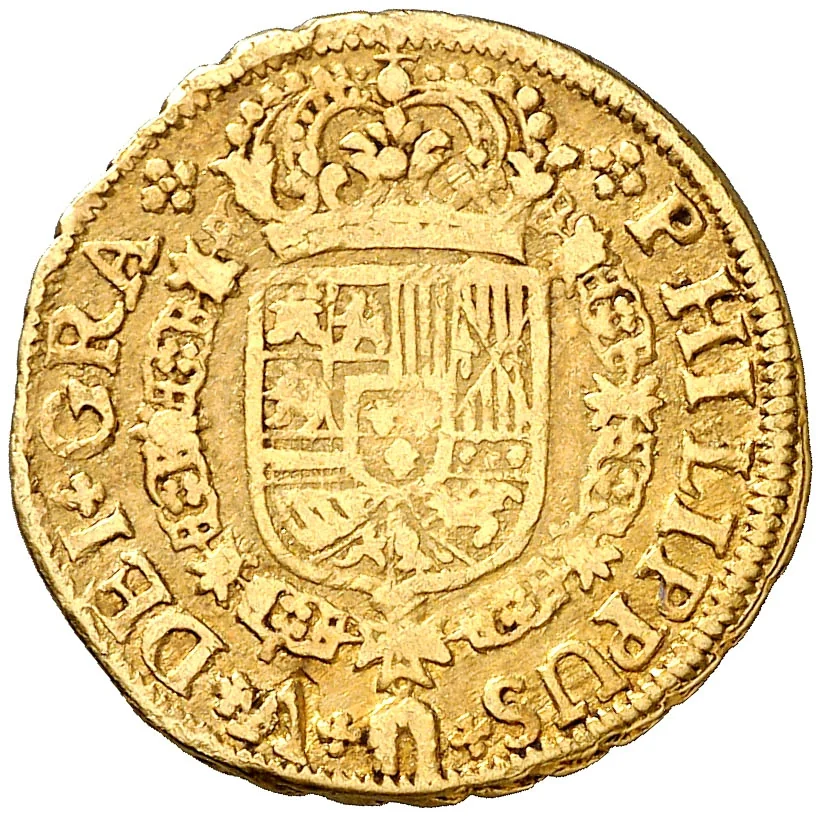

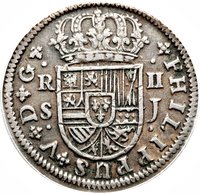
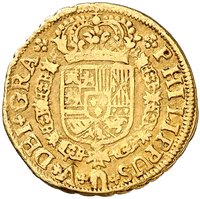
Obverse
Description:
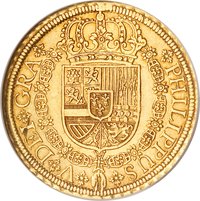
Crowned Spanish coat of arms with the Golden Fleece.
Inscription:
✤ PHILIPPUS ✤ ✤ V ✤ DEI ✤ GRA ✤
Script: Latin
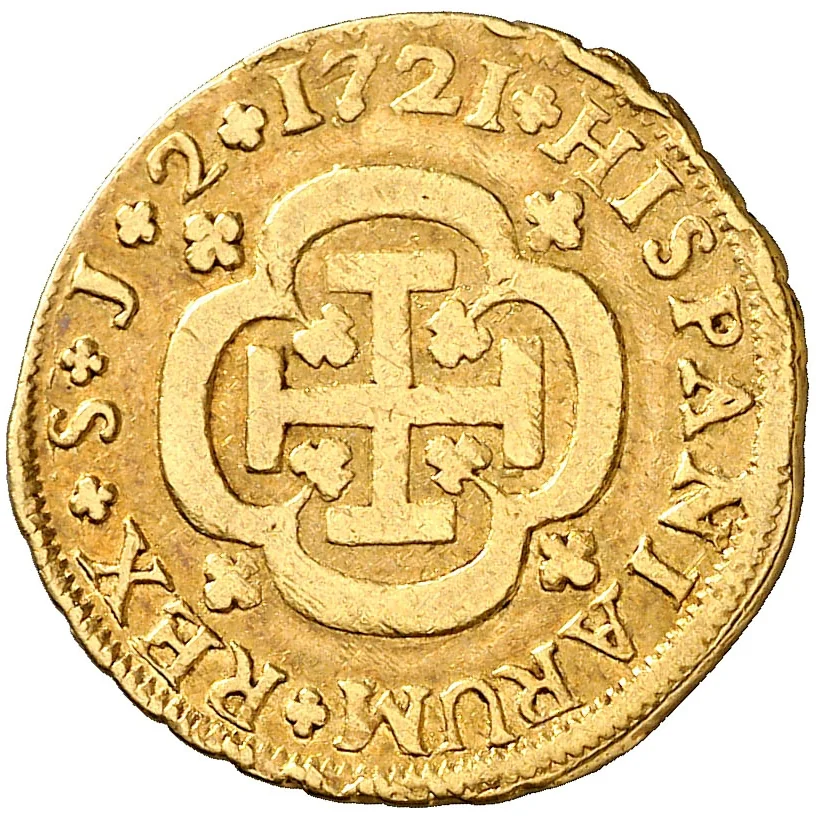
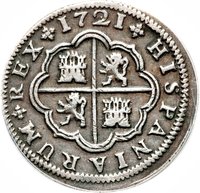
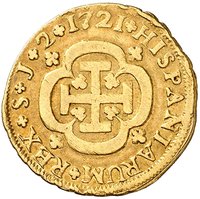
Reverse
Description:
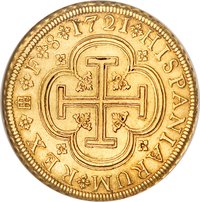
Cross within quatrefoil.
Inscription:
✤ HISPANIARUM ✤ REX ✤ S ✤ J ✤ 2 ✤ 1721
Script: Latin
Edge
Categories
| Symbols> Coat of Arms |
| Symbol> Cross |
Mints
| Name | Mark |
|---|---|
| Royal Mint of Seville | S |
Mintings
| Year | Mint Mark | Mintage | Quality | Collection |
|---|---|---|---|---|
| 1720 | SJ | — | ||
| 1721 | SJ | — | ||
| 1722 | SJ | — | ||
| 1723 | SJ | — | ||
| 1726 | SJ | — |
Historical background
In 1720, Spain’s currency system was in a state of profound crisis, a direct legacy of the costly War of the Spanish Succession (1701-1714). To finance the conflict, the Crown had resorted to massive debasement of the silver real and the copper vellón coinage, flooding the economy with low-intrinsic-value money. This practice, combined with the disruption of silver shipments from the Americas during the war, led to severe inflation, a loss of public confidence in the coinage, and widespread economic instability. The monetary chaos was so entrenched that different regions of Spain effectively operated with different valuations for the same coins, hampering internal trade.
The ascension of King Philip V of the Bourbon dynasty brought a centralized reform effort. His government, influenced by French mercantilist ideas, recognized that monetary disorder was a major obstacle to state-building and economic recovery. The pivotal reform came with the royal decree of October 14, 1720, which aimed to completely restructure the system. It introduced a new silver standard based on the real de plata antigua (old silver real) and ordered the withdrawal and recoinage of all debased vellón currency. This was an ambitious attempt to stabilize the unit of account and restore trust by guaranteeing the precious metal content of the coinage.
The immediate impact of the 1720 reform was mixed. While it established a clearer framework for the future and began the process of withdrawing worthless copper, the sheer scale of the problem and the costs of recoinage meant stability was not achieved overnight. The economy continued to suffer from the aftershocks of devaluation, and the Crown's chronic fiscal deficits persisted. Nevertheless, the decree laid the essential groundwork for the more successful monetary stability that would characterize the mid-18th century, marking a crucial first step in the Bourbon project to modernize the Spanish state and its finances.
The ascension of King Philip V of the Bourbon dynasty brought a centralized reform effort. His government, influenced by French mercantilist ideas, recognized that monetary disorder was a major obstacle to state-building and economic recovery. The pivotal reform came with the royal decree of October 14, 1720, which aimed to completely restructure the system. It introduced a new silver standard based on the real de plata antigua (old silver real) and ordered the withdrawal and recoinage of all debased vellón currency. This was an ambitious attempt to stabilize the unit of account and restore trust by guaranteeing the precious metal content of the coinage.
The immediate impact of the 1720 reform was mixed. While it established a clearer framework for the future and began the process of withdrawing worthless copper, the sheer scale of the problem and the costs of recoinage meant stability was not achieved overnight. The economy continued to suffer from the aftershocks of devaluation, and the Crown's chronic fiscal deficits persisted. Nevertheless, the decree laid the essential groundwork for the more successful monetary stability that would characterize the mid-18th century, marking a crucial first step in the Bourbon project to modernize the Spanish state and its finances.
✨ Legendary