

10 Florins – Hungary
Hungary

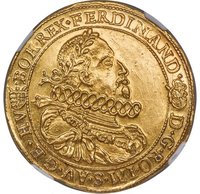
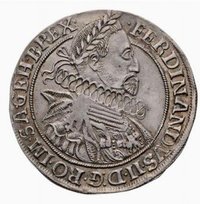
Obverse
Description:
Laureate bust right with curls, necklace, and Golden Fleece ring; smaller portrait within inner circle.
Inscription:
FERDINANDVS · II · D · G · R · I · S · AVG · GER · HVN · BOH · REX *
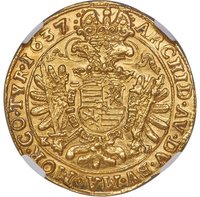
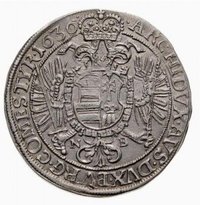
Reverse
Description:
Imperial double-headed eagle holding sword and scepter, crowned with the full Hungarian coat of arms. Mintmark at eagle's feet.
Inscription:
ARCHIDVX · AVS · DVX · BVRG · COMES · TYR · 1635 ·
N B
N B
Edge
Plain
Mints
| Name | Mark |
|---|---|
| Baia Mare | NB |
Mintings
| Year | Mint Mark | Mintage | Quality | Collection |
|---|---|---|---|---|
| 1635 | N-B | — |
Historical background
In 1635, the Kingdom of Hungary, then divided between the Habsburg-ruled Royal Hungary in the west and north, the Ottoman-occupied central territories, and the semi-independent Principality of Transylvania in the east, faced a complex and deteriorating currency situation. The primary currency was the silver Thaler (or Tallér), but the reality was one of severe monetary fragmentation and debasement. The Habsburg government in Vienna, perpetually financially strained by the ongoing Thirty Years' War, frequently manipulated the coinage to raise funds. They reduced the silver content of the lower-denomination denars and kreutzers minted for use in Hungary, leading to chronic inflation and a loss of public trust. This "bad money" flooded the market, while full-value silver coins were hoarded or used for foreign trade, a classic example of Gresham's Law.
The situation was exacerbated by the circulation of a vast array of foreign coins, including older Hungarian issues, Turkish akçe, and coins from German states, all with fluctuating and uncertain values. This created a chaotic exchange environment that hampered commerce. Furthermore, the Ottoman-occupied regions and Transylvania operated under different monetary systems, with Transylvania minting its own coins (such as the silver ducat and garas), adding another layer of complexity to cross-regional trade. The Habsburg monetary policy was deeply unpopular, seen as an exploitative measure that drained the kingdom's wealth to fund a distant war, fueling resentment among both the nobility and commoners.
Consequently, the 1635 currency climate was one of instability and economic strain. Debased coinage eroded purchasing power, particularly for those on fixed incomes or paying traditional feudal dues in cash. The monetary chaos acted as a drag on the kingdom's economy, discouraging investment and complicating everyday transactions. This financial turmoil contributed to the broader political tensions between the Hungarian estates and the Habsburg crown, as disputes over taxation and monetary sovereignty became recurring points of conflict throughout the 17th century.
The situation was exacerbated by the circulation of a vast array of foreign coins, including older Hungarian issues, Turkish akçe, and coins from German states, all with fluctuating and uncertain values. This created a chaotic exchange environment that hampered commerce. Furthermore, the Ottoman-occupied regions and Transylvania operated under different monetary systems, with Transylvania minting its own coins (such as the silver ducat and garas), adding another layer of complexity to cross-regional trade. The Habsburg monetary policy was deeply unpopular, seen as an exploitative measure that drained the kingdom's wealth to fund a distant war, fueling resentment among both the nobility and commoners.
Consequently, the 1635 currency climate was one of instability and economic strain. Debased coinage eroded purchasing power, particularly for those on fixed incomes or paying traditional feudal dues in cash. The monetary chaos acted as a drag on the kingdom's economy, discouraging investment and complicating everyday transactions. This financial turmoil contributed to the broader political tensions between the Hungarian estates and the Habsburg crown, as disputes over taxation and monetary sovereignty became recurring points of conflict throughout the 17th century.
✨ Legendary