

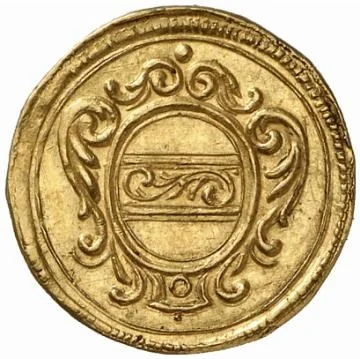
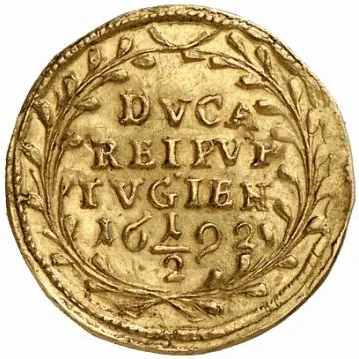
½ Ducat – Zug
Switzerland

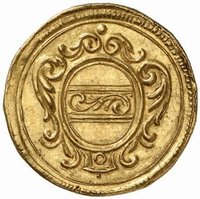
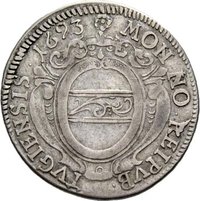
Obverse
Description:
Zug arms in cartouche.
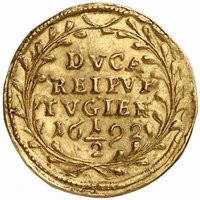
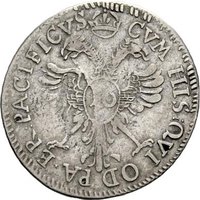
Reverse
Description:
Three-line inscription, date below value, within laurel wreath.
Inscription:
DVCA
REIPVB
TVGIEN
16 1/2 92
REIPVB
TVGIEN
16 1/2 92
Script: Latin
Edge
Mintings
| Year | Mint Mark | Mintage | Quality | Collection |
|---|---|---|---|---|
| 1692 | — | — |
Historical background
In 1692, the Swiss canton of Zug, like much of the Old Swiss Confederacy, was navigating a complex and often chaotic monetary landscape. There was no single, unified Swiss currency; instead, the region operated with a multitude of foreign and domestic coins circulating simultaneously. These included the widely used Kreuzer and Gulden from the Holy Roman Empire, French Écus, Spanish Thalers, and various coins minted by other Swiss cantons. This proliferation created a constant challenge for trade and daily transactions, as the value of each coin depended on its metal content (usually silver), weight, and the perceived trustworthiness of the issuing authority.
The local authorities in Zug attempted to bring order by officially recognizing specific exchange rates (Tarife) for these foreign coins in relation to the local accounting unit, the Zuger Pfund. However, this system was fragile. The frequent debasement of coinage by foreign states and other cantons—reducing the silver content to fund military campaigns—constantly undermined these fixed rates. A coin officially valued at one Zuger Pfund might contain significantly less precious metal than expected, leading to inflation, loss of public trust, and economic disputes. Zug itself did not mint its own coins, making it particularly vulnerable to these external monetary pressures.
This situation placed a significant burden on merchants and officials, who required specialized knowledge to assess coins' true worth. The constant need for money changers and the risk of accepting "bad" coinage hampered commerce. The monetary disarray of 1692 was a typical symptom of the period, highlighting the tension between local economic needs and the lack of a sovereign, stable currency, a problem that would persist in the Swiss Confederacy for nearly two centuries until the federal constitution of 1848.
The local authorities in Zug attempted to bring order by officially recognizing specific exchange rates (Tarife) for these foreign coins in relation to the local accounting unit, the Zuger Pfund. However, this system was fragile. The frequent debasement of coinage by foreign states and other cantons—reducing the silver content to fund military campaigns—constantly undermined these fixed rates. A coin officially valued at one Zuger Pfund might contain significantly less precious metal than expected, leading to inflation, loss of public trust, and economic disputes. Zug itself did not mint its own coins, making it particularly vulnerable to these external monetary pressures.
This situation placed a significant burden on merchants and officials, who required specialized knowledge to assess coins' true worth. The constant need for money changers and the risk of accepting "bad" coinage hampered commerce. The monetary disarray of 1692 was a typical symptom of the period, highlighting the tension between local economic needs and the lack of a sovereign, stable currency, a problem that would persist in the Swiss Confederacy for nearly two centuries until the federal constitution of 1848.
✨ Legendary