

Switzerland

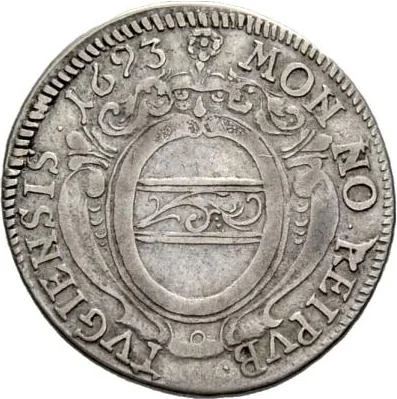
Obverse
Description:
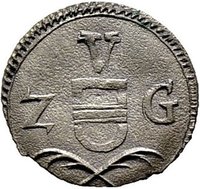
Oval arms in cartouche, date in legend.
Inscription:
MON NO · REIPVB· TVGIENSIS · 1693
Script: Latin
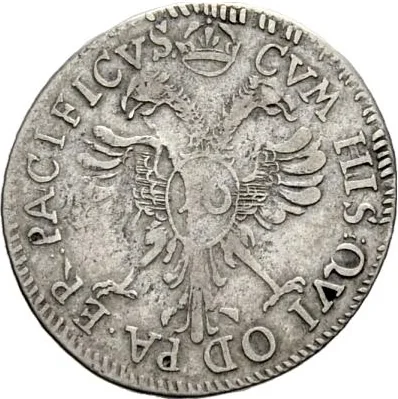
Reverse
Description:
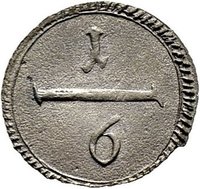
Imperial eagle with crown and chest value.
Inscription:
CVM HIS QVI OD PA · ER: PACIFICVS
10
10
Script: Latin
Edge
Mintings
| Year | Mint Mark | Mintage | Quality | Collection |
|---|---|---|---|---|
| 1693 | — | — | ||
| 1694 | — | — |
Historical background
In 1693, the Swiss canton of Zug, like much of the Old Swiss Confederacy, was grappling with a severe monetary crisis rooted in the widespread debasement of coinage. The primary unit of account was the Gulden (florin), but the physical coins in circulation were a chaotic mix of domestic and foreign issues, including French Louis d'or, Spanish thalers, and Italian ducats. The core problem was that many states, including Swiss cantons and neighboring German principalities, were systematically reducing the precious metal content in their coins to finance military expenditures, particularly during the Nine Years' War (1688-1697). This created a classic case of Gresham's Law, where "bad" debased coins drove "good" full-weight coins out of circulation, as people hoarded the latter for their intrinsic value.
The situation in Zug was directly impacted by the actions of its powerful neighbor, the canton of Bern. In 1693, Bern initiated a major recoinage, issuing new, lighter Batzen and Angster coins with reduced silver content. As a key member of the Confederacy and a major economic force, Bern's currency reforms had a ripple effect, destabilizing trade and pricing across the region. For Zug's local economy, which relied on agriculture, small-scale trade, and transit routes, this volatility caused significant distress. Prices became unpredictable, debts were harder to settle fairly, and public trust in the monetary system eroded, leading to disputes and confusion in everyday transactions.
In response, the authorities in Zug, like other cantons, were forced to constantly reissue official Münztaxen (currency tariff lists). These ordinances attempted to fix the value of the myriad circulating coins in terms of the local Gulden, declaring specific exchange rates and often banning the most debased foreign coins. However, these measures were largely reactive and struggled to keep pace with the inflationary spiral. The 1693 crisis thus highlighted Zug's vulnerability within the fragmented monetary landscape of the Confederacy, where the lack of a centralized coinage policy left individual cantons to defend their economic stability against a flood of depreciating currency.
The situation in Zug was directly impacted by the actions of its powerful neighbor, the canton of Bern. In 1693, Bern initiated a major recoinage, issuing new, lighter Batzen and Angster coins with reduced silver content. As a key member of the Confederacy and a major economic force, Bern's currency reforms had a ripple effect, destabilizing trade and pricing across the region. For Zug's local economy, which relied on agriculture, small-scale trade, and transit routes, this volatility caused significant distress. Prices became unpredictable, debts were harder to settle fairly, and public trust in the monetary system eroded, leading to disputes and confusion in everyday transactions.
In response, the authorities in Zug, like other cantons, were forced to constantly reissue official Münztaxen (currency tariff lists). These ordinances attempted to fix the value of the myriad circulating coins in terms of the local Gulden, declaring specific exchange rates and often banning the most debased foreign coins. However, these measures were largely reactive and struggled to keep pace with the inflationary spiral. The 1693 crisis thus highlighted Zug's vulnerability within the fragmented monetary landscape of the Confederacy, where the lack of a centralized coinage policy left individual cantons to defend their economic stability against a flood of depreciating currency.
✨ Legendary