

1 mark – Sweden
Add to wishlist
Sweden
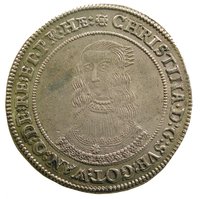
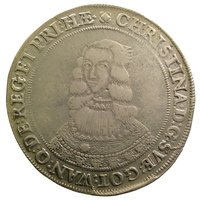
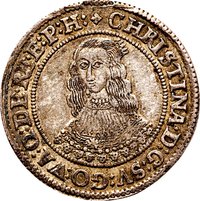
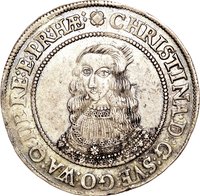
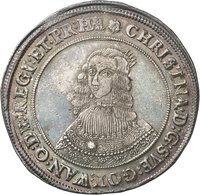
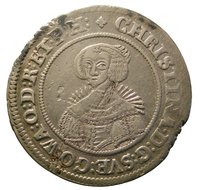
Obverse
Description:
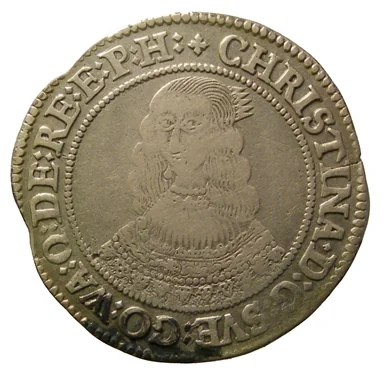
Bare-headed Queen Christina facing left within circle, legend outside.
Inscription:
CHRISTINA·D:G:SVE:GO:WA:Q:DE:RE:E:P:H:*
Script: Latin
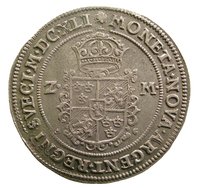
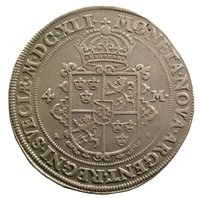
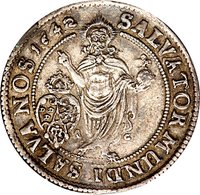
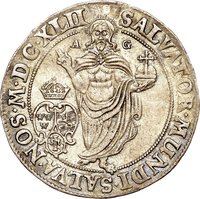
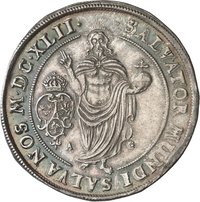
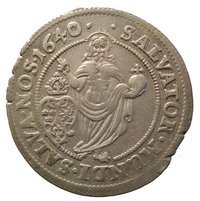
Reverse
Description:
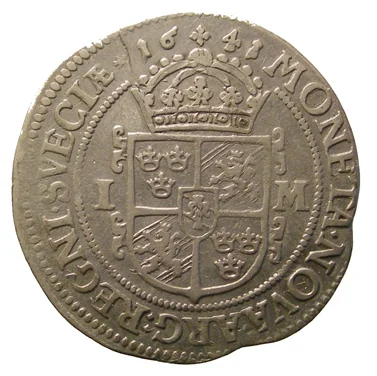
Shield with Swedish arms divides value within circular legend.
Inscription:
MONETA·NOVA·ARG·REGNI·SVECIÆ*16*41
1 M
1 M
Script: Latin
Edge
Mints
| Name | Mark |
|---|---|
| Stockholm | — |
Mintings
| Year | Mint Mark | Mintage | Quality | Collection |
|---|---|---|---|---|
| 1641 | — | — | ||
| 1642 | — | — | ||
| 1646 | — | — |
Historical background
In 1641, Sweden was in the midst of the Thirty Years' War (1618-1648), a conflict that placed immense financial strain on the kingdom. To fund its expansive military campaigns across the Holy Roman Empire, the Swedish state, under the leadership of Chancellor Axel Oxenstierna, relied heavily on war indemnities, foreign subsidies (notably from France), and the systematic exploitation of occupied territories. However, these sources were unpredictable and often insufficient, leading to chronic fiscal pressure that directly impacted the domestic currency system.
The Swedish monetary situation was complex and deteriorating. The country operated on a bimetallic standard, but the constant need for bullion to pay troops and suppliers led to repeated debasements of the copper coinage, which was particularly important due to Sweden's significant copper exports. The famous plåtmynt (plate money) – large, cumbersome rectangular copper slabs – was in circulation, representing a practical response to the high value of copper. However, the real value of these coins often fell below their face value, and the simultaneous circulation of older, better-quality coins alongside newer, debased ones created confusion and fostered inflation within Sweden itself.
Consequently, 1641 was a year marked by monetary instability and administrative struggle. The government attempted to control the currency through ordinances, setting official exchange rates between silver and copper coins, but these measures were frequently undermined by market forces and the sheer economic demands of the war. The situation eroded public trust in the currency, hampered domestic trade, and highlighted the precarious link between Sweden's imperial ambitions and its economic foundations, a tension that would necessitate major financial reforms after the war's conclusion.
The Swedish monetary situation was complex and deteriorating. The country operated on a bimetallic standard, but the constant need for bullion to pay troops and suppliers led to repeated debasements of the copper coinage, which was particularly important due to Sweden's significant copper exports. The famous plåtmynt (plate money) – large, cumbersome rectangular copper slabs – was in circulation, representing a practical response to the high value of copper. However, the real value of these coins often fell below their face value, and the simultaneous circulation of older, better-quality coins alongside newer, debased ones created confusion and fostered inflation within Sweden itself.
Consequently, 1641 was a year marked by monetary instability and administrative struggle. The government attempted to control the currency through ordinances, setting official exchange rates between silver and copper coins, but these measures were frequently undermined by market forces and the sheer economic demands of the war. The situation eroded public trust in the currency, hampered domestic trade, and highlighted the precarious link between Sweden's imperial ambitions and its economic foundations, a tension that would necessitate major financial reforms after the war's conclusion.
Series: 1641 Sweden circulation coins
✨ Legendary