

¼ riksdaler – Sweden
Add to wishlist
Sweden
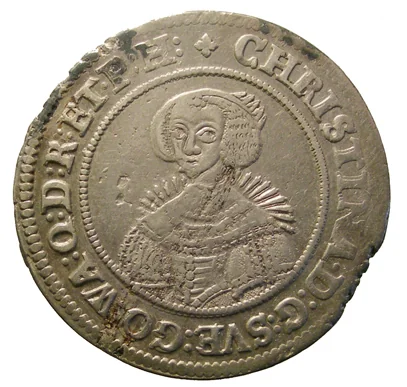
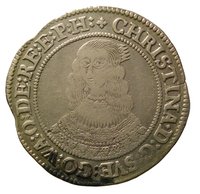
Obverse
Description:
Bare-headed bust of Queen Christina, her hair drawn back, within a circular inscription.
Inscription:
CHRISTINA·D:G:SVE:GO:WA:Q:D:R:ET·P:H: *
Script: Latin
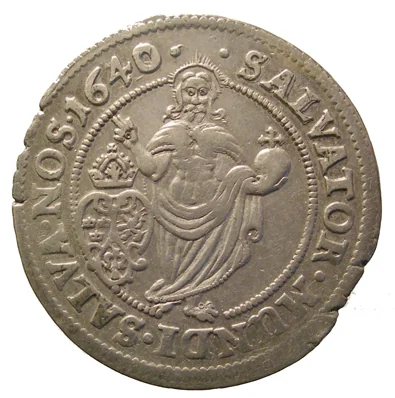
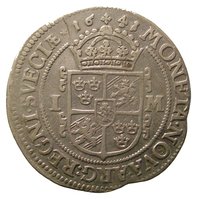
Reverse
Description:
Risen Christ holds orb, crowned triple arms to left. Mintmark near head or feet.
Inscription:
·SALVATOR·MUNDI·SALVA·NOS·1640·
Script: Latin
Edge
Mintings
| Year | Mint Mark | Mintage | Quality | Collection |
|---|---|---|---|---|
| 1640 | — | — | ||
| 1641 | — | — |
Historical background
In 1640, Sweden was a rising military power deeply embroiled in the Thirty Years' War, and its currency system was under severe strain from the astronomical costs of conflict. The state's primary source of wealth was copper, mined from the great mountain at Falun, which led to a unique and problematic bimetallic system. Since 1624, Sweden had operated on a copper standard alongside silver, where large, cumbersome copper plåtmynt (plate money) circulated at a mandated value far above the intrinsic worth of the metal, backed by royal decree.
This system was inherently unstable and manipulated to finance war. The government, particularly under Chancellor Axel Oxenstierna, repeatedly debased the coinage to pay armies and purchase supplies abroad. The copper content in coins was reduced, and more coins were minted from the same amount of metal, leading to inflation and a loss of public confidence. Furthermore, the need for silver to fund campaigns in Germany created a persistent drain, causing a disparity between the official exchange rate between copper and silver and their market values, which encouraged hoarding and speculation.
Consequently, the domestic economy suffered from price volatility and complexity. Peasants and merchants had to navigate a confusing mix of old and new coinages, both Swedish and foreign. The heavy copper plate money was impractical for everyday trade, highlighting the system's inefficiency. Thus, the currency situation in 1640 was one of deliberate inflationary policy, where the crown's immediate military necessities consistently overrode the need for monetary stability, laying the groundwork for future financial crises in the Swedish Empire.
This system was inherently unstable and manipulated to finance war. The government, particularly under Chancellor Axel Oxenstierna, repeatedly debased the coinage to pay armies and purchase supplies abroad. The copper content in coins was reduced, and more coins were minted from the same amount of metal, leading to inflation and a loss of public confidence. Furthermore, the need for silver to fund campaigns in Germany created a persistent drain, causing a disparity between the official exchange rate between copper and silver and their market values, which encouraged hoarding and speculation.
Consequently, the domestic economy suffered from price volatility and complexity. Peasants and merchants had to navigate a confusing mix of old and new coinages, both Swedish and foreign. The heavy copper plate money was impractical for everyday trade, highlighting the system's inefficiency. Thus, the currency situation in 1640 was one of deliberate inflationary policy, where the crown's immediate military necessities consistently overrode the need for monetary stability, laying the groundwork for future financial crises in the Swedish Empire.
✨ Legendary