

1 mark – Sweden
Add to wishlist
Sweden
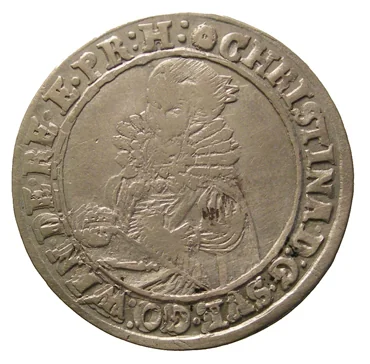
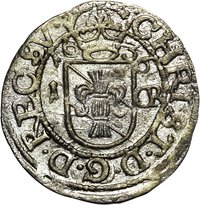
Obverse
Description:
Bust of Queen Christina facing left within a circular inscription.
Inscription:
*CHRISTINA·D:G·SVE·GO·WAN·DE·RE·E·PR:H:
Script: Latin
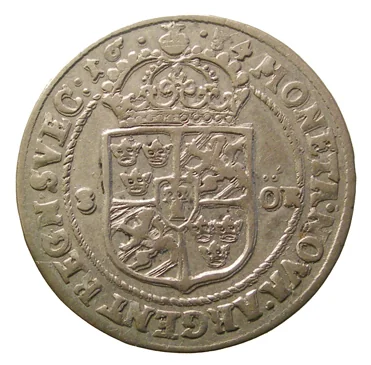
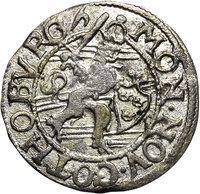
Reverse
Description:
Shield with Swedish arms divides value within circular legend.
Inscription:
MONETA·NOVA·ARGENT REGN·SVEC:16· ·34
8 Ör
8 Ör
Script: Latin
Edge
Mints
| Name | Mark |
|---|---|
| Stockholm | — |
Mintings
| Year | Mint Mark | Mintage | Quality | Collection |
|---|---|---|---|---|
| 1634 | — | 105,000 |
Historical background
In 1634, Sweden was in the midst of the Thirty Years' War, a conflict that placed immense strain on its economy. King Gustavus Adolphus, who had been killed in battle two years prior, had financed his ambitious military campaigns largely through foreign loans, the seizure of coin and bullion from conquered territories, and heavy taxation. This created a significant monetary influx, but the constant need to pay and supply armies across Germany led to chronic fiscal pressure. The state treasury was perpetually in need of precious metal to mint coins and fund the war effort, setting the stage for monetary instability.
The domestic currency system was complex and problematic. Sweden operated on a bimetallic standard (silver and copper), but a crucial feature was the abundant production of large, cumbersome copper plate money (plåtmynt). These heavy plates, whose face value was tied to the market price of copper, were necessary due to Sweden's rich copper mines and a relative scarcity of silver. However, the system was unwieldy, and the real value of both silver and copper coins fluctuated against each other and against the constantly rising prices caused by war inflation. This led to confusion, Gresham's Law (where "bad" money drives out "good"), and difficulties in both everyday trade and state finances.
Against this backdrop, the government under Chancellor Axel Oxenstierna sought greater control. The year 1634 is notable for the completion of the Instrument of Government and the creation of specific governmental offices, which centralized administration. While not a single monetary reform, this institutional strengthening was directly linked to managing the financial crisis. The state intensified its efforts to regulate currency, compel the acceptance of copper money, and centralize fiscal policy to better extract resources for the war, laying bare the direct connection between Sweden's military ambitions and its troubled currency.
The domestic currency system was complex and problematic. Sweden operated on a bimetallic standard (silver and copper), but a crucial feature was the abundant production of large, cumbersome copper plate money (plåtmynt). These heavy plates, whose face value was tied to the market price of copper, were necessary due to Sweden's rich copper mines and a relative scarcity of silver. However, the system was unwieldy, and the real value of both silver and copper coins fluctuated against each other and against the constantly rising prices caused by war inflation. This led to confusion, Gresham's Law (where "bad" money drives out "good"), and difficulties in both everyday trade and state finances.
Against this backdrop, the government under Chancellor Axel Oxenstierna sought greater control. The year 1634 is notable for the completion of the Instrument of Government and the creation of specific governmental offices, which centralized administration. While not a single monetary reform, this institutional strengthening was directly linked to managing the financial crisis. The state intensified its efforts to regulate currency, compel the acceptance of copper money, and centralize fiscal policy to better extract resources for the war, laying bare the direct connection between Sweden's military ambitions and its troubled currency.
✨ Legendary