

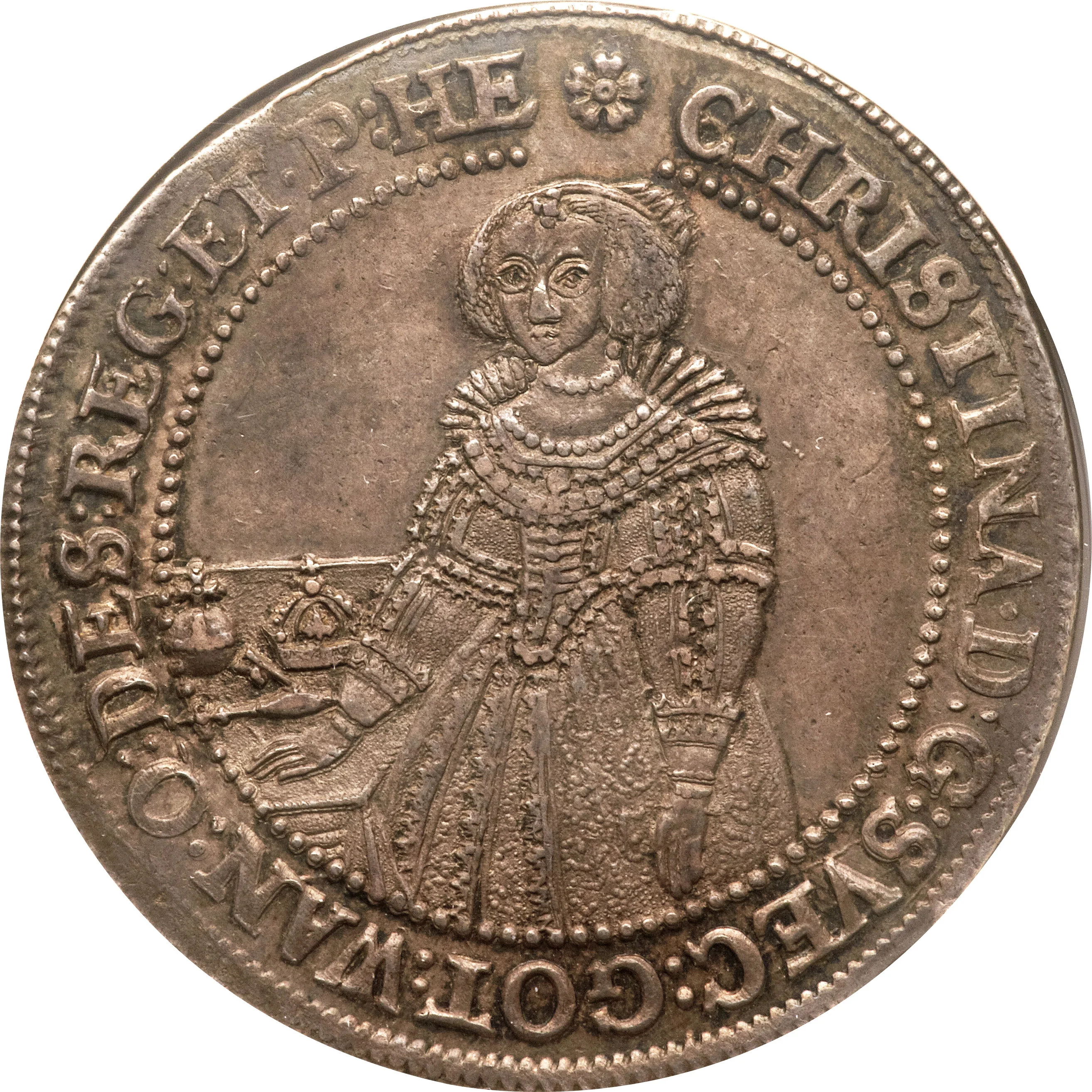
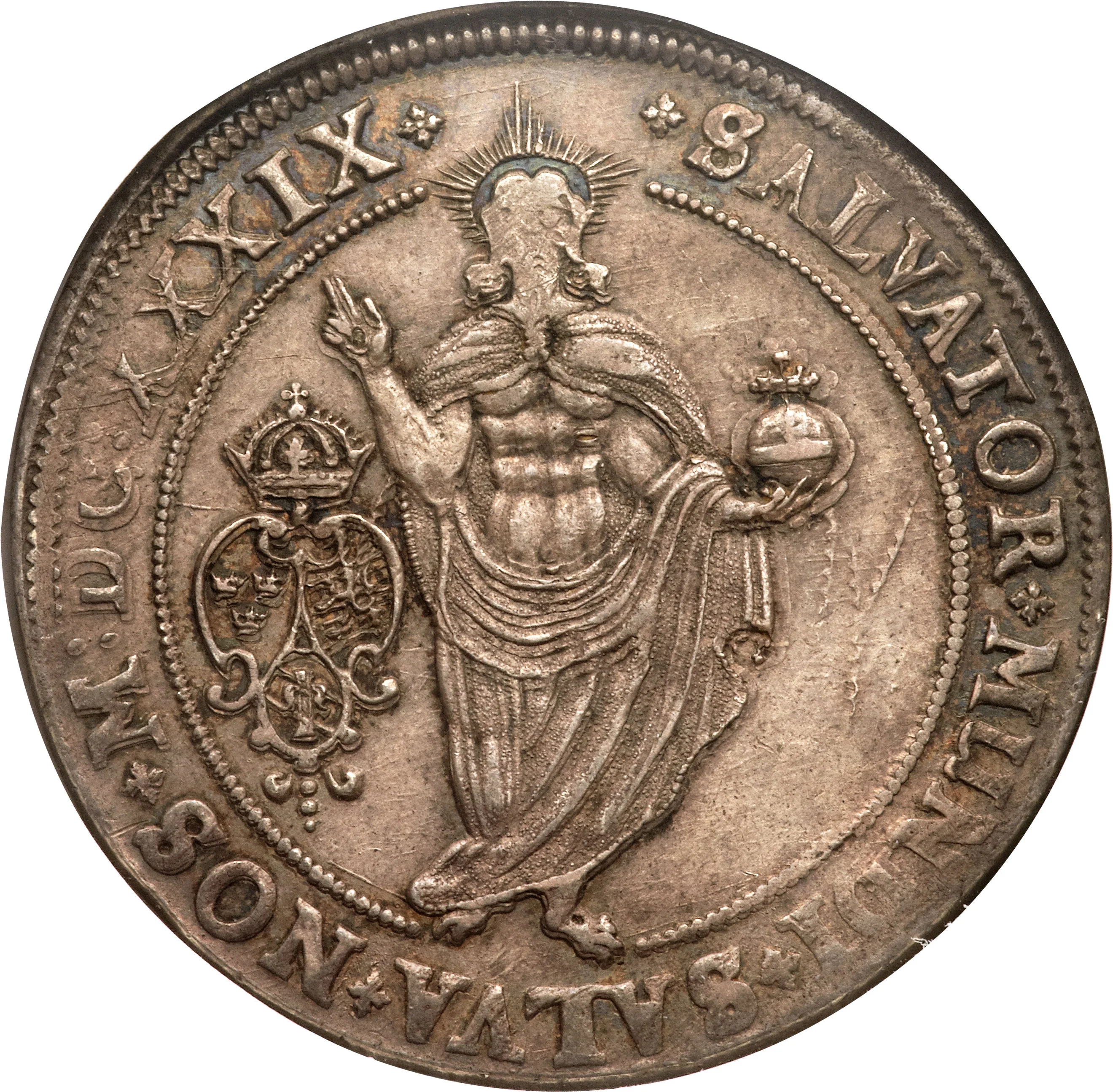
1 riksdaler – Sweden
Add to wishlist
Sweden
Mintings
| Year | Mint Mark | Mintage | Quality | Collection |
|---|---|---|---|---|
| 1639 | — | — | ||
| 1640 | — | — | ||
| 1641 | — | — |
Historical background
In 1639, Sweden was in the midst of the Thirty Years' War (1618-1648), a period of immense fiscal strain and monetary experimentation. The kingdom, under Chancellor Axel Oxenstierna's administration, was financing its powerful military through foreign subsidies, war loot, and heavy domestic taxation. However, these sources were insufficient, leading to a reliance on currency manipulation. The state's primary tool was the copper standard, formally adopted in 1625, which made bulky copper daler coins legal tender alongside silver.
The year 1639 fell within a critical phase of this policy. To fund the war effort, the Swedish Crown, through the Riksens Ständers Myntverk (the Estates' Mint), was aggressively debasing the currency. This involved increasing the nominal value of existing coins while reducing their precious metal content, or issuing vast quantities of low-weight copper mynt and örtug coins. The result was a severe bimetallic crisis: the fixed exchange rate between the overvalued copper currency and the undervalued silver currency created chaos. Gresham's Law took hold, as "bad" copper money drove "good" silver money out of circulation, either into private hoards or for export.
Consequently, Sweden suffered from price inflation, market confusion, and a loss of confidence in the monetary system. The public and foreign merchants struggled with multiple, fluctuating exchange rates. This unstable environment, driven by wartime exigency, highlighted the limitations of the copper standard and set the stage for future financial reforms, most notably the establishment of Europe's first central bank, the Riksens Ständers Bank (the Bank of the Estates), in 1668, which aimed to bring order to the kingdom's finances.
The year 1639 fell within a critical phase of this policy. To fund the war effort, the Swedish Crown, through the Riksens Ständers Myntverk (the Estates' Mint), was aggressively debasing the currency. This involved increasing the nominal value of existing coins while reducing their precious metal content, or issuing vast quantities of low-weight copper mynt and örtug coins. The result was a severe bimetallic crisis: the fixed exchange rate between the overvalued copper currency and the undervalued silver currency created chaos. Gresham's Law took hold, as "bad" copper money drove "good" silver money out of circulation, either into private hoards or for export.
Consequently, Sweden suffered from price inflation, market confusion, and a loss of confidence in the monetary system. The public and foreign merchants struggled with multiple, fluctuating exchange rates. This unstable environment, driven by wartime exigency, highlighted the limitations of the copper standard and set the stage for future financial reforms, most notably the establishment of Europe's first central bank, the Riksens Ständers Bank (the Bank of the Estates), in 1668, which aimed to bring order to the kingdom's finances.
✨ Legendary