

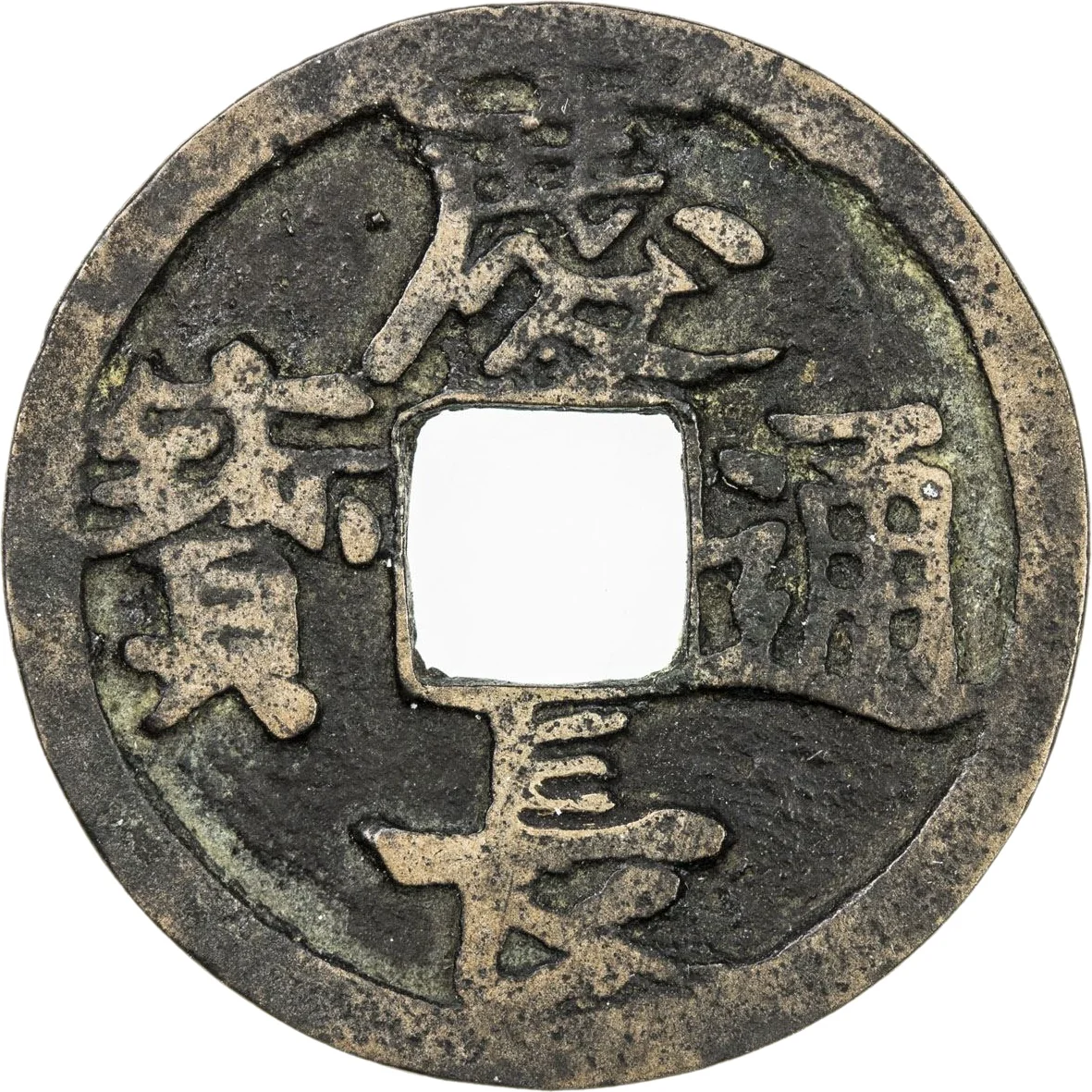
1 Mon – Japan
Japan
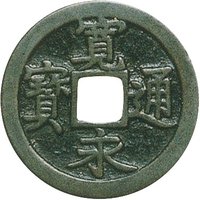
Obverse
Description:
Four figures circle a pit.
Inscription:
慶
寳 通
長
寳 通
長
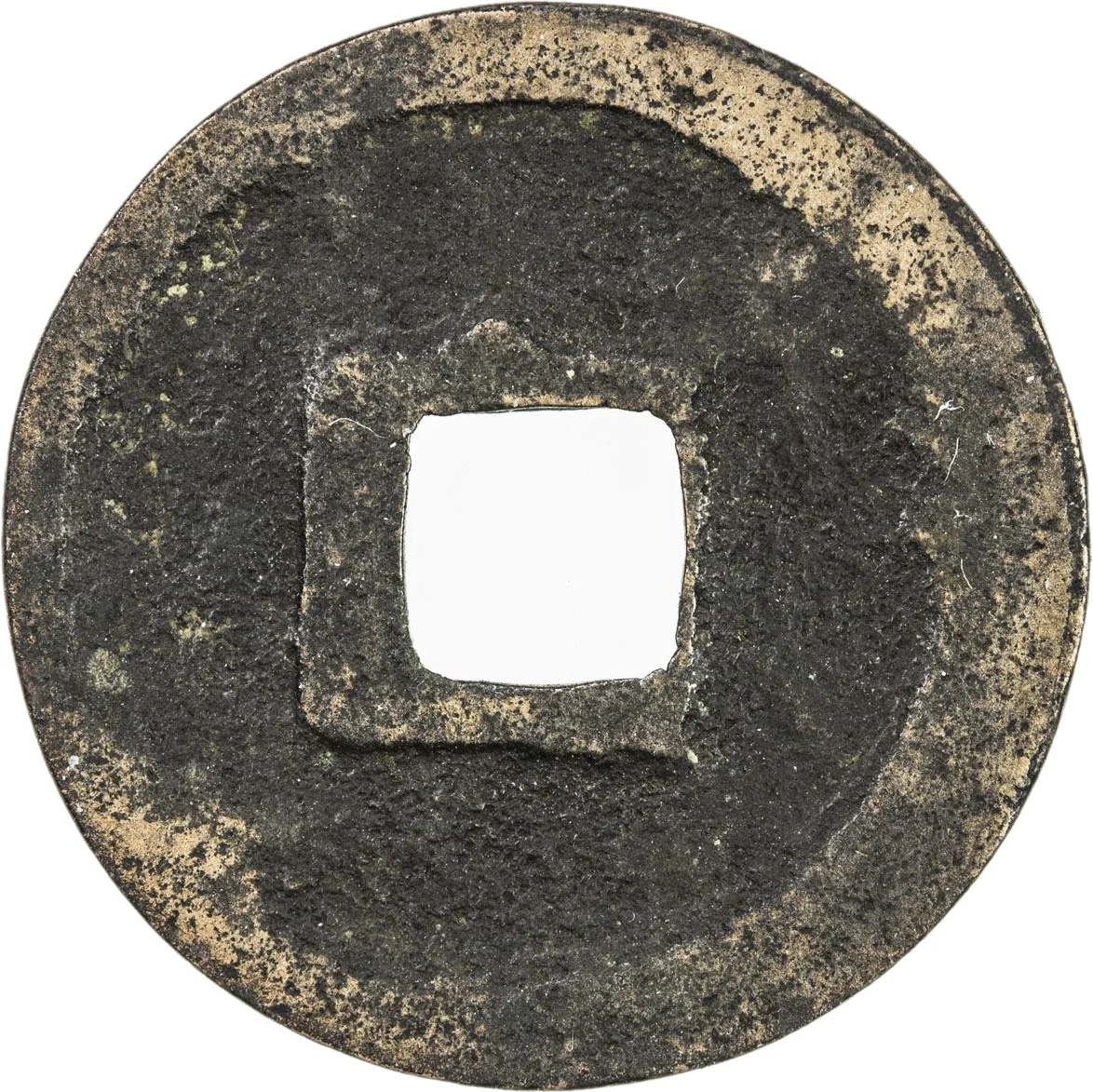
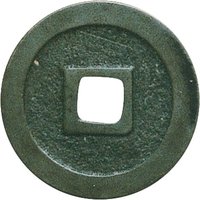
Reverse
Description:
Simple.
Edge
Plain
Mintings
| Year | Mint Mark | Mintage | Quality | Collection |
|---|---|---|---|---|
| 1606 | — | — |
Historical background
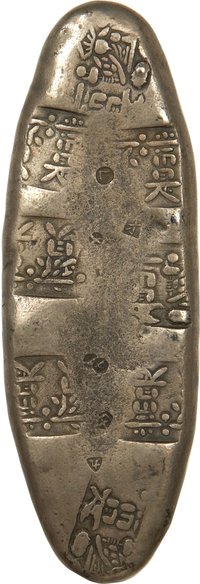
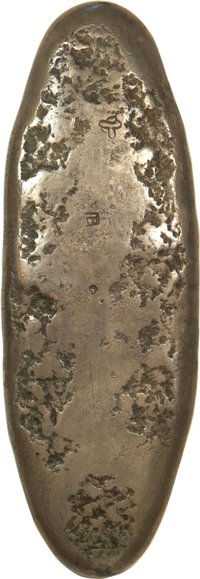
In 1606, Japan’s currency system was in a state of complex transition, shaped by the recent unification of the country under the Tokugawa shogunate (established in 1603). The nation lacked a unified, centrally minted coinage. Instead, the economy operated on a tri-metallic system of gold, silver, and bronze coins, but these currencies were not yet standardized across domains. Gold was primarily minted into oval koban and ōban coins by the shogunate, silver came in stamped ingots or loose granules measured by weight (the chōgin system), and bronze zeni coins served for small transactions. A significant portion of the circulating coinage, especially copper, was imported from China and Southeast Asia, making the money supply partially dependent on foreign trade.
The Tokugawa regime, under Shogun Tokugawa Ieyasu, was actively working to assert central control over currency as a pillar of political and economic stability. Key mints, like the Ginza (silver mint) in Edo and the Kinza (gold mint) in Kyoto, were established or brought under shogunal authority around this time. The year 1606 falls within a period when the government was beginning to standardize the weight, purity, and design of gold coins to combat counterfeiting and establish its monetary sovereignty. However, this process was incomplete; many regional daimyo still issued their own local currencies and promissory notes, leading to a fragmented monetary landscape where exchange rates between gold, silver, and copper could fluctuate.
This currency situation directly reflected the broader socio-political structure. The shogunate’s move toward a centralized coinage was a deliberate step to weaken the financial independence of the daimyo, control inflation, and facilitate tax collection and inter-domain trade. Yet, in 1606, the system was not yet the fully codified and closed Tokugawa coinage system it would later become. The economy still relied heavily on a mix of official coins, private merchant notes, and imported currency, all functioning within a framework where the shogunate was steadily, but not yet completely, consolidating its monetary authority.
The Tokugawa regime, under Shogun Tokugawa Ieyasu, was actively working to assert central control over currency as a pillar of political and economic stability. Key mints, like the Ginza (silver mint) in Edo and the Kinza (gold mint) in Kyoto, were established or brought under shogunal authority around this time. The year 1606 falls within a period when the government was beginning to standardize the weight, purity, and design of gold coins to combat counterfeiting and establish its monetary sovereignty. However, this process was incomplete; many regional daimyo still issued their own local currencies and promissory notes, leading to a fragmented monetary landscape where exchange rates between gold, silver, and copper could fluctuate.
This currency situation directly reflected the broader socio-political structure. The shogunate’s move toward a centralized coinage was a deliberate step to weaken the financial independence of the daimyo, control inflation, and facilitate tax collection and inter-domain trade. Yet, in 1606, the system was not yet the fully codified and closed Tokugawa coinage system it would later become. The economy still relied heavily on a mix of official coins, private merchant notes, and imported currency, all functioning within a framework where the shogunate was steadily, but not yet completely, consolidating its monetary authority.
💎 Extremely Rare