

1 Mon – Japan
Japan
Context
Material
Diameter: 24 mm
Weight: 4 g
Thickness: 1 mm
Shape: Round with a square hole
Composition: Copper
Magnetic: No
Technique: Cast
References
KM: #Click to copy to clipboard15
Numista: #283929
Obverse
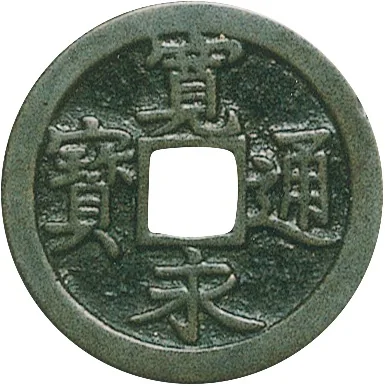
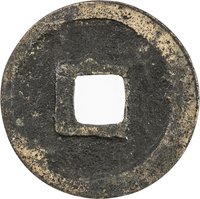
Description:
Four figures encircle the hole, forming the Kan'eitsūhō coin inscription. The character 永 (Ei) is in an irregular font, known as "Nisuiei."
Inscription:
寛
寶 通
永
寶 通
永
Reverse
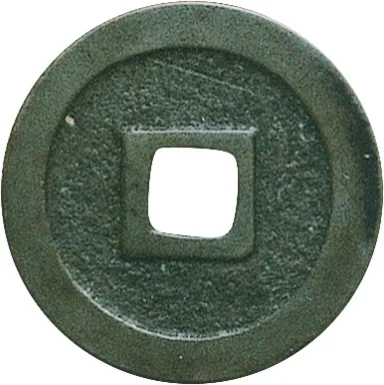
Description:
Blank.
Edge
Mintings
| Year | Mint Mark | Mintage | Quality | Collection |
|---|---|---|---|---|
| 1626 | — | — | ||
| 1626 | — | — | BU | |
| 1636 | — | — | BU |
Historical background
In 1626, Japan's currency system was a complex and evolving tri-metallic structure, overseen by the Tokugawa shogunate. The nation operated on a system of gold, silver, and copper-based coins, each with separate, non-decimal denominations and distinct spheres of influence. Gold koban and ōban coins, minted by the shogunate, were the high-value currency of the ruling samurai class and the daimyo domains, used for large transactions, stipends, and state finance. Silver, however, circulated primarily by weight (in the momme and kan units) rather than as stamped coins, functioning as the medium for major merchant and inter-regional trade, particularly in the commercial hub of Osaka.
This period followed the shogunate's decisive move to centralize monetary authority, begun by Tokugawa Ieyasu. The establishment of the kinza (gold mint), ginza (silver mint), and dōza (copper mint) created official monopolies, aiming to standardize coinage and assert state control over the economy. However, in 1626, the system was not yet fully unified. Older, debased provincial coins and even imported Chinese copper cash (known as Yongle tongbao) still circulated alongside the new official issues, leading to fluctuating exchange rates between the three metals that were set—and sometimes manipulated—by the shogunate.
The currency situation of this era was fundamentally shaped by Japan's policy of sakoku (national seclusion), which was being solidified in the 1630s. With foreign trade heavily restricted to specific ports and partners, the inflow of foreign silver (particularly from Spanish mines via Manila) and gold was becoming controlled. This allowed the Tokugawa shogunate to increasingly manage the money supply internally, using currency production and recoinages as a key tool of fiscal policy, setting the stage for the more stable and isolated monetary regime that would characterize much of the Edo period.
This period followed the shogunate's decisive move to centralize monetary authority, begun by Tokugawa Ieyasu. The establishment of the kinza (gold mint), ginza (silver mint), and dōza (copper mint) created official monopolies, aiming to standardize coinage and assert state control over the economy. However, in 1626, the system was not yet fully unified. Older, debased provincial coins and even imported Chinese copper cash (known as Yongle tongbao) still circulated alongside the new official issues, leading to fluctuating exchange rates between the three metals that were set—and sometimes manipulated—by the shogunate.
The currency situation of this era was fundamentally shaped by Japan's policy of sakoku (national seclusion), which was being solidified in the 1630s. With foreign trade heavily restricted to specific ports and partners, the inflow of foreign silver (particularly from Spanish mines via Manila) and gold was becoming controlled. This allowed the Tokugawa shogunate to increasingly manage the money supply internally, using currency production and recoinages as a key tool of fiscal policy, setting the stage for the more stable and isolated monetary regime that would characterize much of the Edo period.
⭐ Somewhat Rare