

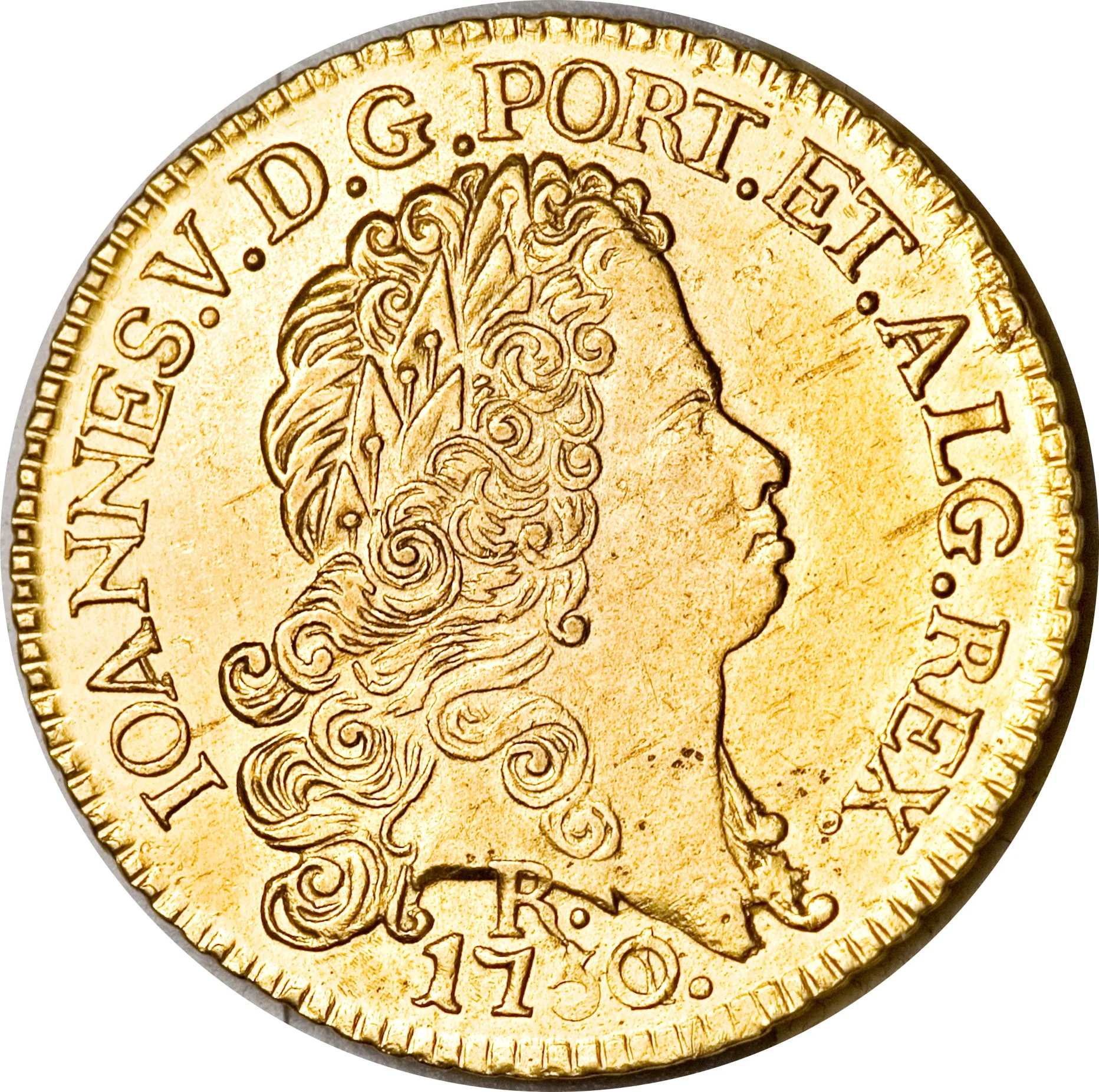
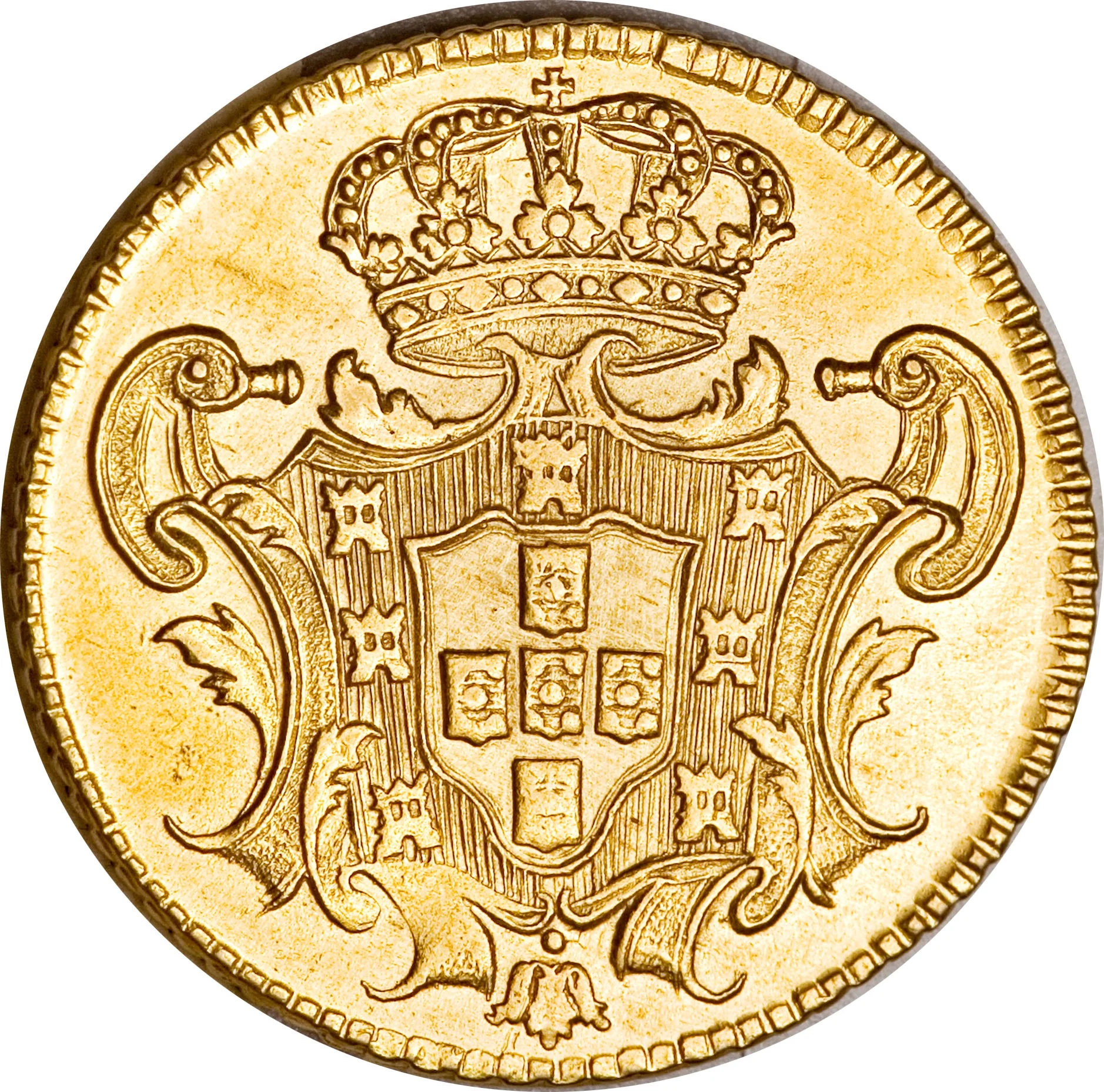
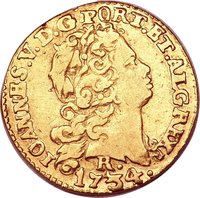
Obverse
Description:
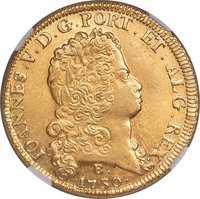
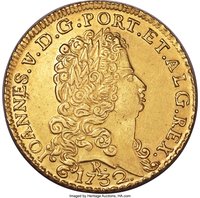
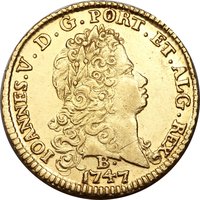
João V bust right, date, and mintmark R.
Inscription:
IOANNES. V. D. G. PORT. ET. ALG. REX. 1743. R.
Script: Latin
Engraver: Antônio Mengin
Designer: Vieira Lusitano
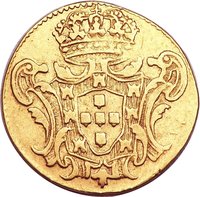
Reverse
Description:
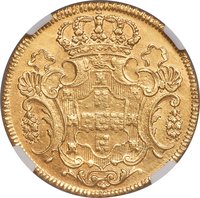
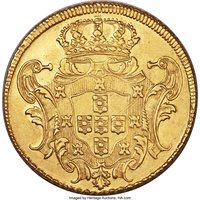
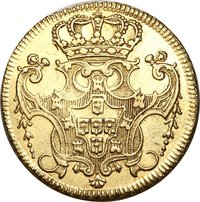
João V's crowned coat of arms.
Edge
Reeded.
Mints
| Name | Mark |
|---|---|
| Casa da Moeda do Brasil | R |
Mintings
Historical background
In 1731, Brazil's currency situation was characterized by profound scarcity and complexity, rooted in its colonial status under the Portuguese Empire. The official currency was the Portuguese real (plural: réis), but the colony suffered from a chronic shortage of minted coinage. Most large-scale transactions, especially those related to the export of sugar, gold, and later diamonds, were conducted through bills of exchange and ledger credits. The physical money in circulation was a chaotic mix of worn and clipped Portuguese coins, along with a variety of foreign currencies—particularly Spanish-American pieces of eight—which circulated widely out of necessity.
This scarcity was acutely felt in the everyday economy of the coastal settlements and the burgeoning mining regions of Minas Gerais. To facilitate local trade, alternative forms of money were ubiquitous. These included commodity money, such as rolls of tobacco or squares of sugarcane brandy (aguardente), and even slaves, who were used as a high-value unit of account. Perhaps most significantly, the Portuguese Crown had authorized the issuance of primitive paper notes, known as papel selado (stamped paper), but these were often mistrusted and not a fully effective solution. The economy thus operated on a fragile system of credit, barter, and heterogeneous metal.
The underlying cause of this monetary disorder was Portugal's mercantilist policy, which aimed to extract maximum wealth from Brazil. The Crown established Casas de Fundição (Smelting Houses) in the mining regions, where all gold dust was required to be minted into coinage, with a fifth (o quinto) deducted for the royal treasury. However, this system encouraged widespread smuggling and tax evasion. Consequently, while vast quantities of gold flowed from Brazil to Lisbon, financing the Portuguese monarchy and its deficits, the colony itself remained monetarily starved, setting the stage for ongoing fiscal tensions and informal economic practices that would persist throughout the colonial period.
This scarcity was acutely felt in the everyday economy of the coastal settlements and the burgeoning mining regions of Minas Gerais. To facilitate local trade, alternative forms of money were ubiquitous. These included commodity money, such as rolls of tobacco or squares of sugarcane brandy (aguardente), and even slaves, who were used as a high-value unit of account. Perhaps most significantly, the Portuguese Crown had authorized the issuance of primitive paper notes, known as papel selado (stamped paper), but these were often mistrusted and not a fully effective solution. The economy thus operated on a fragile system of credit, barter, and heterogeneous metal.
The underlying cause of this monetary disorder was Portugal's mercantilist policy, which aimed to extract maximum wealth from Brazil. The Crown established Casas de Fundição (Smelting Houses) in the mining regions, where all gold dust was required to be minted into coinage, with a fifth (o quinto) deducted for the royal treasury. However, this system encouraged widespread smuggling and tax evasion. Consequently, while vast quantities of gold flowed from Brazil to Lisbon, financing the Portuguese monarchy and its deficits, the colony itself remained monetarily starved, setting the stage for ongoing fiscal tensions and informal economic practices that would persist throughout the colonial period.
Series: Serie of Shields

💎 Extremely Rare