

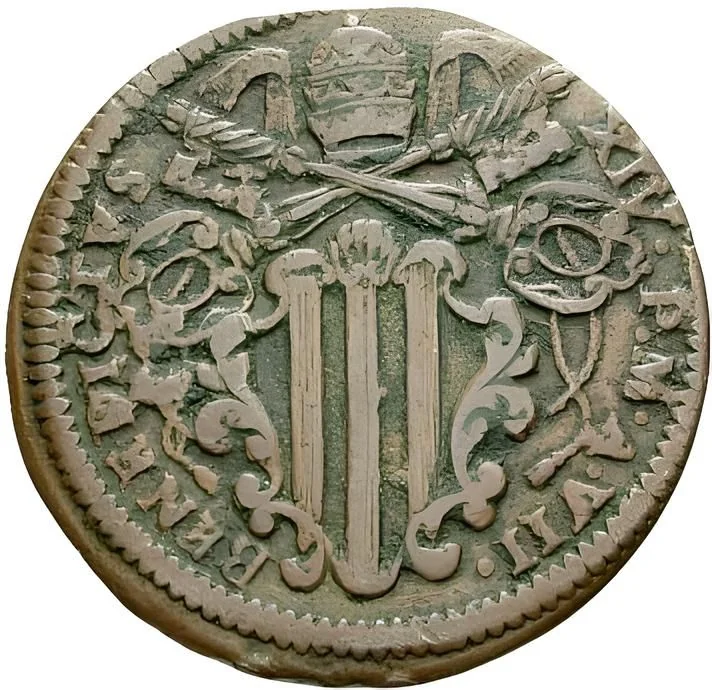
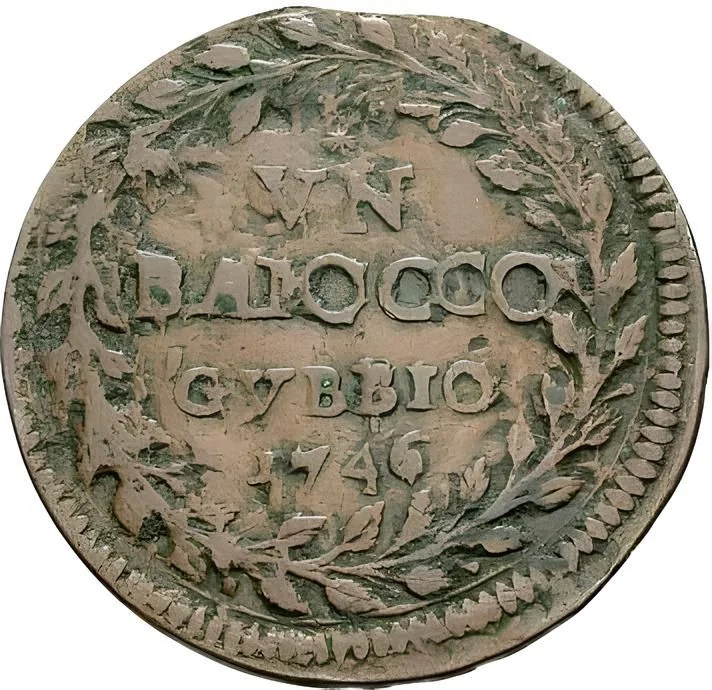
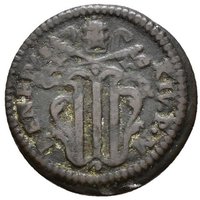
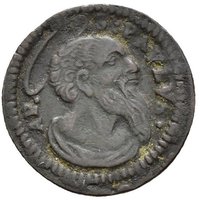
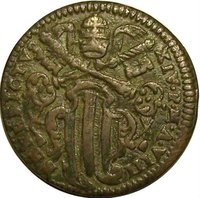
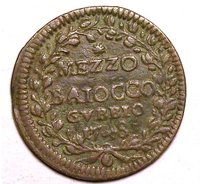
1 baiocco – Gubbio
Add to wishlist
Italy
Obverse
Reverse
Edge
Plain
Mints
| Name | Mark |
|---|---|
| Gubbio | — |
Mintings
| Year | Mint Mark | Mintage | Quality | Collection |
|---|---|---|---|---|
| 1740 | I | — | ||
| 1741 | I | — | ||
| 1741 | II | — | ||
| 1742 | III | — | ||
| 1743 | IV | — | ||
| 1744 | V | — | ||
| 1745 | — | — | ||
| 1745 | V | — | ||
| 1745 | VI | — | ||
| 1746 | — | — | ||
| 1747 | — | — | ||
| 1747 | VI | — | ||
| 1747 | VII | — | ||
| 1748 | — | — | ||
| 1749 | — | — | ||
| 1750 | X | — | ||
| 1751 | — | — | ||
| 1751 | X | — | ||
| 1752 | — | — | ||
| 1753 | X | — | ||
| 1753 | XI | — | ||
| 1753 | XIII | — | ||
| 1754 | — | — | ||
| 1754 | XIV | — | ||
| 1755 | — | — | ||
| 1756 | — | — | ||
| 1757 | — | — |
Historical background
In 1740, the Italian city-state of Gubbio, like much of the Papal States under Pope Clement XII, operated within a complex and often chaotic monetary system. The official currency was the Papal scudo, divided into 100 baiochi, each of which was further divided into 10 quattrini. However, the reality in marketplaces was a cacophony of competing coins. Alongside Papal issues, older regional coins from previous papal reigns, Spanish silver reales, and even gold zecchini from Venice and Genoa circulated freely, their value constantly negotiated based on weight, metal purity, and the reputation of the mint.
This proliferation created significant practical problems. Exchange rates between these various coins were unstable and often manipulated by money-changers (banchieri), leading to frequent disputes and hindering commerce. Furthermore, the Papal mint struggled with currency debasement—reducing the precious metal content in coins to fund state expenditures—which eroded public trust. For the citizens of Gubbio, this meant everyday transactions required careful scrutiny of coins and a working knowledge of a fluid and unreliable valuation system, making trade cumbersome and risky.
The situation was symptomatic of a broader pre-modern economic reality where monetary sovereignty was fragmented. While the Papal government in Rome issued decrees to standardize currency, its authority was difficult to enforce uniformly in a peripheral commune like Gubbio. Consequently, the local economy in 1740 functioned with a pragmatic, if inefficient, bimetallic system reliant on both official coinage and a shadow circulation of foreign and older coins, all amidst an undercurrent of inflation and monetary uncertainty.
This proliferation created significant practical problems. Exchange rates between these various coins were unstable and often manipulated by money-changers (banchieri), leading to frequent disputes and hindering commerce. Furthermore, the Papal mint struggled with currency debasement—reducing the precious metal content in coins to fund state expenditures—which eroded public trust. For the citizens of Gubbio, this meant everyday transactions required careful scrutiny of coins and a working knowledge of a fluid and unreliable valuation system, making trade cumbersome and risky.
The situation was symptomatic of a broader pre-modern economic reality where monetary sovereignty was fragmented. While the Papal government in Rome issued decrees to standardize currency, its authority was difficult to enforce uniformly in a peripheral commune like Gubbio. Consequently, the local economy in 1740 functioned with a pragmatic, if inefficient, bimetallic system reliant on both official coinage and a shadow circulation of foreign and older coins, all amidst an undercurrent of inflation and monetary uncertainty.
Series: 1740 Gubbio circulation coins

💎 Very Rare