

1 Groschen – Hungary
Hungary

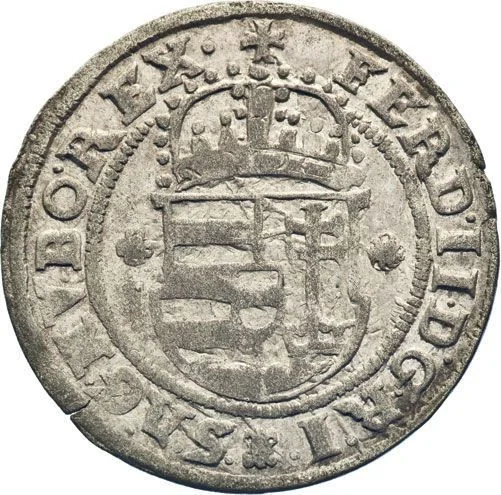
Obverse
Description:
Hungarian coat of arms with Austrian shield between rosettes; in inner circle.
Inscription:
FERD · II · D · G · R · I · S · A · G · HV · BO · REX
Script: Latin
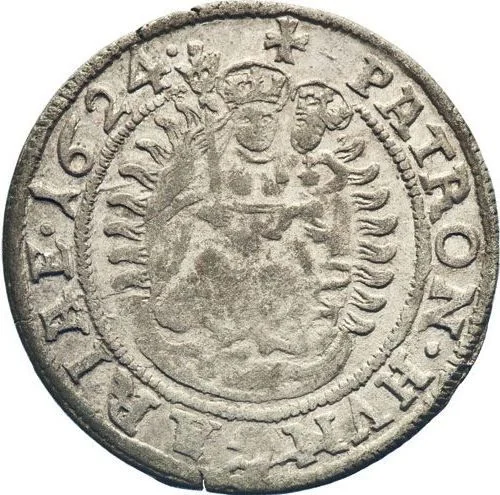
Reverse
Description:
Radiant Madonna, crowned and holding child and scepter, on a crescent moon.
Inscription:
PATRONA · HVNGARIAE· 1624 ·
Script: Latin
Edge
Plain
Legend:
Ж
Mintings
| Year | Mint Mark | Mintage | Quality | Collection |
|---|---|---|---|---|
| 1624 | Ж | — |
Historical background
In 1624, Hungary existed as a divided kingdom, a reality that directly shaped its complex currency situation. The central territories were under Habsburg rule, while the east was the independent Principality of Transylvania, with the Ottoman Empire occupying the central plains. This tripartite division meant no single, unified monetary system. The Habsburg-ruled Royal Hungary used coins minted by the Habsburg emperors, primarily large silver thalers (Tallér) and smaller denars. However, these official coins circulated alongside a flood of debased, lower-quality domestic coinage and a vast array of foreign currencies from trade and war, including Ottoman akçe and Polish coins, leading to chronic instability and confusion in everyday transactions.
The period was marked by severe currency debasement, a deliberate policy of the Viennese court to finance ongoing wars against the Ottomans and in the Thirty Years' War. By reducing the precious metal content in coins minted in mining towns like Körmöcbánya (today's Kremnica, Slovakia), the authorities could produce more coins from the same silver reserves, creating short-term war revenue but triggering rampant inflation. This "Kipper und Wipper" phenomenon, seen across Central Europe, led to a loss of public trust, as older, full-value coins were hoarded or melted down, leaving only the poorer currency in active circulation.
Consequently, the Hungarian economy in 1624 suffered from a dual crisis: a lack of uniform legal tender and the corrosive effects of inflation driven by state policy. Trade was hampered, and the population, particularly those on fixed incomes or paying traditional taxes, bore the brunt of the devaluation. This monetary chaos reflected the broader political fragmentation and the immense financial pressures of perpetual warfare, placing a heavy burden on the kingdom's economic and social stability.
The period was marked by severe currency debasement, a deliberate policy of the Viennese court to finance ongoing wars against the Ottomans and in the Thirty Years' War. By reducing the precious metal content in coins minted in mining towns like Körmöcbánya (today's Kremnica, Slovakia), the authorities could produce more coins from the same silver reserves, creating short-term war revenue but triggering rampant inflation. This "Kipper und Wipper" phenomenon, seen across Central Europe, led to a loss of public trust, as older, full-value coins were hoarded or melted down, leaving only the poorer currency in active circulation.
Consequently, the Hungarian economy in 1624 suffered from a dual crisis: a lack of uniform legal tender and the corrosive effects of inflation driven by state policy. Trade was hampered, and the population, particularly those on fixed incomes or paying traditional taxes, bore the brunt of the devaluation. This monetary chaos reflected the broader political fragmentation and the immense financial pressures of perpetual warfare, placing a heavy burden on the kingdom's economic and social stability.

✨ Legendary