

1 Denier – Hungary
Hungary
Context

Material
Diameter: 14 mm
Weight: 0.56 g
Shape: Irregular round
Alignment: Coin alignment
flip
References
KM: #Click to copy to clipboard88
Numista: #55970
Obverse
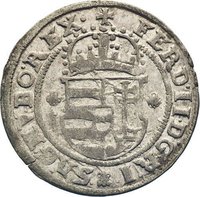
Description:
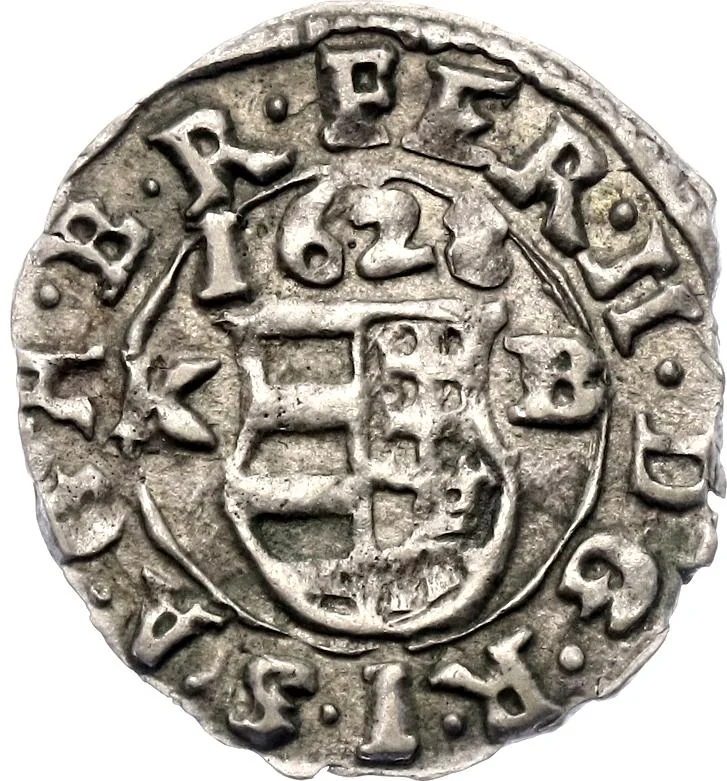
Curved Hungarian shield divides mintmark; mintyear above.
Inscription:
FER · II · D · G · R · I · S · A · G · H · B · R ·
1627
K B
1627
K B
Script: Latin
Reverse
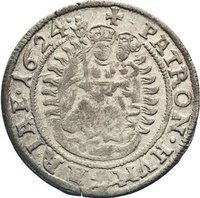
Description:
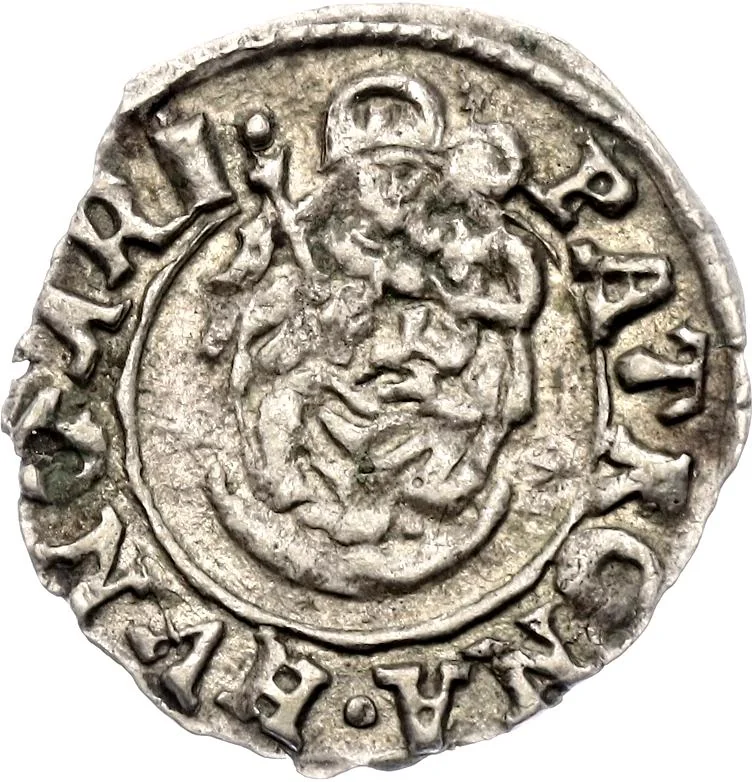
Crowned Madonna holding child and scepter, standing on a crescent moon; dated legend.
Inscription:
PATRONA · HVNGARI ·
Script: Latin
Edge
Plain
Mintings
| Year | Mint Mark | Mintage | Quality | Collection |
|---|---|---|---|---|
| 1625 | K-B | — | ||
| 1626 | K-B | — | ||
| 1627 | K-B | — | ||
| 1628 | K-B | — | ||
| 1629 | K-B | — | ||
| 1630 | K-B | — | ||
| 1631 | N-B | — | ||
| 1632 | N-B | — | ||
| 1633 | N-B | — | ||
| 1634 | N-B | — |
Historical background
In 1625, the Kingdom of Hungary was embroiled in the Long Turkish War (1593-1606) and its turbulent aftermath, a period defined by a tripartite division of its territory. The Habsburgs controlled Royal Hungary in the north and west, the Ottoman Empire held central and southern regions, and the Principality of Transylvania in the east often acted as a semi-independent power. This fragmentation directly crippled any unified monetary policy, creating a chaotic and multi-currency economic landscape. The once-prestigious Hungarian gold forint and silver denar had been in severe decline for decades, with their precious metal content repeatedly debased by the Habsburg monarchy in Vienna to finance its continuous warfare against the Ottomans and in the Thirty Years' War.
Consequently, the everyday currency situation was one of extreme complexity and instability. The debased domestic coins circulated alongside a flood of more reliable foreign currencies, particularly the Reichsthaler from the Holy Roman Empire and various large silver thalers from the Netherlands and the German states. In Ottoman-occupied areas, Turkish akçe and para were prevalent, while in Transylvania, local coinage held sway. This monetary mosaic led to widespread confusion, fluctuating exchange rates, and rampant speculation by money-changers. The chronic shortage of good, high-value coinage for large transactions contrasted with the abundance of low-quality, small-denomination coins that fueled inflation and eroded public trust.
The economic strain was exacerbated by the ongoing military frontier and the resulting disruption of trade and agriculture. Counterfeiting was rampant, further devaluing the currency. While the Habsburg authorities issued regulations to fix exchange rates and control the circulation of foreign coin, these measures were largely ineffective on the ground. Thus, in 1625, Hungary’s currency system was not a unified entity but a symptomatic reflection of its political division: unstable, internationally dependent, and a significant burden on its war-weary population and struggling economy.
Consequently, the everyday currency situation was one of extreme complexity and instability. The debased domestic coins circulated alongside a flood of more reliable foreign currencies, particularly the Reichsthaler from the Holy Roman Empire and various large silver thalers from the Netherlands and the German states. In Ottoman-occupied areas, Turkish akçe and para were prevalent, while in Transylvania, local coinage held sway. This monetary mosaic led to widespread confusion, fluctuating exchange rates, and rampant speculation by money-changers. The chronic shortage of good, high-value coinage for large transactions contrasted with the abundance of low-quality, small-denomination coins that fueled inflation and eroded public trust.
The economic strain was exacerbated by the ongoing military frontier and the resulting disruption of trade and agriculture. Counterfeiting was rampant, further devaluing the currency. While the Habsburg authorities issued regulations to fix exchange rates and control the circulation of foreign coin, these measures were largely ineffective on the ground. Thus, in 1625, Hungary’s currency system was not a unified entity but a symptomatic reflection of its political division: unstable, internationally dependent, and a significant burden on its war-weary population and struggling economy.

🌟 Limited