

½ Thaler – Hungary
Hungary

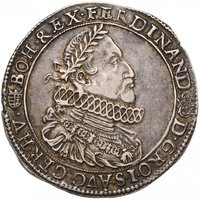
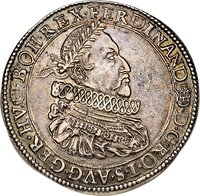
Obverse
Description:
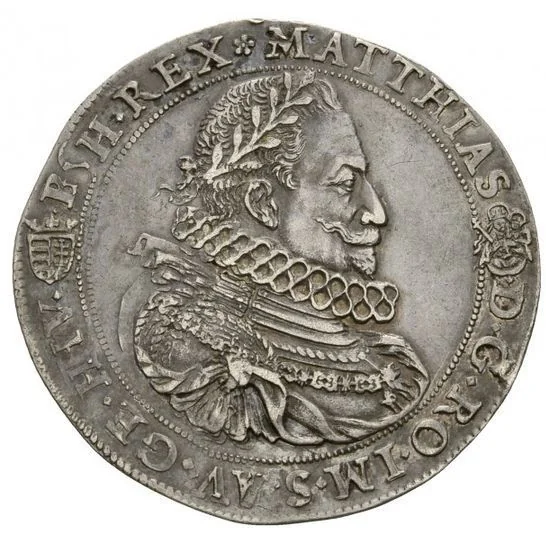
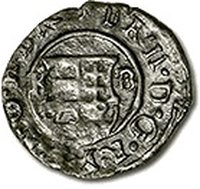
Laureate head of Matthias facing right, with Golden Fleece necklace. Crowned Hungarian shield behind, Madonna and child on crescent at right.
Inscription:
MATTHIAS + D + G + RO + IM + S + AV + GE + HV + + BO + REX *
Script: Latin
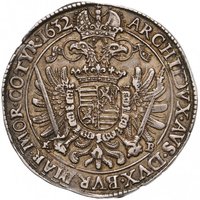
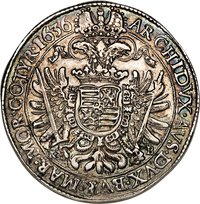
Reverse
Description:
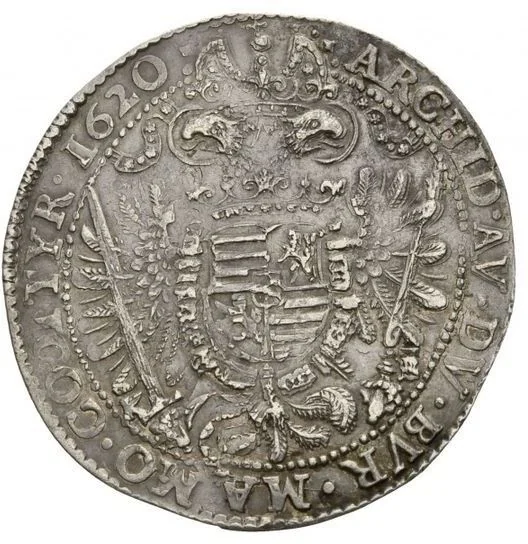
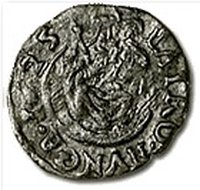
Imperial eagle with crown, sword, scepter, and orb. On its breast, a quartered shield of Árpád stripes and Bohemian lions, with an Austrian-Burgundian chest shield. Mintmarks flank the eagle.
Inscription:
ARCHID · AV · DV ·BVR MA · MOR · CO · TYR · 1615
K B
K B
Script: Latin
Edge
Plain
Mints
| Name | Mark |
|---|---|
| Kremnica | KB |
Mintings
| Year | Mint Mark | Mintage | Quality | Collection |
|---|---|---|---|---|
| 1620 | K-B | — | ||
| 1621 | K-B | — |
Historical background
In 1620, Hungary was a fractured kingdom divided into three parts: Royal Hungary under Habsburg rule, Ottoman-occupied central Hungary, and the semi-independent Principality of Transylvania. This political fragmentation led to a chaotic and multi-currency monetary landscape. The Habsburgs minted silver thalers and smaller denars in Royal Hungary, but their value was consistently undermined by chronic debasement, as the Vienna court often reduced the silver content to finance its wars against the Ottomans and Protestant estates. Simultaneously, Ottoman akçe and, more importantly, large quantities of high-quality Dutch lion thalers and Spanish pieces of eight circulated widely, becoming preferred stores of value due to their reliable silver content.
The monetary system was further strained by the circulation of underweight and counterfeit coins, a common problem in early modern Europe but exacerbated in Hungary by its position as a warzone. Furthermore, the prolific silver and gold mines of historical Upper Hungary (modern Slovakia) were a critical source of wealth for the Habsburg monarchy, but much of this bullion was exported to central mints in Vienna or used to pay for military expenses, rather than stabilizing the local currency. This created a persistent shortage of sound small change for everyday transactions, hampering trade and often forcing markets to rely on barter or the physical cutting of coins.
This unstable currency situation was not merely an economic issue but a deeply political one. The constant debasement of coinage by the Habsburgs was a point of major contention with the Hungarian estates, who saw it as a breach of their liberties and a hidden tax that impoverished the population. The economic discontent fed into the broader religious and political conflicts of the period, most notably the ongoing struggle between the Catholic Habsburgs and the Protestant estates, which would soon erupt into open warfare within the Thirty Years' War. Thus, the state of Hungary's currency in 1620 reflected its profound disunity and served as both a symptom and a cause of its ongoing crises.
The monetary system was further strained by the circulation of underweight and counterfeit coins, a common problem in early modern Europe but exacerbated in Hungary by its position as a warzone. Furthermore, the prolific silver and gold mines of historical Upper Hungary (modern Slovakia) were a critical source of wealth for the Habsburg monarchy, but much of this bullion was exported to central mints in Vienna or used to pay for military expenses, rather than stabilizing the local currency. This created a persistent shortage of sound small change for everyday transactions, hampering trade and often forcing markets to rely on barter or the physical cutting of coins.
This unstable currency situation was not merely an economic issue but a deeply political one. The constant debasement of coinage by the Habsburgs was a point of major contention with the Hungarian estates, who saw it as a breach of their liberties and a hidden tax that impoverished the population. The economic discontent fed into the broader religious and political conflicts of the period, most notably the ongoing struggle between the Catholic Habsburgs and the Protestant estates, which would soon erupt into open warfare within the Thirty Years' War. Thus, the state of Hungary's currency in 1620 reflected its profound disunity and served as both a symptom and a cause of its ongoing crises.
Series: 1620 Hungary circulation coins

✨ Legendary