Logo Title
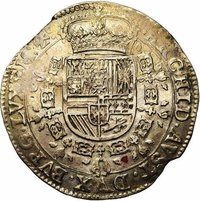
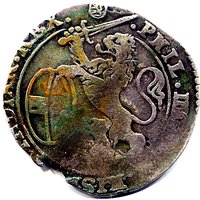
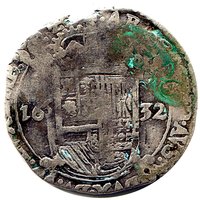
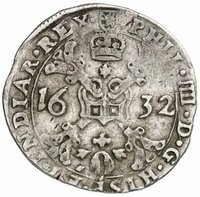
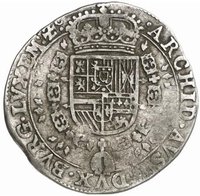
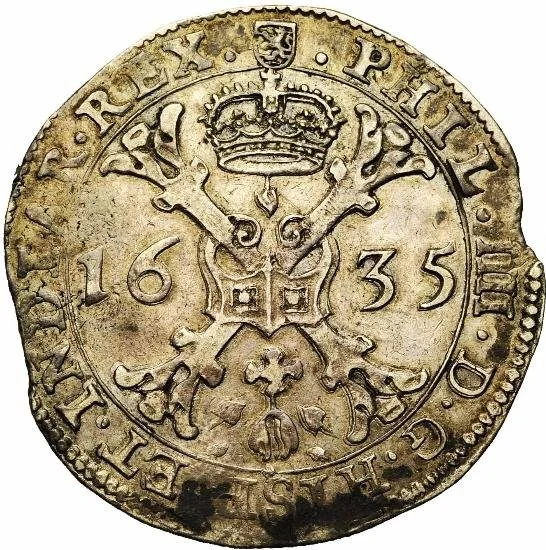
obverse
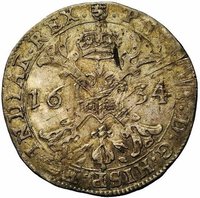
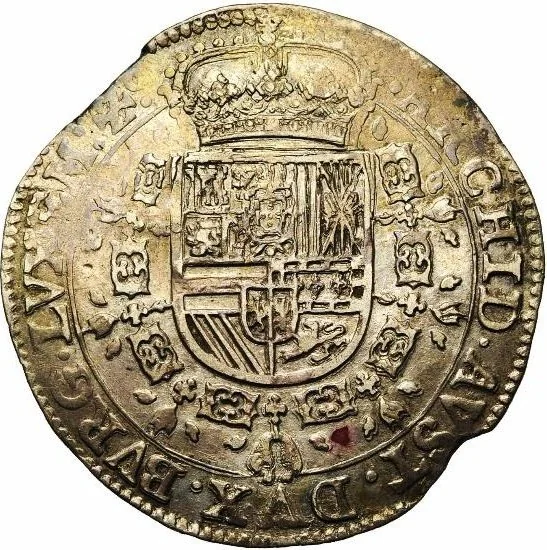
reverse
Jean Elsen & ses Fils s.a.
Context
Years: 1632–1643
Country: Luxembourg Country flag
Ruler: Philip IV
Currency:
(1353—1713)
Demonetized: Yes
Material
Diameter: 42 mm
Weight: 28.1 g
Silver weight: 24.53 g
Composition: 87.3% Silver
Magnetic: No
Alignment: Coin alignment
Obverse
OBVERSE ↑
flip
Reverse
REVERSE ↓
References
KM: #Click to copy to clipboard17
Numista: #106477
Value
Bullion value: $70.17

Obverse

Description:
Burgundian cross with central firesteel and Golden Fleece jewel, flanking the date.
Inscription:
PHIL.IIII.D.G.HISP.ET.INDIAR.REX.
Script: Latin

Reverse

Description:
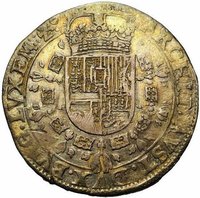
Coat of arms crowned and encircled by the Order of the Golden Fleece's collar.
Inscription:
ARCHID.AVST.DVX.BVRG.LUXEM.Zc
Script: Latin

Edge

Mintings

YearMint MarkMintageQualityCollection
1632écusson
1633
1634
1635
1636
1637
1638
1639
1643

Historical background

In 1632, the Duchy of Luxembourg was a strategic possession of the Spanish Habsburgs, deeply entangled in the prolonged and devastating Thirty Years' War. Its currency situation was consequently chaotic and fragmented, reflecting both its political allegiance and its position as a war-torn crossroads. The official currency was the Spanish system, based on the real and the escudo, with accounts often kept in the livre de gros (pound groat), a legacy from earlier Burgundian rule. However, the constant financial demands of garrisoning and supplying the formidable fortress of Luxembourg City, a key Spanish stronghold, led to severe monetary pressures, including the debasement of coinage to fund military expenses.

The reality in daily commerce was a complex bazaar of circulating coins. Alongside often-depreciated Spanish issues, a multitude of foreign currencies passed through merchants' hands and soldiers' pay. German thalers from neighboring principalities, Dutch leeuwendaalders, French livres, and even older Burgundian patards all circulated concurrently. This proliferation led to significant confusion, requiring constant exchange calculations and reliance on published courants de monnoye (exchange rate bulletins) to determine the value of hundreds of different coin types based on their precious metal content, which was often clipped or worn.

This monetary disorder severely hampered trade and economic stability. Counterfeiting was rampant, and the uncertainty of value created friction in markets already strained by wartime requisitions and the passage of marauding armies. For the common people of Luxembourg, the currency situation in 1632 was a daily hardship, symbolizing the broader instability of the era, where the value of money was as uncertain as their security, dictated more by the needs of distant kings and the fortunes of war than by any stable local economy.

Series: 1632 Duchy of Luxembourg circulation coins

1 Escalin obverse
1 Escalin reverse
1 Escalin
1632-1644
¼ Patagon obverse
¼ Patagon reverse
¼ Patagon
1632
½ Patagon obverse
½ Patagon reverse
½ Patagon
1632-1639
1 Patagon obverse
1 Patagon reverse
1 Patagon
1632-1643
Legendary