


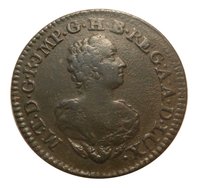
Obverse
Description:
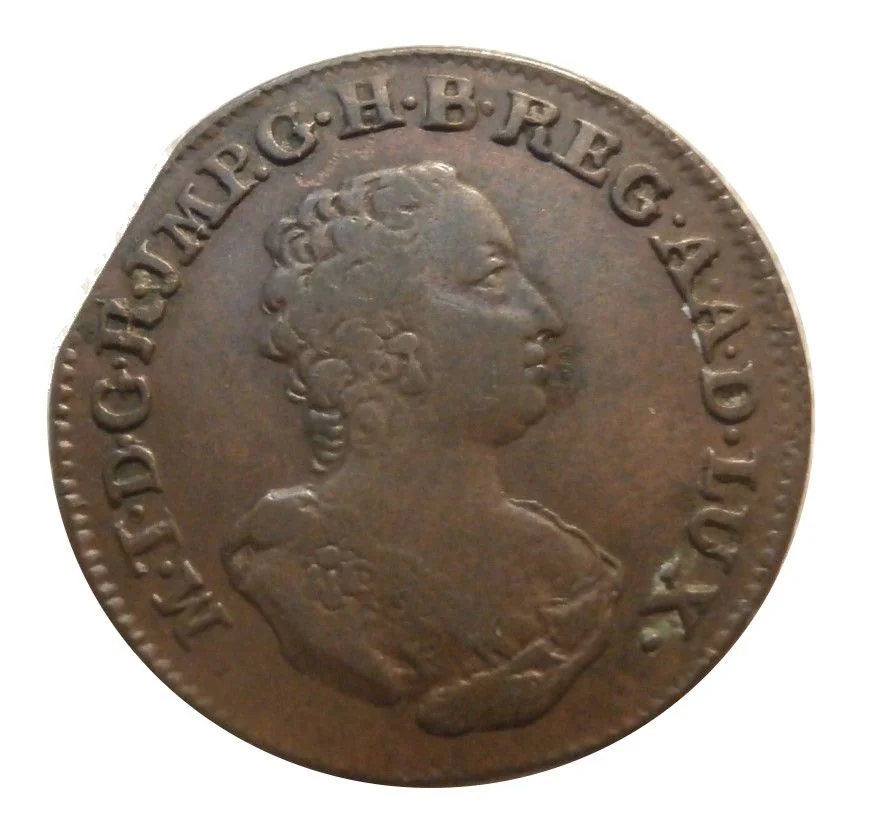
Right-facing bust of Maria Theresa, Austrian Empress and Luxembourg Duchess (1740–1780), encircled by the legend and an outer ring.
Inscription:
M•T•D•G•R•JMP•G•H•B•REG•A•A•D•LUX•
Script: Latin
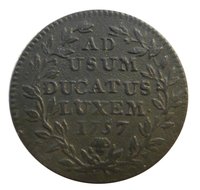
Reverse
Description:
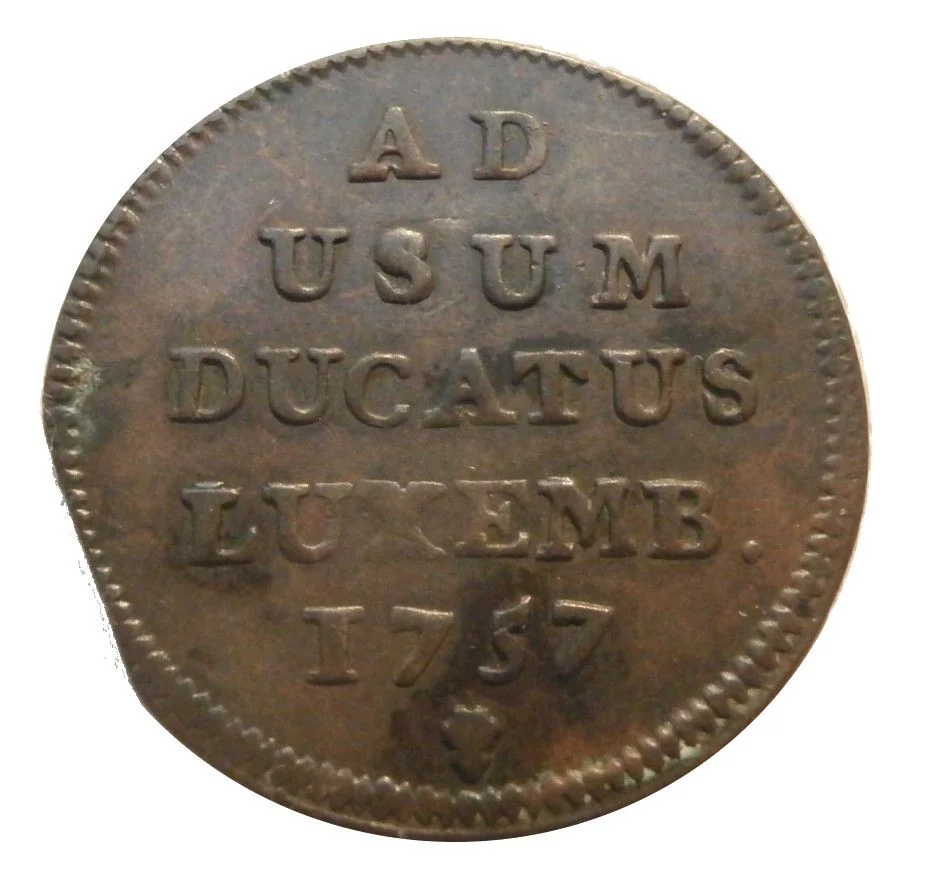
Legend and mint year.
Five lines.
Angel head below.
External girdle.
Five lines.
Angel head below.
External girdle.
Inscription:
AD ꟾ USUM ꟾ DUCATUS ꟾ LUXEMB. ꟾ 1757
Script: Latin
Edge
Plain
Mints
| Name | Mark |
|---|---|
| Royal Mint of Belgium | — |
Mintings
| Year | Mint Mark | Mintage | Quality | Collection |
|---|---|---|---|---|
| 1757 | — | — |
Historical background
In 1757, the Duchy of Luxembourg, a possession of the Austrian Habsburgs, operated within a complex and often chaotic monetary landscape typical of the Holy Roman Empire. There was no single, unified "Luxembourgish" currency. Instead, the territory's economy relied on a concurrent circulation of multiple coinage systems. Officially, accounts were kept in livres, sous, and deniers (pounds, shillings, and pence), following the Habsburg monetary standard. However, a plethora of physical coins from neighboring states—especially French louis d'or, Dutch guilders, and various German talers and kreuzers—circulated widely, their values fluctuating based on metallic content and market confidence.
This period fell during the global conflict of the Seven Years' War (1756-1763), which placed severe strain on Luxembourg's monetary stability. The Habsburg government, requiring vast sums to finance the war, often resorted to debasement—reducing the precious metal content in newly minted coins while maintaining their face value. This practice, alongside the influx of foreign coins from moving armies and disrupted trade, led to significant inflation and a loss of public trust in the currency. Merchants and citizens faced daily uncertainty, needing to constantly assess and haggle over the real value of disparate coins.
Consequently, daily commerce in Luxembourg in 1757 was characterized by practical complexity. Exchange rates between the various silver and gold coins were posted and updated regularly, much like foreign exchange tables today. The situation disadvantaged common people and hampered efficient trade, as the intrinsic value of a coin often mattered more than its official denomination. This fragmented and unstable system highlighted the lack of centralized monetary sovereignty and was a defining economic challenge for the Duchy until the sweeping reforms introduced across the Habsburg lands by Empress Maria Theresa in the later 1760s.
This period fell during the global conflict of the Seven Years' War (1756-1763), which placed severe strain on Luxembourg's monetary stability. The Habsburg government, requiring vast sums to finance the war, often resorted to debasement—reducing the precious metal content in newly minted coins while maintaining their face value. This practice, alongside the influx of foreign coins from moving armies and disrupted trade, led to significant inflation and a loss of public trust in the currency. Merchants and citizens faced daily uncertainty, needing to constantly assess and haggle over the real value of disparate coins.
Consequently, daily commerce in Luxembourg in 1757 was characterized by practical complexity. Exchange rates between the various silver and gold coins were posted and updated regularly, much like foreign exchange tables today. The situation disadvantaged common people and hampered efficient trade, as the intrinsic value of a coin often mattered more than its official denomination. This fragmented and unstable system highlighted the lack of centralized monetary sovereignty and was a defining economic challenge for the Duchy until the sweeping reforms introduced across the Habsburg lands by Empress Maria Theresa in the later 1760s.
⭐ Rare