

1 Groschen – Hungary
Hungary

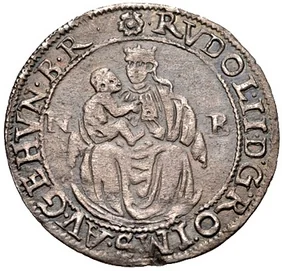
Obverse
Description:
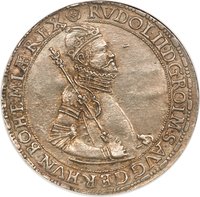
Crowned Madonna holding child on right arm; mintmark between them, rosette above begins legend.
Inscription:
RVDOL · II · D · G · RO · IM · S · AV · GE · HVN · B · R ·
N B
N B
Script: Latin
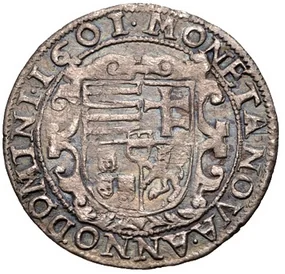
Reverse
Description:
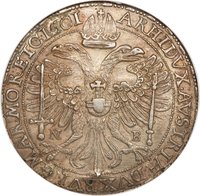
Hungarian fourfold arms: Árpád stripes, double cross, Dalmatian leopard heads, Bohemian lion. Central shield: Austrian bonds. Cartouche within pearl circle.
Inscription:
MONETA·NOVA·ANNO·DOMINI·1601·
Script: Latin
Edge
Plain
Mints
| Name | Mark |
|---|---|
| Baia Mare | NB |
Mintings
| Year | Mint Mark | Mintage | Quality | Collection |
|---|---|---|---|---|
| 1600 | N-B | — | ||
| 1601 | N-B | — |
Historical background
In 1600, the Kingdom of Hungary was in a state of profound monetary instability, caught between the competing fiscal systems of two great powers. The Habsburg-ruled Royal Hungary in the west and north officially used the silver Thaler (or Tallér), a stable, high-quality coin aligned with the Holy Roman Empire's standards. Meanwhile, the Ottoman-occupied central territories and the semi-independent Principality of Transylvania in the east operated on a bimetallic system of Ottoman gold Sultani and silver Akçe, which were steadily debased. This created a chaotic environment where multiple currencies of varying purity circulated without a unified standard, leading to confusion and facilitating fraud.
The core of the crisis was rampant debasement, particularly of the lower-denomination silver coins used in everyday life. To finance continuous warfare against the Ottomans and internal rebellions, the Habsburg authorities, notably from the 1590s, repeatedly reduced the silver content of the smaller denars and polturas minted in Nagybánya (today Baia Mare, Romania). This "Kipper und Wipper" period saw good, full-weight coins hoarded or melted down, while floods of poor-quality coins drove up prices and eroded public trust. The situation was exacerbated by a massive influx of even more debased Polish and Turkish coins from the east.
Consequently, Hungary suffered from severe price inflation, a disconnect between official and market exchange rates, and a crippling shortage of reliable small change for daily commerce. This monetary fragmentation and decay were symptomatic of the kingdom's political division following the Battle of Mohács in 1526. The currency chaos stifled economic growth, burdened the peasantry, and created a lucrative yet destabilizing opportunity for money-changers and speculators, leaving the Hungarian economy vulnerable and unstable as it entered the turbulent seventeenth century.
The core of the crisis was rampant debasement, particularly of the lower-denomination silver coins used in everyday life. To finance continuous warfare against the Ottomans and internal rebellions, the Habsburg authorities, notably from the 1590s, repeatedly reduced the silver content of the smaller denars and polturas minted in Nagybánya (today Baia Mare, Romania). This "Kipper und Wipper" period saw good, full-weight coins hoarded or melted down, while floods of poor-quality coins drove up prices and eroded public trust. The situation was exacerbated by a massive influx of even more debased Polish and Turkish coins from the east.
Consequently, Hungary suffered from severe price inflation, a disconnect between official and market exchange rates, and a crippling shortage of reliable small change for daily commerce. This monetary fragmentation and decay were symptomatic of the kingdom's political division following the Battle of Mohács in 1526. The currency chaos stifled economic growth, burdened the peasantry, and created a lucrative yet destabilizing opportunity for money-changers and speculators, leaving the Hungarian economy vulnerable and unstable as it entered the turbulent seventeenth century.
✨ Legendary