

1 Denier – Hungary
Hungary

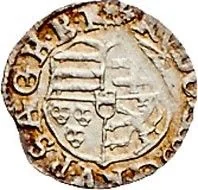
Obverse
Description:
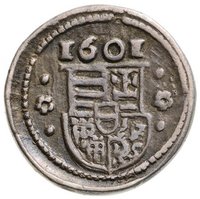
Curved, pointed top. Fourfold Hungarian arms: Árpád stripes, double cross, Dalmatian leopard heads, Bohemian lion. Central shield: Austrian bonds. Mint year on reverse.
Inscription:
RVDOL · II · D · G · R · IMP · S · A · G · H · B · R ·
Script: Latin
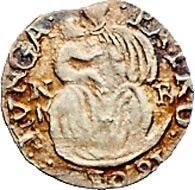
Reverse
Description:
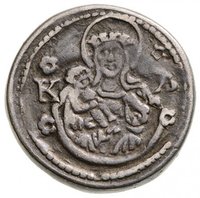
Madonna and Child, mintmark NB (Nagybánya).
Inscription:
PATRONA · HVNGARI · 1601 ·
N B
N B
Script: Latin
Edge
Plain
Mints
| Name | Mark |
|---|---|
| Baia Mare | NB |
Mintings
| Year | Mint Mark | Mintage | Quality | Collection |
|---|---|---|---|---|
| 1581 | N | — | ||
| 1601 | N | — |
Historical background
In 1581, Hungary existed as a fractured realm, divided into three parts: the Ottoman-occupied center, the semi-independent Principality of Transylvania in the east, and the Royal Hungary of the Habsburgs in the north and west. This political fragmentation directly caused a severe and chaotic currency situation. The Habsburg-ruled kingdom, where the royal mint operated, faced relentless financial pressure from the ongoing wars against the Ottoman Empire, leading to chronic debasement of the coinage. The silver content of coins was repeatedly reduced to fund military expenses, causing inflation and eroding public trust in the official currency.
This instability was exacerbated by a flood of foreign coins circulating within the kingdom's borders. High-quality silver thalers from the German states and the Dutch Republic flowed in, often used for large transactions and hoarded as a secure store of value, while a multitude of lower-quality Turkish and Transylvanian coins also circulated, especially in border regions. The Habsburg authorities struggled to control this monetary anarchy, as the poor-quality domestic coins were driven out of circulation by Gresham's Law ("bad money drives out good"), further weakening the local economy.
Consequently, the monetary system of Royal Hungary in 1581 was characterized by a confusing multiplicity of coins of varying origins and intrinsic values, widespread counterfeiting, and accelerating inflation. This financial disorder mirrored the kingdom's precarious geopolitical position, where the constant strain of war finance undermined economic stability, burdened the population, and complicated both everyday trade and the crown's fiscal administration. The currency crisis was a direct symptom of the kingdom's struggle for survival on the frontier of Christendom.
This instability was exacerbated by a flood of foreign coins circulating within the kingdom's borders. High-quality silver thalers from the German states and the Dutch Republic flowed in, often used for large transactions and hoarded as a secure store of value, while a multitude of lower-quality Turkish and Transylvanian coins also circulated, especially in border regions. The Habsburg authorities struggled to control this monetary anarchy, as the poor-quality domestic coins were driven out of circulation by Gresham's Law ("bad money drives out good"), further weakening the local economy.
Consequently, the monetary system of Royal Hungary in 1581 was characterized by a confusing multiplicity of coins of varying origins and intrinsic values, widespread counterfeiting, and accelerating inflation. This financial disorder mirrored the kingdom's precarious geopolitical position, where the constant strain of war finance undermined economic stability, burdened the population, and complicated both everyday trade and the crown's fiscal administration. The currency crisis was a direct symptom of the kingdom's struggle for survival on the frontier of Christendom.
✨ Legendary