

3 Florins – Hungary
Hungary

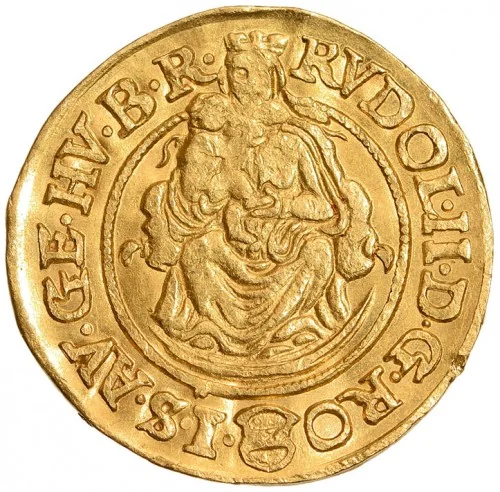
Obverse
Description:
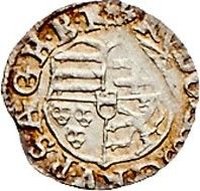
Crowned Madonna on crescent, holding child; Austrian shield below; within pearl circle.
Inscription:
RVDOL · II · D · G · RO I · S · AV · GE · HV · B · R ·
Script: Latin
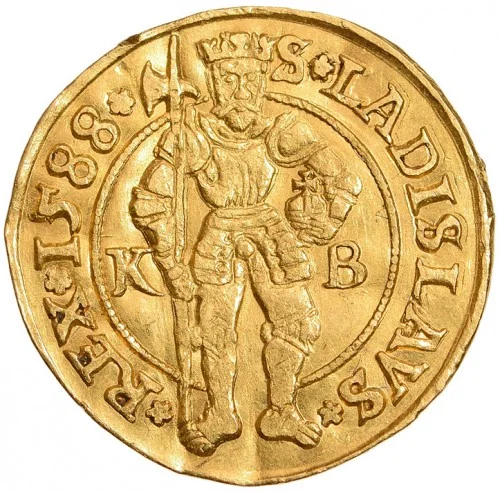
Reverse
Description:
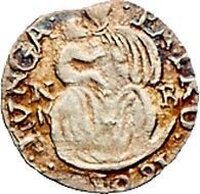
Crowned king holding a scepter and orb, breaking through a circular line.
Inscription:
S · LADISLAVS· · REX · 1580 ·
K B
K B
Script: Latin
Edge
Plain
Mints
| Name | Mark |
|---|---|
| Kremnica | KB |
Mintings
| Year | Mint Mark | Mintage | Quality | Collection |
|---|---|---|---|---|
| 1580 | K | — | ||
| 1601 | K | — |
Historical background
In 1580, the Kingdom of Hungary was in a state of profound monetary instability, a direct consequence of the political division following the Ottoman victory at Mohács in 1526. The realm was split into three parts: Royal Hungary under Habsburg rule in the north and west, the Ottoman-occupied central plains, and the semi-independent Principality of Transylvania in the east. This fragmentation led to a chaotic circulation of multiple coinages, each region operating with different monetary systems and standards. The Habsburgs minted thalers and denars in places like Kremnica, but to fund continuous warfare against the Ottomans, they heavily debased the silver coinage, flooding Royal Hungary with low-quality, "black money" that drove good money out of circulation.
The situation was exacerbated by the widespread influx of foreign coins, particularly high-quality German and Dutch thalers, which were hoarded for their reliable silver content, and Turkish akçe and altın coins in the occupied territories. This created a multi-currency environment where everyday transactions were fraught with confusion over exchange rates and metal purity. The Habsburg authorities attempted currency reforms, but these were largely ineffective stopgap measures. Debasement continued as the easiest way to finance the border fortress system (Militärgrenze), eroding public trust and causing severe price inflation, especially for basic goods.
Thus, the currency situation in 1580 was one of debilitating complexity and decay. It reflected the kingdom's fractured sovereignty and the immense fiscal strain of its permanent military frontier. The monetary chaos stifled commerce, penalized the peasantry and soldiers paid in weak coin, and created an economy where barter often prevailed. This instability was a chronic symptom of Hungary’s geopolitical plight, hindering economic recovery and integration for over a century.
The situation was exacerbated by the widespread influx of foreign coins, particularly high-quality German and Dutch thalers, which were hoarded for their reliable silver content, and Turkish akçe and altın coins in the occupied territories. This created a multi-currency environment where everyday transactions were fraught with confusion over exchange rates and metal purity. The Habsburg authorities attempted currency reforms, but these were largely ineffective stopgap measures. Debasement continued as the easiest way to finance the border fortress system (Militärgrenze), eroding public trust and causing severe price inflation, especially for basic goods.
Thus, the currency situation in 1580 was one of debilitating complexity and decay. It reflected the kingdom's fractured sovereignty and the immense fiscal strain of its permanent military frontier. The monetary chaos stifled commerce, penalized the peasantry and soldiers paid in weak coin, and created an economy where barter often prevailed. This instability was a chronic symptom of Hungary’s geopolitical plight, hindering economic recovery and integration for over a century.
✨ Legendary