

1 Obol – Hungary
Hungary

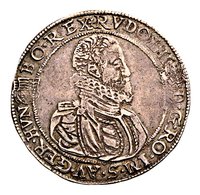
Obverse
Description:
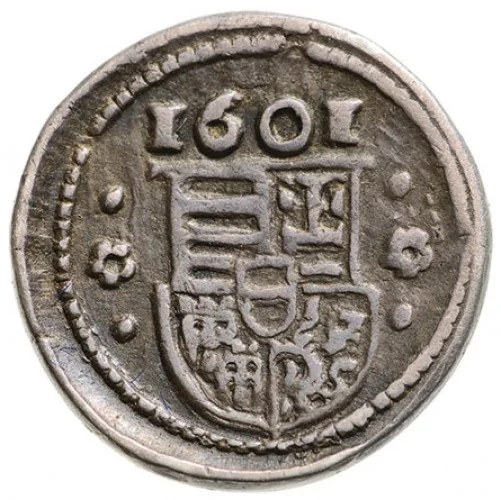
Hungarian coat of arms with Árpád stripes, double cross, Dalmatian leopard heads, and Bohemian lion; central shield with Austrian bonds. Mint year above, two side rosettes between dots.
Inscription:
1601
Script: Latin
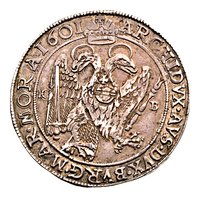
Reverse
Description:
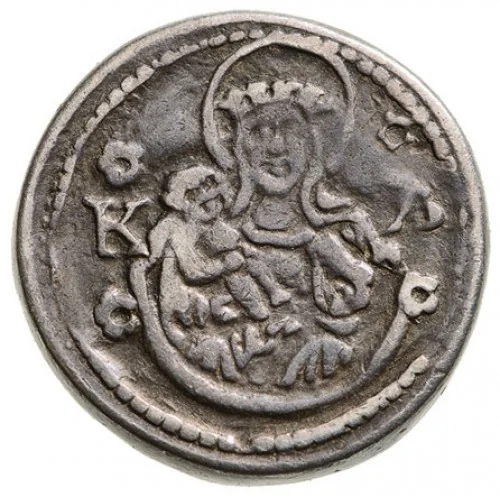
Madonna crowned on crescent, holding child, with K-B mintmark.
Inscription:
K B
Script: Latin
Edge
Plain
Mints
| Name | Mark |
|---|---|
| Kremnica | KB |
Mintings
| Year | Mint Mark | Mintage | Quality | Collection |
|---|---|---|---|---|
| 1583 | K-B | — | ||
| 1586 | K-B | — | ||
| 1601 | K-B | — |
Historical background
In 1583, the Kingdom of Hungary was grappling with a severe and protracted currency crisis, a direct consequence of the Ottoman conquest which had split the realm into three parts: the Ottoman-occupied centre, the Principality of Transylvania in the east, and the Habsburg-ruled "Royal Hungary" in the north and west. This fragmentation destroyed the unified economic and monetary system of the medieval kingdom. The Habsburgs, who ruled the remaining Royal Hungary from Vienna, were primarily focused on financing their continuous wars against the Ottomans and in Europe. To raise funds quickly, they dramatically increased the production of silver coinage, particularly the thaler and its fractional coins, at mints like Nagybánya (now Baia Mare, Romania), but systematically debased the currency by reducing its precious metal content.
The result was a chaotic monetary landscape where coins of vastly different intrinsic values circulated simultaneously. High-quality older Hungarian silver coins, new but debased Habsburg issues, Ottoman akçes, and various European thalers all competed in the marketplace. This led to Gresham's Law in action, where "bad money drives out good"—people hoarded the older, purer coins and used the debased ones for trade, further eroding trust in the currency. Prices soared as the value of the circulating coinage fell, creating significant hardship for the population, especially those on fixed incomes like soldiers and landowners receiving traditional feudal dues.
This monetary instability exacerbated the broader economic decline and social unrest within war-ravaged Royal Hungary. It undermined both local commerce and the kingdom's tax base, creating a vicious cycle where the Habsburg state, desperate for revenue to maintain its military frontier (Militärgrenze) against the Ottomans, resorted to further debasement. Thus, in 1583, Hungary's currency was not merely a financial issue but a stark symptom of the kingdom's political fragmentation and the immense strain of perpetual warfare on its economy and society.
The result was a chaotic monetary landscape where coins of vastly different intrinsic values circulated simultaneously. High-quality older Hungarian silver coins, new but debased Habsburg issues, Ottoman akçes, and various European thalers all competed in the marketplace. This led to Gresham's Law in action, where "bad money drives out good"—people hoarded the older, purer coins and used the debased ones for trade, further eroding trust in the currency. Prices soared as the value of the circulating coinage fell, creating significant hardship for the population, especially those on fixed incomes like soldiers and landowners receiving traditional feudal dues.
This monetary instability exacerbated the broader economic decline and social unrest within war-ravaged Royal Hungary. It undermined both local commerce and the kingdom's tax base, creating a vicious cycle where the Habsburg state, desperate for revenue to maintain its military frontier (Militärgrenze) against the Ottomans, resorted to further debasement. Thus, in 1583, Hungary's currency was not merely a financial issue but a stark symptom of the kingdom's political fragmentation and the immense strain of perpetual warfare on its economy and society.
✨ Legendary