

3 kreuzer – Salm-Dhaun, Wildgraviate and Rhingraviate of
Add to wishlist
Germany
Context
References
KM: #
Numista: #166459
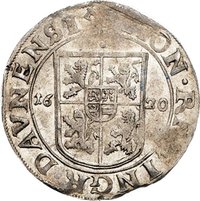
Obverse
Description:
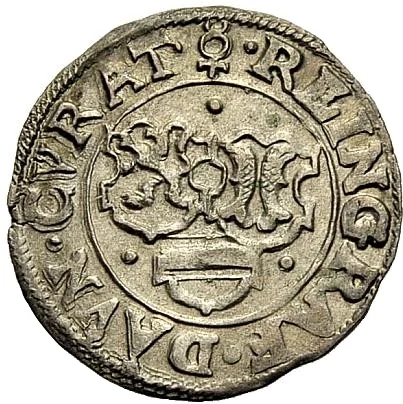
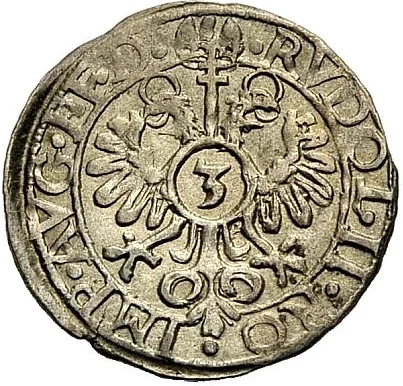
Three small shields, crown above. Reverse: Crowned imperial eagle with '3' on breast.
Inscription:
REINGRAF.DAVN.CVRAT(EL).
Script: Latin
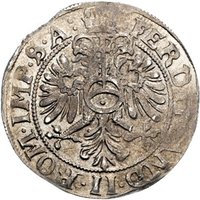
Reverse
Description:
Imperial eagle with crown, breast shield displaying "3," encircled by titles of Rudolf II.
Script: Latin
Edge
Mintings
| Year | Mint Mark | Mintage | Quality | Collection |
|---|---|---|---|---|
| 1608 | — | — |
Historical background
In 1608, the currency situation within the combined territories of the Wildgraviate and Rhingraviate of Salm-Dhaun was one of profound complexity and instability, typical of the Holy Roman Empire's fragmented monetary landscape. The region lacked a unified, sovereign coinage, meaning that a multitude of coins from various issuing authorities circulated simultaneously. These included not only coins minted by the Counts of Salm-Dhaun themselves but also those from neighbouring principalities, imperial cities, and even older, debased coins from previous decades. This created a chaotic marketplace where merchants and peasants alike had to constantly assess the metallic content and origin of each coin.
The core of the problem was competitive debasement. Facing constant financial pressures from maintaining their courts and jurisdictions, the counts, like many minor rulers, were tempted to reduce the precious metal content in their own minted coins while officially maintaining their face value. This practice, however, eroded public trust and led to Gresham's Law in action: "bad" (debased) coins drove "good" (full-weight) coins out of circulation, as people hoarded the latter or melted them down. Consequently, everyday transactions were conducted in increasingly inferior coinage, harming wage earners and causing price inflation, while long-distance trade required cumbersome calculations and exchanges.
Attempts at regulation existed, primarily through imperial ordinances like the Reichsmünzordnung (Imperial Coinage Ordinance), which aimed to standardize the Reichsthaler. However, enforcement in a patchwork entity like the Empire was weak, and local rulers often ignored these standards. Therefore, in 1608, the monetary reality in Salm-Dhaun was defined by this tension between imperial decrees and local fiscal necessity, resulting in a unreliable currency system that stifled economic confidence and created significant hardship for its population on the eve of the turmoil that would soon engulf the region in the Thirty Years' War.
The core of the problem was competitive debasement. Facing constant financial pressures from maintaining their courts and jurisdictions, the counts, like many minor rulers, were tempted to reduce the precious metal content in their own minted coins while officially maintaining their face value. This practice, however, eroded public trust and led to Gresham's Law in action: "bad" (debased) coins drove "good" (full-weight) coins out of circulation, as people hoarded the latter or melted them down. Consequently, everyday transactions were conducted in increasingly inferior coinage, harming wage earners and causing price inflation, while long-distance trade required cumbersome calculations and exchanges.
Attempts at regulation existed, primarily through imperial ordinances like the Reichsmünzordnung (Imperial Coinage Ordinance), which aimed to standardize the Reichsthaler. However, enforcement in a patchwork entity like the Empire was weak, and local rulers often ignored these standards. Therefore, in 1608, the monetary reality in Salm-Dhaun was defined by this tension between imperial decrees and local fiscal necessity, resulting in a unreliable currency system that stifled economic confidence and created significant hardship for its population on the eve of the turmoil that would soon engulf the region in the Thirty Years' War.
✨ Legendary