

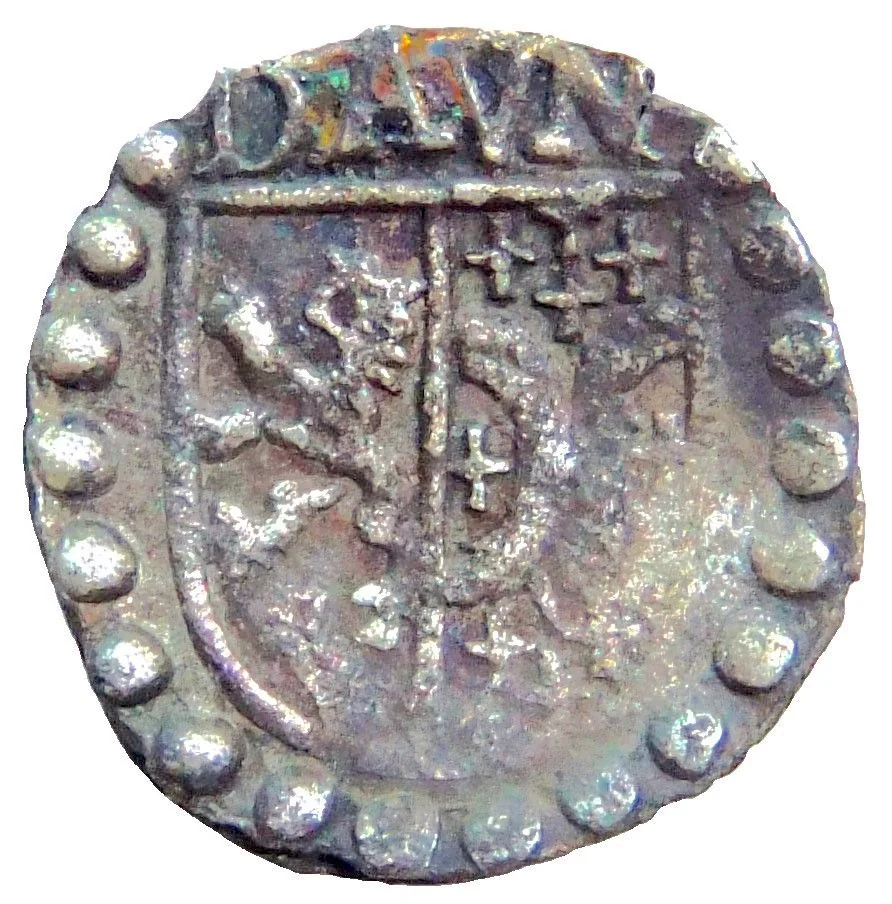
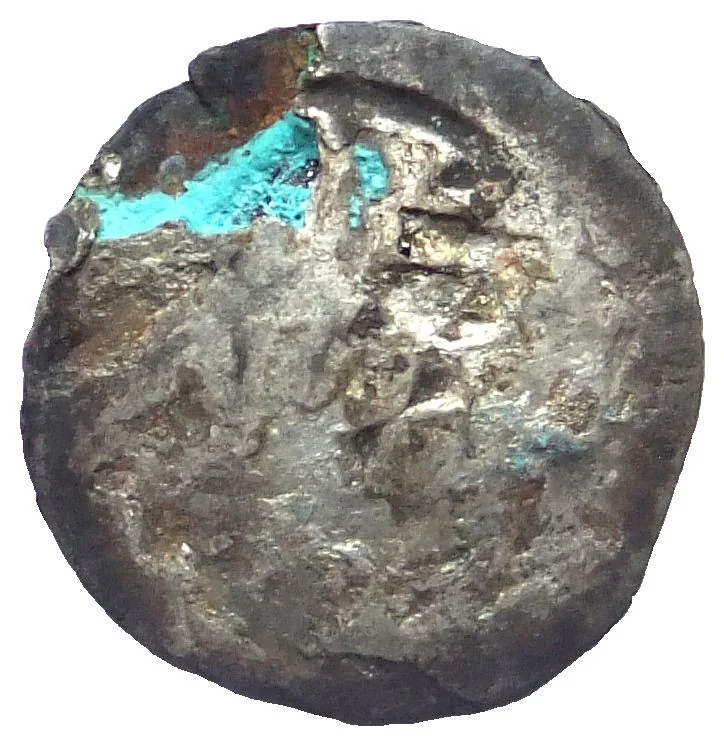
1 pfennig – Salm-Dhaun, Wildgraviate and Rhingraviate of
Add to wishlist
Germany
Context
Material
Diameter: 13 mm
Weight: 0.25 g
Silver Weight:: 0.25 g
Shape: Irregular round
Composition: Silver
Magnetic: No
References
KM: #
Numista: #467151
Value
Bullion value: $0.64
Mintings
| Year | Mint Mark | Mintage | Quality | Collection |
|---|---|---|---|---|
| — | — | — |
Historical background
In 1607, the currency situation within the combined territories of the Wild- and Rhingraviate of Salm-Dhaun was one of profound complexity and debasement, typical of the fragmented Holy Roman Empire during the Kipper- und Wipperzeit (the "Clipping and Swinging" period). This was an era of rampant monetary manipulation, where numerous small states, including the Salm-Dhaun counts, sought to profit by reducing the precious metal content of their coinage while nominally maintaining its face value. The result was a flood of unstable, low-quality coins circulating alongside older, purer issues, causing severe inflation and a crisis of trust in the monetary system.
The counts of Salm-Dhaun, like their neighbours, operated their own mints (notably at Kirn and Dhaun), using their Münzregal (sovereign minting right) not for economic stability but as a source of seigniorage revenue. They would issue new coins with reduced silver content, use them to pay debts and obligations at their old nominal value, and then recall older coins, only to melt them down and re-mint them into even more debased currency. This practice created a chaotic multi-currency environment where merchants and subjects had to constantly weigh and assess coins, with values fluctuating based on their origin and suspected metal content.
Consequently, the local economy suffered from erratic prices, hoarding of good money, and a preference for barter. The situation was further complicated by the circulation of coins from nearby larger territories like the Electoral Palatinate and Trier, as well as imperial attempts at regulation that were largely ignored. For the common people of Salm-Dhaun, the year 1607 was marked by economic hardship and uncertainty, as the value of their currency was systematically eroded by the very authorities meant to guarantee it, a contributing factor to the widespread social tensions that would soon erupt in the Thirty Years' War.
The counts of Salm-Dhaun, like their neighbours, operated their own mints (notably at Kirn and Dhaun), using their Münzregal (sovereign minting right) not for economic stability but as a source of seigniorage revenue. They would issue new coins with reduced silver content, use them to pay debts and obligations at their old nominal value, and then recall older coins, only to melt them down and re-mint them into even more debased currency. This practice created a chaotic multi-currency environment where merchants and subjects had to constantly weigh and assess coins, with values fluctuating based on their origin and suspected metal content.
Consequently, the local economy suffered from erratic prices, hoarding of good money, and a preference for barter. The situation was further complicated by the circulation of coins from nearby larger territories like the Electoral Palatinate and Trier, as well as imperial attempts at regulation that were largely ignored. For the common people of Salm-Dhaun, the year 1607 was marked by economic hardship and uncertainty, as the value of their currency was systematically eroded by the very authorities meant to guarantee it, a contributing factor to the widespread social tensions that would soon erupt in the Thirty Years' War.
✨ Legendary