

1 Dirham – Ottoman Empire
Turkey
Context
Year: 1622
Islamic (Hijri) Year: 1031
Country: Turkey 
Issuer: Ottoman Empire
Currency:
(1327—1687)
Demonetized: Yes
Material
References
KM: #Click to copy to clipboard10
Numista: #165683
Value
Bullion value: $5.30
Obverse
Description:
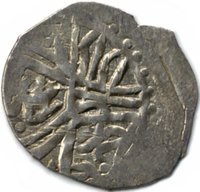
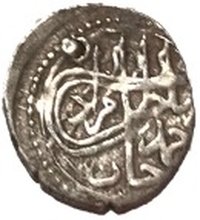
Toughra: four-line poetry.
Reverse
Description:
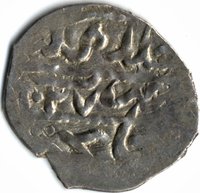
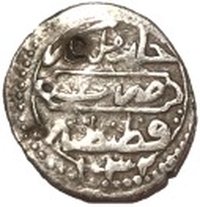
Issuing authority and mint.
Edge
Mints
| Name | Mark |
|---|---|
| Revan | — |
Mintings
| Year | Mint Mark | Mintage | Quality | Collection |
|---|---|---|---|---|
| 1622 | — | — |
Historical background
In 1622, the Ottoman Empire was grappling with a severe currency crisis rooted in decades of fiscal strain. The primary cause was the relentless debasement of the silver akçe, the empire's foundational coin. To finance prolonged wars against the Safavids and Habsburgs, and to cover a growing budget deficit, the state repeatedly reduced the silver content of the akçe. This practice, while providing short-term liquidity, triggered rampant inflation, a loss of confidence in the currency, and severe economic dislocation, particularly for the fixed-salaried Janissary corps and civil servants.
The crisis came to a head in the "Halic Incident" of 1622, a direct rebellion by angry Janissaries and sipahi cavalry over their pay. Their salaries, paid in heavily debased akçe, had catastrophically diminished in real purchasing power. The soldiers mutinied, seized the imperial mint located on the Golden Horn (Halic), and for three days personally oversaw the striking of new coins with a higher silver content for their own back pay. This dramatic event underscored the state's loss of monetary control and the direct link between currency policy and political stability.
Sultan Osman II, whose reign was already unstable, became a primary target of the unrest fueled by this economic chaos. His attempts at reform and his perceived role in the monetary instability contributed to the fury of the military factions. Just months after the currency rebellion, Osman II was deposed and murdered in a violent coup, making the currency crisis of 1622 a pivotal factor in one of the most shocking regicides in Ottoman history. The period thus illustrates a vicious cycle where fiscal weakness led to currency debasement, which in turn sparked military insurrection and profound political upheaval.
The crisis came to a head in the "Halic Incident" of 1622, a direct rebellion by angry Janissaries and sipahi cavalry over their pay. Their salaries, paid in heavily debased akçe, had catastrophically diminished in real purchasing power. The soldiers mutinied, seized the imperial mint located on the Golden Horn (Halic), and for three days personally oversaw the striking of new coins with a higher silver content for their own back pay. This dramatic event underscored the state's loss of monetary control and the direct link between currency policy and political stability.
Sultan Osman II, whose reign was already unstable, became a primary target of the unrest fueled by this economic chaos. His attempts at reform and his perceived role in the monetary instability contributed to the fury of the military factions. Just months after the currency rebellion, Osman II was deposed and murdered in a violent coup, making the currency crisis of 1622 a pivotal factor in one of the most shocking regicides in Ottoman history. The period thus illustrates a vicious cycle where fiscal weakness led to currency debasement, which in turn sparked military insurrection and profound political upheaval.
✨ Legendary