

1 Dirham – Ottoman Empire
Turkey
Context
Year: 1618
Islamic (Hijri) Year: 1027
Country: Turkey 
Issuer: Ottoman Empire
Ruler: Osman II
Currency:
(1327—1687)
Demonetized: Yes
Material
References
KM: #Click to copy to clipboard38.3
Numista: #76310
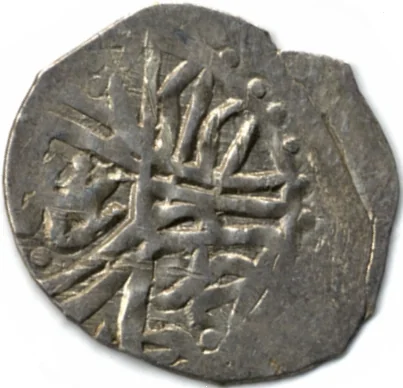
Obverse
Description:
Imperial monogram.
Script: Arabic
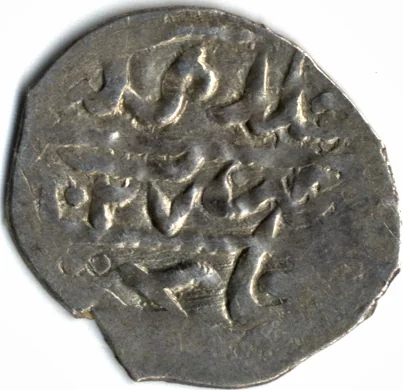
Reverse
Description:
Ascension 1027, Mint Çança (Gümüşhane)
Inscription:
1027 AH
Minted in Çança
Minted in Çança
Script: Arabic
Edge
Mints
| Name | Mark |
|---|---|
| Canca | — |
Mintings
| Year | Mint Mark | Mintage | Quality | Collection |
|---|---|---|---|---|
| 1618 | — | — |
Historical background
In 1618, the Ottoman Empire was grappling with a severe and protracted currency crisis, primarily driven by the "Price Revolution" sweeping Europe. The influx of vast quantities of silver from the Spanish Americas into the global economy caused widespread inflation, which deeply affected the Ottoman monetary system. The empire's primary silver coin, the akçe, had been steadily debased for decades to meet military and administrative expenses, leading to a drastic loss in its silver content and value. By 1618, the currency had become so unstable that it disrupted trade, tax collection, and state salaries, creating profound economic uncertainty.
The crisis was exacerbated by the empire's porous bimetallic system and trade imbalances. While the state minted the silver akçe, the gold sultani was also in circulation, but the fixed exchange rate between gold and silver failed to keep pace with shifting global bullion prices. Furthermore, the Ottoman Empire ran a significant trade deficit with the East, particularly for luxury goods from India and Iran, causing a persistent outflow of silver to Asia. This "bullion drain," combined with internal debasement, meant that by 1618, the treasury was struggling to acquire enough pure specie to mint credible currency, leading to frequent recoinages and public distrust.
Sultan Osman II, who ascended the throne in 1618, inherited this financial turmoil. The currency instability directly threatened the financial backbone of the state—the timar system and the Janissary corps. Soldiers and officials paid in devalued akçe grew discontent, while provincial tax revenues collected in the weakened coinage shrank in real terms. Although a major monetary reform would not be attempted until the 1620s under Sultan Murad IV, the situation in 1618 was a critical point of pressure, highlighting the empire's vulnerability to global economic forces and setting the stage for a period of internal strife and necessary, yet disruptive, fiscal restructuring.
The crisis was exacerbated by the empire's porous bimetallic system and trade imbalances. While the state minted the silver akçe, the gold sultani was also in circulation, but the fixed exchange rate between gold and silver failed to keep pace with shifting global bullion prices. Furthermore, the Ottoman Empire ran a significant trade deficit with the East, particularly for luxury goods from India and Iran, causing a persistent outflow of silver to Asia. This "bullion drain," combined with internal debasement, meant that by 1618, the treasury was struggling to acquire enough pure specie to mint credible currency, leading to frequent recoinages and public distrust.
Sultan Osman II, who ascended the throne in 1618, inherited this financial turmoil. The currency instability directly threatened the financial backbone of the state—the timar system and the Janissary corps. Soldiers and officials paid in devalued akçe grew discontent, while provincial tax revenues collected in the weakened coinage shrank in real terms. Although a major monetary reform would not be attempted until the 1620s under Sultan Murad IV, the situation in 1618 was a critical point of pressure, highlighting the empire's vulnerability to global economic forces and setting the stage for a period of internal strife and necessary, yet disruptive, fiscal restructuring.

✨ Legendary