

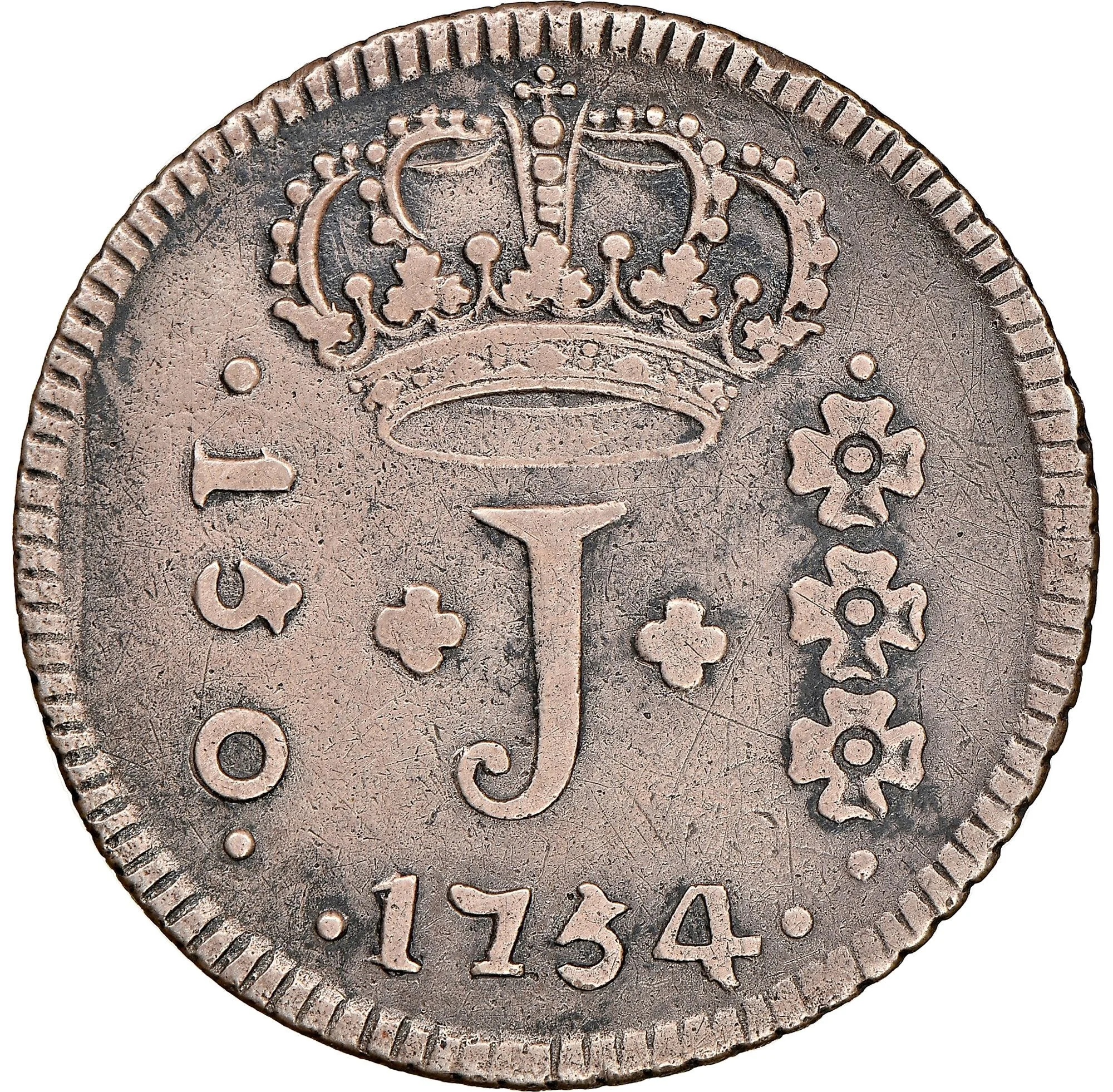

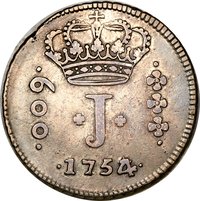
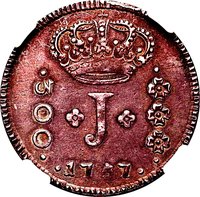
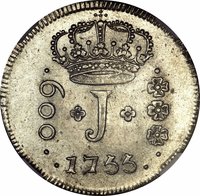
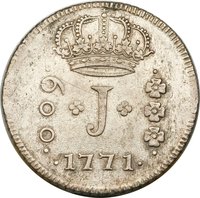
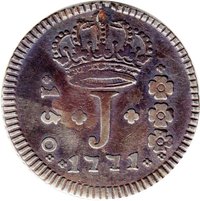
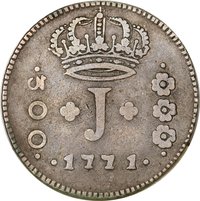
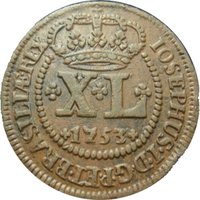
Obverse
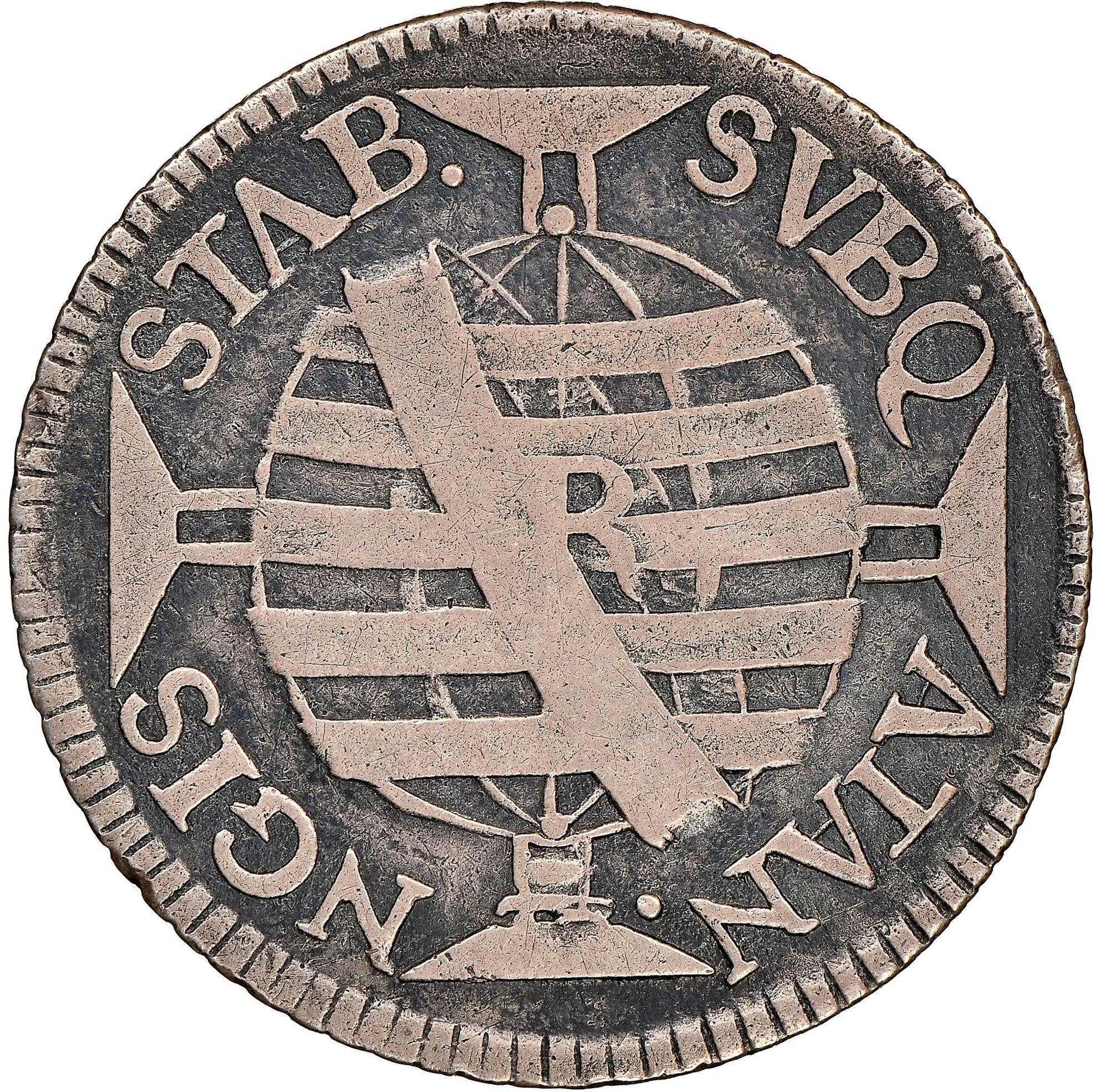
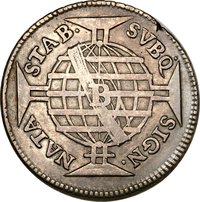
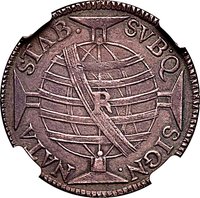
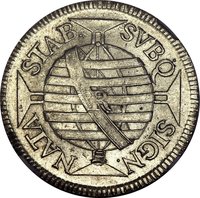
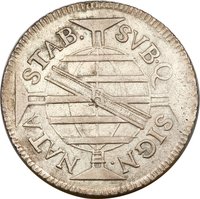
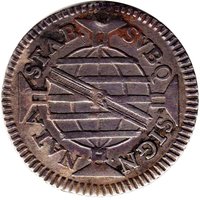
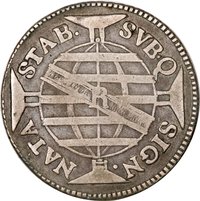
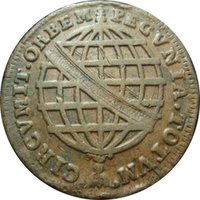
Reverse
Description:
An armillary sphere before the Order of Christ cross, with the R mintmark.
Inscription:
SVBQ. SIGN. NATA. STAB.
Script: Latin
Edge
Reeded.
Mints
| Name | Mark |
|---|---|
| Casa da Moeda do Brasil | R |
Historical background
In 1754, Brazil's currency situation was characterized by a complex and often chaotic system inherited from its colonial status under Portuguese rule. The primary circulating medium was the Portuguese real (plural: réis), but the colony suffered from a chronic shortage of coinage. This scarcity was exacerbated by Portugal's mercantilist policies, which drained gold and silver from Brazil to finance the metropolis and its trade deficits, particularly with England. Much of the gold from the Minas Gerais region, discovered decades earlier, was minted into coin in Portugal itself or left the colony as bullion, leaving local economies struggling with a lack of reliable specie for everyday transactions.
To cope with this scarcity, a variety of improvised and informal currencies circulated alongside official coinage. These included gold dust, commodity money (like sugar and tobacco in certain regions), and, most problematically, a flood of counterfeit and debased coins. The Portuguese administration attempted to impose order by establishing mints in Brazil, such as the Casa da Moeda in Rio de Janeiro (founded in 1703), but control was inconsistent. Furthermore, the value of coins often varied significantly from one captaincy to another, and the widespread clipping and forgery of coins undermined trust in the monetary system, complicating trade and taxation.
This unstable environment occurred under the governance of the Marquis of Pombal, who was consolidating power in Lisbon. While his broader reforms would soon impact Brazil, the immediate currency situation in 1754 reflected pre-Pombaline inefficiencies. The lack of a uniform and trustworthy currency hindered economic integration within the vast colony and was a persistent grievance among local merchants and planters. This monetary disarray underscored the tensions between a colony generating immense wealth and a colonial power struggling to manage and extract that wealth effectively, setting the stage for more centralized reforms later in the 1750s, including stricter control over gold production and minting.
To cope with this scarcity, a variety of improvised and informal currencies circulated alongside official coinage. These included gold dust, commodity money (like sugar and tobacco in certain regions), and, most problematically, a flood of counterfeit and debased coins. The Portuguese administration attempted to impose order by establishing mints in Brazil, such as the Casa da Moeda in Rio de Janeiro (founded in 1703), but control was inconsistent. Furthermore, the value of coins often varied significantly from one captaincy to another, and the widespread clipping and forgery of coins undermined trust in the monetary system, complicating trade and taxation.
This unstable environment occurred under the governance of the Marquis of Pombal, who was consolidating power in Lisbon. While his broader reforms would soon impact Brazil, the immediate currency situation in 1754 reflected pre-Pombaline inefficiencies. The lack of a uniform and trustworthy currency hindered economic integration within the vast colony and was a persistent grievance among local merchants and planters. This monetary disarray underscored the tensions between a colony generating immense wealth and a colonial power struggling to manage and extract that wealth effectively, setting the stage for more centralized reforms later in the 1750s, including stricter control over gold production and minting.
Series: Series of J
💎 Extremely Rare