

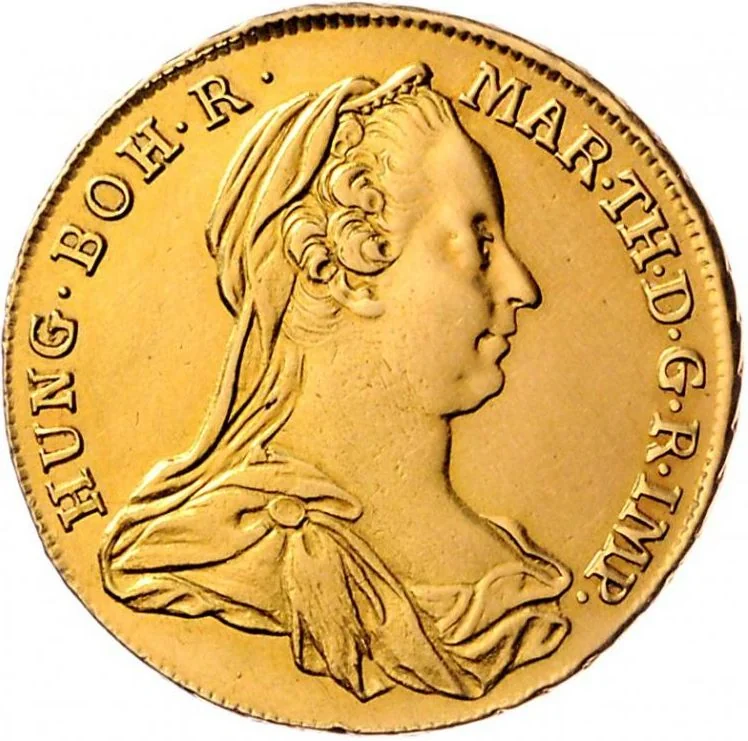
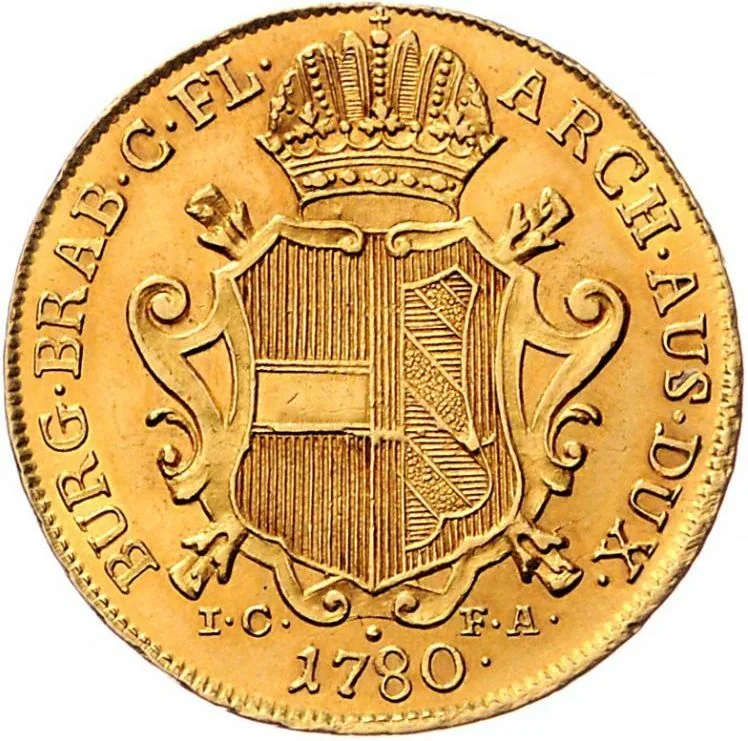
2 Souverains – Austrian Netherlands
Belgium
Context
Years: 1774–1780
Country: Belgium 
Issuer: Austrian Netherlands
Ruler: Maria Theresa
Currency:
(1744—1798)
Demonetized: Yes
Material
References
KM: #Click to copy to clipboard27
Numista: #159910
Value
Bullion value: $1704.24
Obverse
Description:
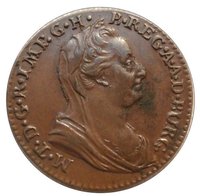
Veiled portrait, facing right.
Inscription:
MAR TH D G R IMP HUNG BOH REG
Script: Latin
Reverse
Description:
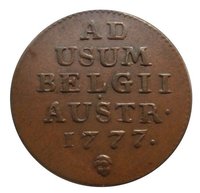
Crowned shield in a baroque frame.
Inscription:
ARCH AUS DUX BURG BRAB C FL
IC FA
IC FA
Script: Latin
Edge
Mints
| Name | Mark |
|---|---|
| Münze Österreich | — |
Mintings
| Year | Mint Mark | Mintage | Quality | Collection |
|---|---|---|---|---|
| 1774 | IC | — | ||
| 1780 | IC | — |
Historical background
In 1774, the Austrian Netherlands (approximately modern-day Belgium and Luxembourg) was grappling with a complex and debilitating currency crisis, a legacy of its position as a crossroads of European commerce and a pawn in great power politics. The region, under Habsburg rule since 1714, was a patchwork of different provinces, each with its own historic monetary systems and units of account (like the florin of Brabant or the patagon). This created a chaotic environment where multiple foreign and domestic coins, including Dutch guilders, French louis d'or, and Austrian kronenthalers, circulated simultaneously, their values fluctuating constantly against each other and the notional units of account.
The core of the problem was a severe shortage of high-quality, full-weight specie (coin). Decades of trade imbalances and the systematic extraction of good coinage by merchants and money-changers for melting or export had left the circulation dominated by worn, clipped, and debased pieces. This "bad money" drove out the "good," following Gresham's Law, crippling daily transactions and creating widespread uncertainty for both commerce and tax collection. The Vienna-based government of Empress Maria Theresa was aware of the issue but had been slow to act, preoccupied with wars and reforms elsewhere in her empire.
Consequently, by 1774, the monetary chaos was a primary concern for the local Council of Finance in Brussels. The year represented a pivotal moment of impending reform, as authorities were actively preparing a major recoinage edict. This planned reform, which would be promulgated in 1775, aimed to standardize the monetary system by introducing new, stable silver florins and patagons tied to the kronenthaler, and to forcibly withdraw and remint the degraded currency. Thus, the situation in 1774 was one of acute disorder, marking the final year of an unsustainable system before a concerted, though ultimately only partially successful, imperial attempt to impose monetary order.
The core of the problem was a severe shortage of high-quality, full-weight specie (coin). Decades of trade imbalances and the systematic extraction of good coinage by merchants and money-changers for melting or export had left the circulation dominated by worn, clipped, and debased pieces. This "bad money" drove out the "good," following Gresham's Law, crippling daily transactions and creating widespread uncertainty for both commerce and tax collection. The Vienna-based government of Empress Maria Theresa was aware of the issue but had been slow to act, preoccupied with wars and reforms elsewhere in her empire.
Consequently, by 1774, the monetary chaos was a primary concern for the local Council of Finance in Brussels. The year represented a pivotal moment of impending reform, as authorities were actively preparing a major recoinage edict. This planned reform, which would be promulgated in 1775, aimed to standardize the monetary system by introducing new, stable silver florins and patagons tied to the kronenthaler, and to forcibly withdraw and remint the degraded currency. Thus, the situation in 1774 was one of acute disorder, marking the final year of an unsustainable system before a concerted, though ultimately only partially successful, imperial attempt to impose monetary order.
✨ Legendary