

2 Souverains – Austrian Netherlands
Belgium
Context
Years: 1772–1773
Country: Belgium 
Issuer: Austrian Netherlands
Ruler: Maria Theresa
Currency:
(1744—1798)
Demonetized: Yes
Material
References
KM: #Click to copy to clipboard27
Numista: #159908
Value
Bullion value: $1704.24
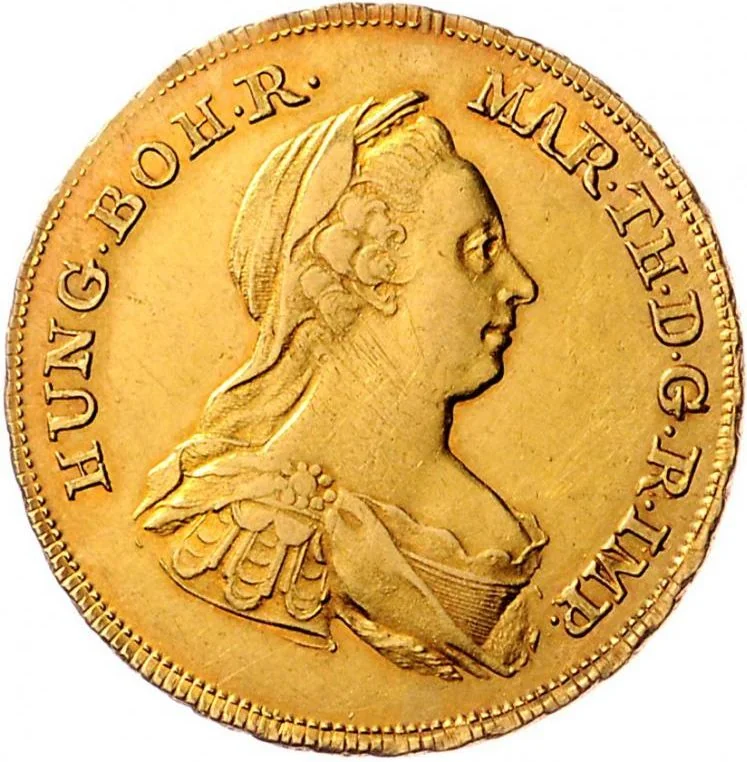
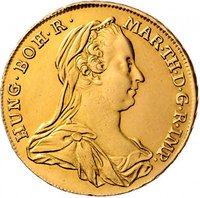
Obverse
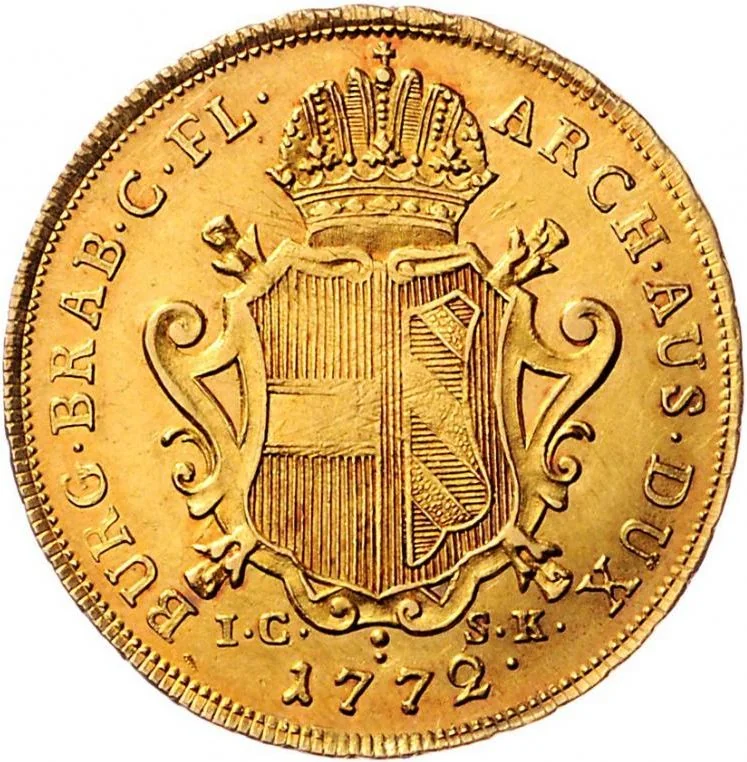
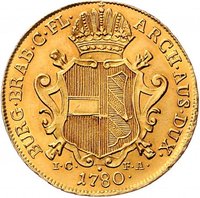
Reverse
Description:
Crowned shield in a baroque frame.
Inscription:
ARCH AUS DUX BURG BRAB C FL
Script: Latin
Edge
Mints
| Name | Mark |
|---|---|
| Münze Österreich | — |
Mintings
| Year | Mint Mark | Mintage | Quality | Collection |
|---|---|---|---|---|
| 1772 | IC | — | ||
| 1773 | IC | — |
Historical background
In 1772, the Austrian Netherlands (approximately modern-day Belgium and Luxembourg) faced a significant and protracted currency crisis rooted in the monetary duality of the region. The economy operated on two parallel standards: the current money (actual circulating coins, heavily debased through wear and clipping) and the bank money, represented by the stable accounting units of the Exchange Bank of Amsterdam. The value of the myriad of physical coins in circulation—a mix of domestic and foreign issues—constantly fluctuated against this stable benchmark, causing widespread confusion, commercial friction, and facilitating rampant speculation.
The core of the problem was a severe shortage of high-quality, full-weight specie. Decades of wear, deliberate clipping, and the export of good coin to neighboring states had left the circulation dominated by degraded and undervalued pieces. This drove Gresham’s Law into full effect, where "bad money drives out good." Attempts by the Habsburg government in Vienna to rectify the situation, such as the failed monetary ordinance of 1756, had only added to the chaos by introducing new tariffs and valuations that were often ignored in practice. By 1772, the disconnect between the official parities and market rates was profound, hampering trade and creating a climate of financial uncertainty.
Empress Maria Theresa’s government recognized the urgent need for reform. The year 1772 itself was a pivotal point of study and planning, leading directly to the comprehensive and successful monetary ordinance of September 1773. This reform, orchestrated by Minister Cobenzl, boldly called in all old coin, introduced new, standardized Austrian Netherlands florins and patards, and strictly fixed their values. Thus, the background of 1772 is one of the final, acute phase of a chronic disorder, setting the stage for the decisive stabilization that would be implemented the following year.
The core of the problem was a severe shortage of high-quality, full-weight specie. Decades of wear, deliberate clipping, and the export of good coin to neighboring states had left the circulation dominated by degraded and undervalued pieces. This drove Gresham’s Law into full effect, where "bad money drives out good." Attempts by the Habsburg government in Vienna to rectify the situation, such as the failed monetary ordinance of 1756, had only added to the chaos by introducing new tariffs and valuations that were often ignored in practice. By 1772, the disconnect between the official parities and market rates was profound, hampering trade and creating a climate of financial uncertainty.
Empress Maria Theresa’s government recognized the urgent need for reform. The year 1772 itself was a pivotal point of study and planning, leading directly to the comprehensive and successful monetary ordinance of September 1773. This reform, orchestrated by Minister Cobenzl, boldly called in all old coin, introduced new, standardized Austrian Netherlands florins and patards, and strictly fixed their values. Thus, the background of 1772 is one of the final, acute phase of a chronic disorder, setting the stage for the decisive stabilization that would be implemented the following year.
✨ Legendary