

1 Kronenthaler – Austrian Netherlands
Belgium
Context
Years: 1755–1765
Country: Belgium 
Issuer: Austrian Netherlands
Ruler: Francis I
Currency:
(1744—1798)
Demonetized: Yes
Material
References
KM: #Click to copy to clipboard22
Numista: #28562
Value
Bullion value: $73.56
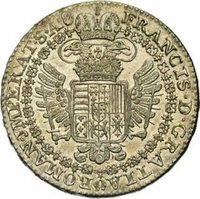
Obverse
Description:
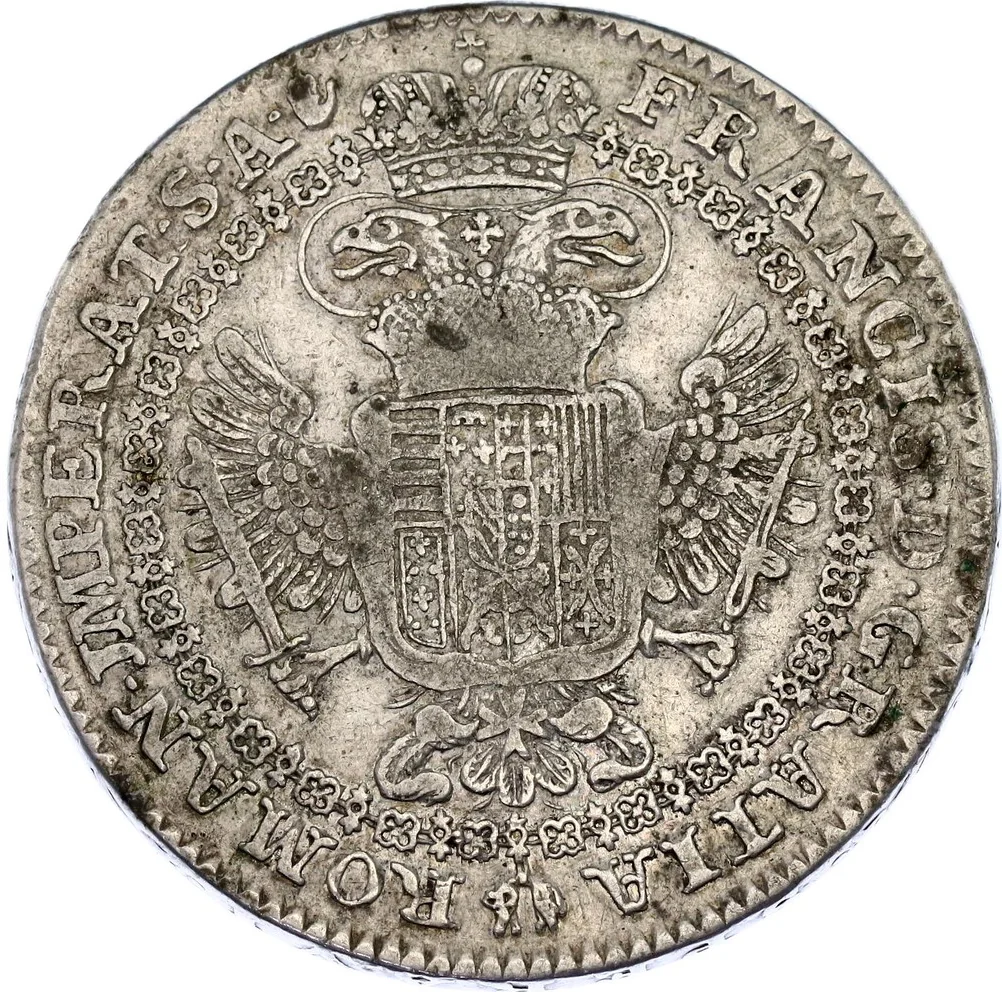
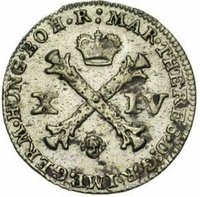
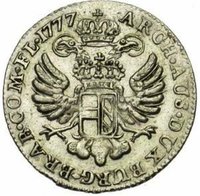
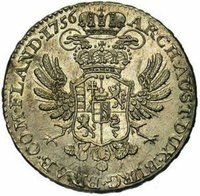
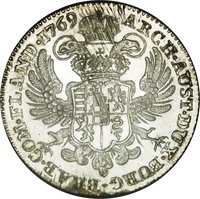
Double-headed eagle holding the emperor's crowned shield, grasping two swords, within the Golden Fleece collar. Latin legends and workshop mark surround it.
Inscription:
FRANCIS·D·GRATIA ROMAN·IMPERAT·S·A·
(symbole main)
(symbole main)
Script: Latin
Engraver: Jacques Roëttiers
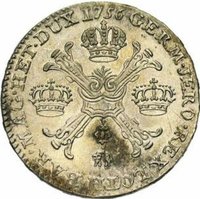
Reverse
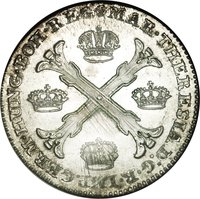
Description:
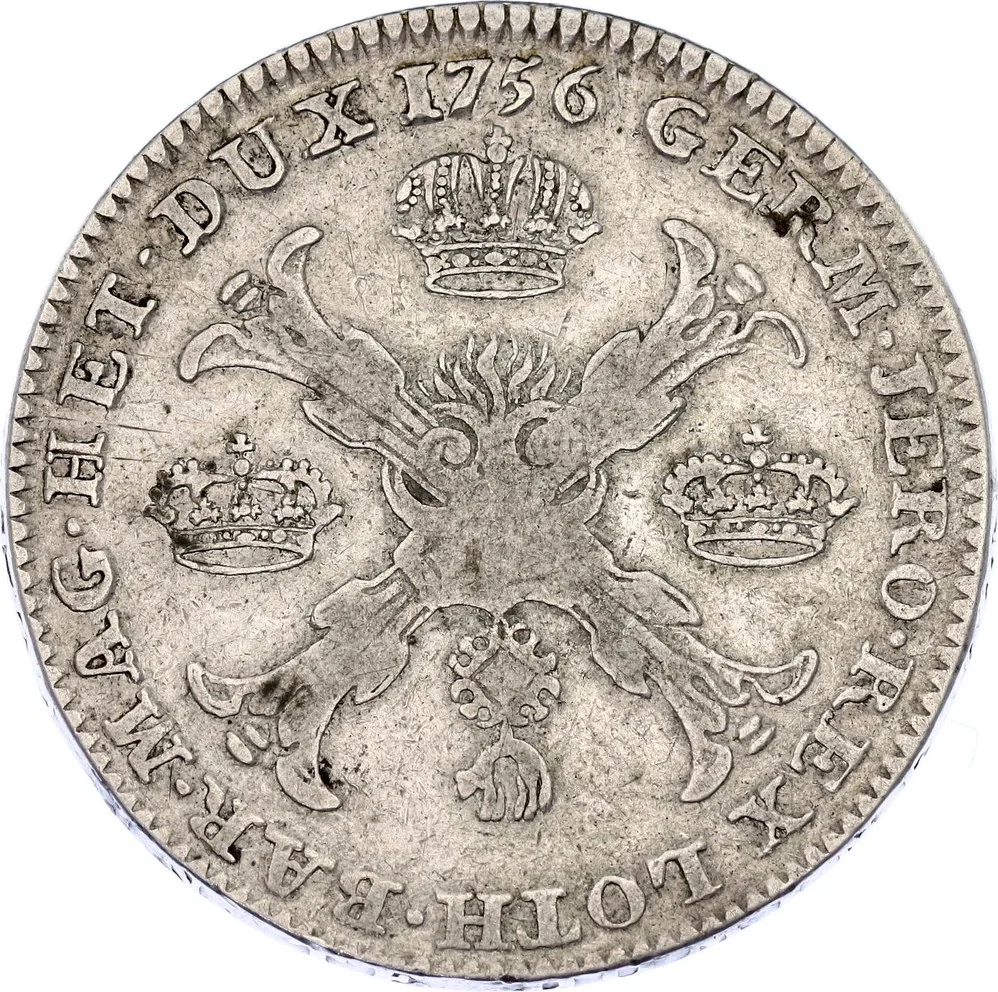
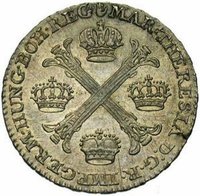
Center: a Burgundy cross with a flaming heart holding the Golden Fleece jewel, flanked by Austrian, Hungarian, and Bohemian crowns. Latin legends and a vintage date encircle it.
Inscription:
GERM·JERO·REX LOTH·BAR·MAG·HET·DUX
1755
1755
Script: Latin
Engraver: Jacques Roëttiers
Edge
Smooth with embossed inscriptions
Legend:
JN TE DOMINE SPERAVI
Mints
| Name | Mark |
|---|---|
| Wolschot Mint | main |
| Royal Mint of Belgium | tete d'ange |
Mintings
| Year | Mint Mark | Mintage | Quality | Collection |
|---|---|---|---|---|
| 1755 | — | — | ||
| 1756 | — | — | ||
| 1757 | — | — | ||
| 1758 | — | — | ||
| 1759 | — | — | ||
| 1760 | — | — | ||
| 1761 | — | — | ||
| 1762 | — | — | ||
| 1763 | — | — | ||
| 1764 | — | — | ||
| 1765 | — | — |
Historical background
In 1755, the currency situation in the Austrian Netherlands was complex and unstable, characterized by a chaotic multiplicity of coins in circulation. The region did not have a unified, modern monetary system but instead operated with a mix of older domestic issues and, more problematically, a vast influx of foreign currency. These included French louis d'or, Dutch guilders, and German thalers, all circulating simultaneously with fluctuating and unofficial exchange rates. This "monetary pluralism" created significant confusion for daily commerce, as the intrinsic value of a coin (its metal content) often differed from its proclaimed nominal value, leading to widespread fraud and economic uncertainty.
The core of the problem lay in the government's limited control over the money supply. While the Habsburg authorities in Brussels minted their own silver kronenthalers and smaller denominations, they could not prevent the circulation of often debased foreign coins. Furthermore, the region was a key economic hub, and its thriving trade naturally attracted currencies from its powerful neighbours. This made the Austrian Netherlands vulnerable to monetary manipulations by foreign states, who could flood the market with inferior coinage to profit from arbitrage, effectively exporting their inflation. The local authorities issued periodic placards (ordinances) to re-tariff the values of specific coins, but these were reactive and temporary fixes that failed to address the systemic issue.
This monetary disorder had direct negative consequences for the economy and state finances. It hampered reliable taxation and state payments, as the value of revenue collected was unpredictable. For merchants and the public, it created transaction costs and risk, discouraging investment and complicating simple purchases. The situation in 1755 was therefore a point of growing tension, highlighting the need for a sweeping monetary reform—a challenge that would be taken up by Empress Maria Theresa's government, culminating in the ambitious and largely successful currency reorganisation initiated with the Convention of Munich in 1756, which aimed to standardise the monetary system across the Habsburg realms.
The core of the problem lay in the government's limited control over the money supply. While the Habsburg authorities in Brussels minted their own silver kronenthalers and smaller denominations, they could not prevent the circulation of often debased foreign coins. Furthermore, the region was a key economic hub, and its thriving trade naturally attracted currencies from its powerful neighbours. This made the Austrian Netherlands vulnerable to monetary manipulations by foreign states, who could flood the market with inferior coinage to profit from arbitrage, effectively exporting their inflation. The local authorities issued periodic placards (ordinances) to re-tariff the values of specific coins, but these were reactive and temporary fixes that failed to address the systemic issue.
This monetary disorder had direct negative consequences for the economy and state finances. It hampered reliable taxation and state payments, as the value of revenue collected was unpredictable. For merchants and the public, it created transaction costs and risk, discouraging investment and complicating simple purchases. The situation in 1755 was therefore a point of growing tension, highlighting the need for a sweeping monetary reform—a challenge that would be taken up by Empress Maria Theresa's government, culminating in the ambitious and largely successful currency reorganisation initiated with the Convention of Munich in 1756, which aimed to standardise the monetary system across the Habsburg realms.
💎 Very Rare