

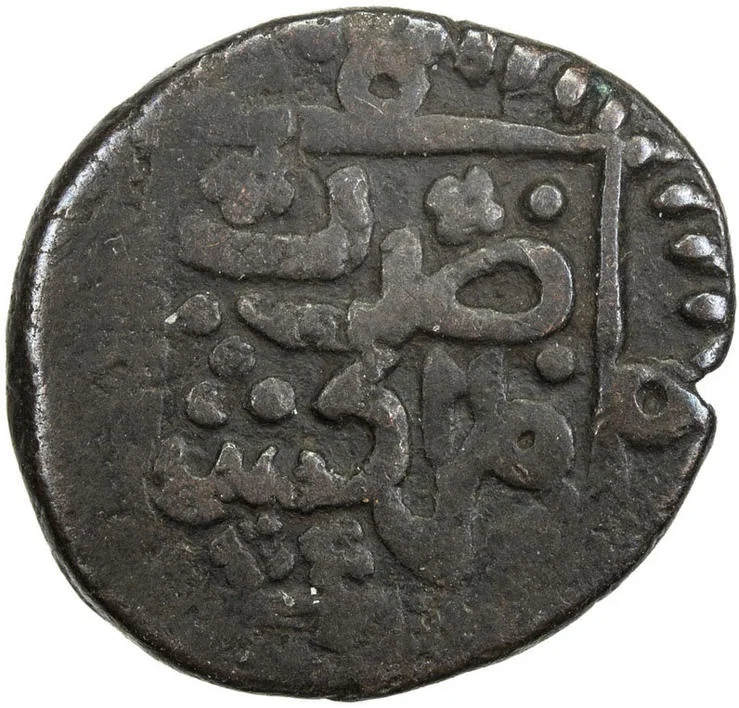
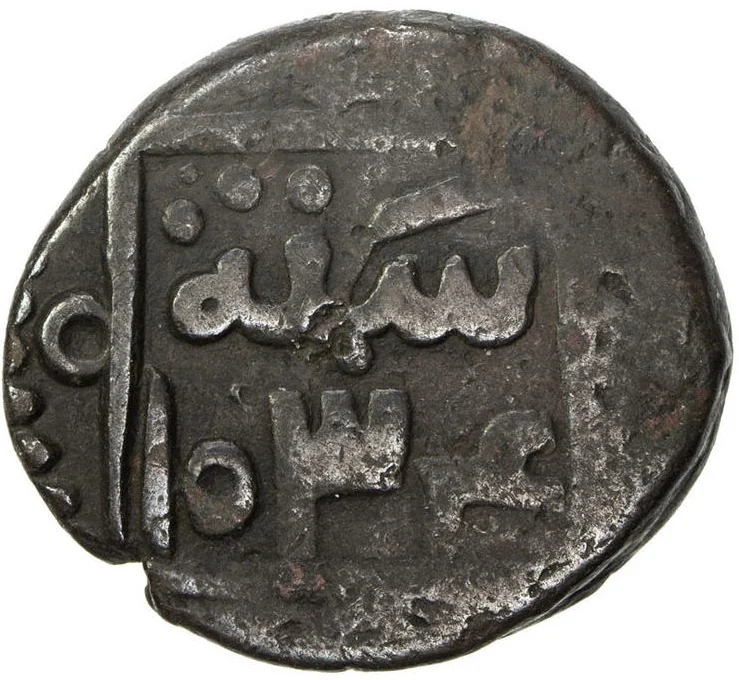
falus – Morocco
Add to wishlist
Morocco
Obverse
Reverse
Edge
Mintings
| Year | Mint Mark | Mintage | Quality | Collection |
|---|---|---|---|---|
| 1624 | — | — | ||
| 1625 | — | — |
Historical background
In 1624, Morocco was under the rule of the Saadi Sultanate, a dynasty that had reached its zenith of power and wealth under Ahmad al-Mansur (d. 1603) but was now in a period of political and economic strain. The immense treasure plundered from the Songhai Empire after the 1591 Battle of Tondibi had largely been spent, and the state was grappling with the costs of maintaining military control over vast territories, internal succession disputes, and the gradual loss of control over trans-Saharan trade routes. This fiscal pressure directly impacted the monetary system, which was a complex mix of locally minted coins and a flood of foreign currency.
The primary currency in circulation was the silver dirham, but its weight and purity were increasingly unstable due to the scarcity of precious metals. The renowned gold dinar, once a symbol of Saadi prestige, was minted less frequently. More significantly, Morocco’s economy was becoming inundated with European coins, particularly Spanish reales (pieces of eight) and Portuguese cruzados, acquired through trade, piracy, and the ransom of Christian captives. This created a de facto bimetallic system where foreign, trusted coins often circulated at a premium compared to debased local issues, leading to confusion in exchange rates and market transactions.
Furthermore, the currency situation reflected Morocco’s precarious geopolitical position. European powers, especially Spain and England, were aggressively expanding their commercial and military influence. The presence of their coins was a tangible sign of this economic penetration, undermining the Sultan's control over the monetary supply—a key attribute of sovereignty. Consequently, while markets in coastal cities like Salé and Essaouira functioned with this heterogeneous mix of coins, the instability and reliance on foreign silver signaled the broader challenges of a once-powerful empire adjusting to shifting global economic currents and internal fiscal weakness.
The primary currency in circulation was the silver dirham, but its weight and purity were increasingly unstable due to the scarcity of precious metals. The renowned gold dinar, once a symbol of Saadi prestige, was minted less frequently. More significantly, Morocco’s economy was becoming inundated with European coins, particularly Spanish reales (pieces of eight) and Portuguese cruzados, acquired through trade, piracy, and the ransom of Christian captives. This created a de facto bimetallic system where foreign, trusted coins often circulated at a premium compared to debased local issues, leading to confusion in exchange rates and market transactions.
Furthermore, the currency situation reflected Morocco’s precarious geopolitical position. European powers, especially Spain and England, were aggressively expanding their commercial and military influence. The presence of their coins was a tangible sign of this economic penetration, undermining the Sultan's control over the monetary supply—a key attribute of sovereignty. Consequently, while markets in coastal cities like Salé and Essaouira functioned with this heterogeneous mix of coins, the instability and reliance on foreign silver signaled the broader challenges of a once-powerful empire adjusting to shifting global economic currents and internal fiscal weakness.

✨ Legendary