

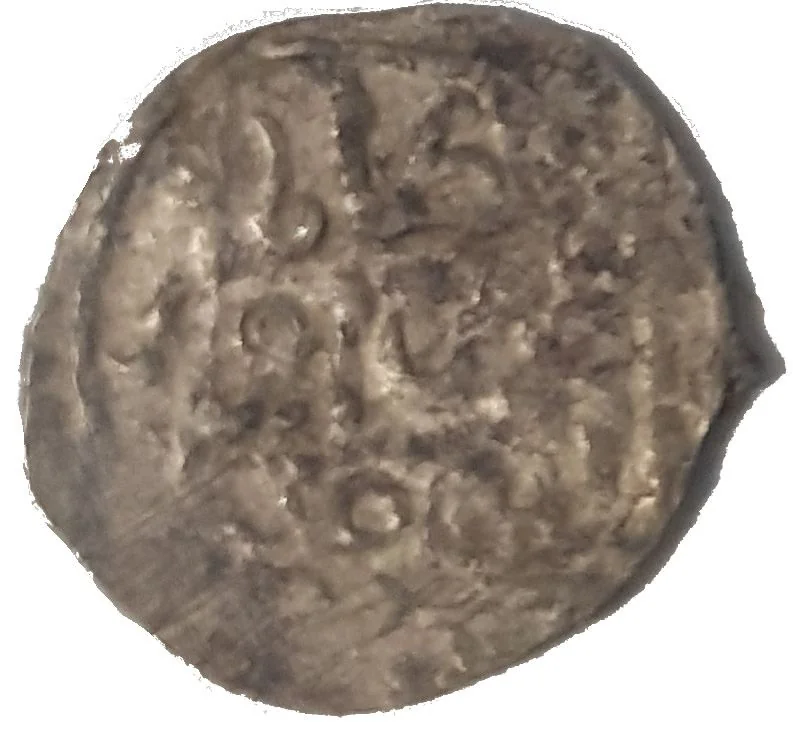
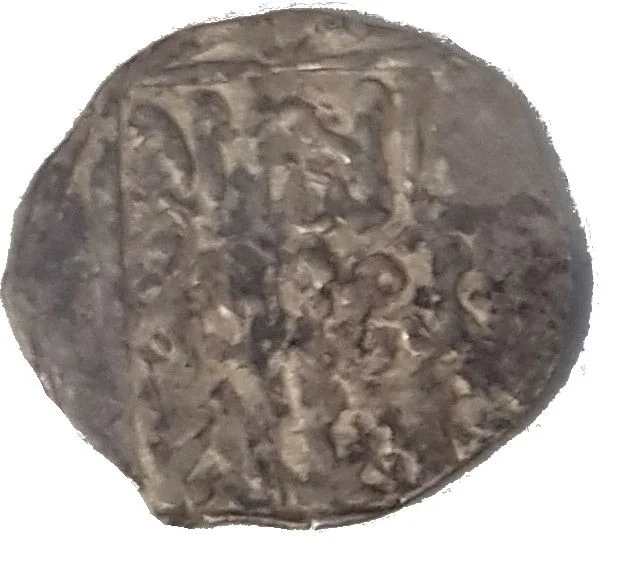
dirham – Morocco
Add to wishlist
Morocco
Mintings
| Year | Mint Mark | Mintage | Quality | Collection |
|---|---|---|---|---|
| 1655 | — | — |
Historical background
In 1655, Morocco was under the reign of the Alaouite Sultan Moulay al-Rashid, who would formally found the dynasty two years later. The country was emerging from a period of profound fragmentation and conflict, known as the era of the "Siba," where central authority had collapsed following the end of the Saadian dynasty. This political instability had severely disrupted the monetary system. The once-reliable gold dinar and silver dirham, staples of the medieval Maghreb, were in a state of disarray, with irregular minting, widespread clipping of coins, and a circulation of a confusing mix of older Saadian, Portuguese, and various local issues.
The currency situation was further complicated by intense foreign trade and piracy. Key coastal cities like Salé and Tetouan operated with significant autonomy and were hubs of corsair activity, bringing in a flood of foreign silver, primarily Spanish reales and pieces of eight. This "corsair silver" became a crucial, if unofficial, part of the money supply alongside the traditional coinage. Furthermore, European merchants trading for Moroccan sugar, leather, and wax paid in their own currencies, leading to a complex multi-currency environment where foreign coins often circulated by weight rather than face value.
Sultan Moulay al-Rashid recognized that asserting monetary control was essential to consolidating his political power and unifying the economy. While his major reforms would crystallize after his conquest of Marrakesh in 1668, the groundwork was being laid in the 1655 period. His priority was to recentralize minting authority, aiming to eventually produce new, trustworthy Alaouite coinage that would displace the chaotic mix of older and foreign coins, thereby symbolizing and enforcing the restoration of a single, sovereign Moroccan state. Thus, the currency situation of 1655 was one of transition from disorder towards the impending reimposition of a unified monetary system.
The currency situation was further complicated by intense foreign trade and piracy. Key coastal cities like Salé and Tetouan operated with significant autonomy and were hubs of corsair activity, bringing in a flood of foreign silver, primarily Spanish reales and pieces of eight. This "corsair silver" became a crucial, if unofficial, part of the money supply alongside the traditional coinage. Furthermore, European merchants trading for Moroccan sugar, leather, and wax paid in their own currencies, leading to a complex multi-currency environment where foreign coins often circulated by weight rather than face value.
Sultan Moulay al-Rashid recognized that asserting monetary control was essential to consolidating his political power and unifying the economy. While his major reforms would crystallize after his conquest of Marrakesh in 1668, the groundwork was being laid in the 1655 period. His priority was to recentralize minting authority, aiming to eventually produce new, trustworthy Alaouite coinage that would displace the chaotic mix of older and foreign coins, thereby symbolizing and enforcing the restoration of a single, sovereign Moroccan state. Thus, the currency situation of 1655 was one of transition from disorder towards the impending reimposition of a unified monetary system.

✨ Legendary