

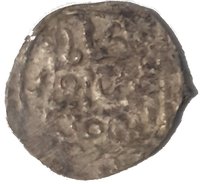
Obverse
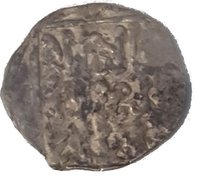
Reverse
Edge
Mintings
| Year | Mint Mark | Mintage | Quality | Collection |
|---|---|---|---|---|
| — | — | — |
Historical background
In 1659, Morocco was in a period of significant political and monetary transition. The Saadi dynasty, which had ruled since the mid-16th century, was in terminal decline following the death of Sultan Ahmad al-Abbas. The country was fracturing into regional entities controlled by rival warlords and religious brotherhoods, most notably the Dilaites in the north and the Alaouites, who were beginning their ascent from Tafilalt. This political fragmentation directly undermined a unified monetary system, as central minting authority eroded and regional powers began to issue their own coinage to fund their military campaigns and assert sovereignty.
The currency in circulation was a complex mixture of inherited and emerging coins. The primary unit was the silver dirham, but its weight and purity were not standardized across the splintered realms. The venerable gold dinar, a staple of the powerful Saadi period, saw its production and circulation decline due to the disruption of trans-Saharan gold trade routes and the state's financial exhaustion. In practice, a multitude of foreign coins circulated heavily, especially Spanish reales and Ottoman coins, which filled the vacuum left by the unreliable domestic mintages. This reliance on foreign specie made the economy vulnerable to external flows and speculation.
Consequently, the monetary situation was characterized by instability and uncertainty. The lack of a strong central authority to guarantee value led to frequent debasements of locally struck coins, as competing factions sought to stretch their precious metal reserves. Exchange rates fluctuated wildly between different coin types and regions, hampering long-distance trade and creating a climate of economic insecurity for merchants and the populace. This chaotic currency environment reflected the broader crisis of the Moroccan state, a condition that would only begin to stabilize with the eventual consolidation of power by the Alaouite Sultan Moulay al-Rashid in the following decade.
The currency in circulation was a complex mixture of inherited and emerging coins. The primary unit was the silver dirham, but its weight and purity were not standardized across the splintered realms. The venerable gold dinar, a staple of the powerful Saadi period, saw its production and circulation decline due to the disruption of trans-Saharan gold trade routes and the state's financial exhaustion. In practice, a multitude of foreign coins circulated heavily, especially Spanish reales and Ottoman coins, which filled the vacuum left by the unreliable domestic mintages. This reliance on foreign specie made the economy vulnerable to external flows and speculation.
Consequently, the monetary situation was characterized by instability and uncertainty. The lack of a strong central authority to guarantee value led to frequent debasements of locally struck coins, as competing factions sought to stretch their precious metal reserves. Exchange rates fluctuated wildly between different coin types and regions, hampering long-distance trade and creating a climate of economic insecurity for merchants and the populace. This chaotic currency environment reflected the broader crisis of the Moroccan state, a condition that would only begin to stabilize with the eventual consolidation of power by the Alaouite Sultan Moulay al-Rashid in the following decade.

✨ Legendary