

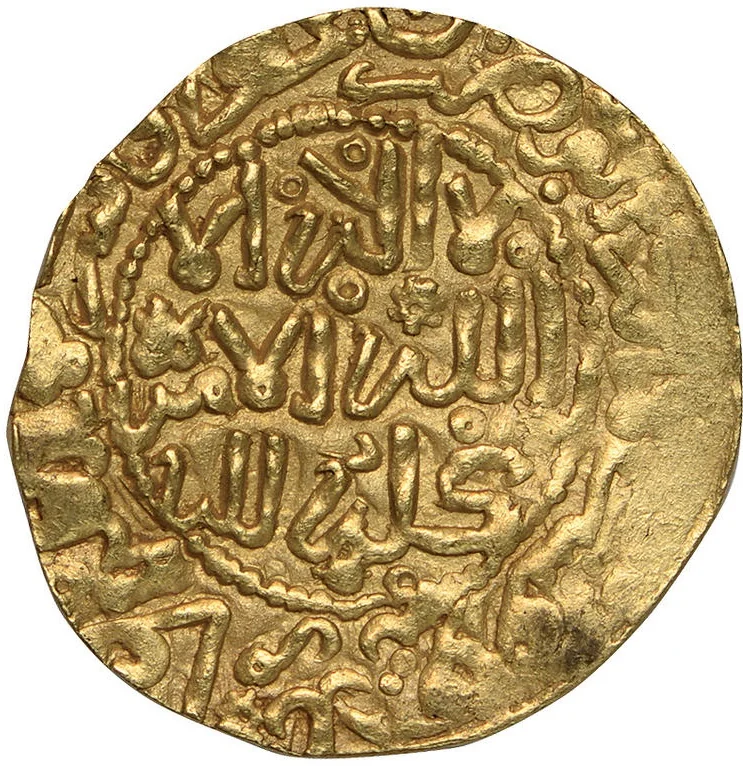
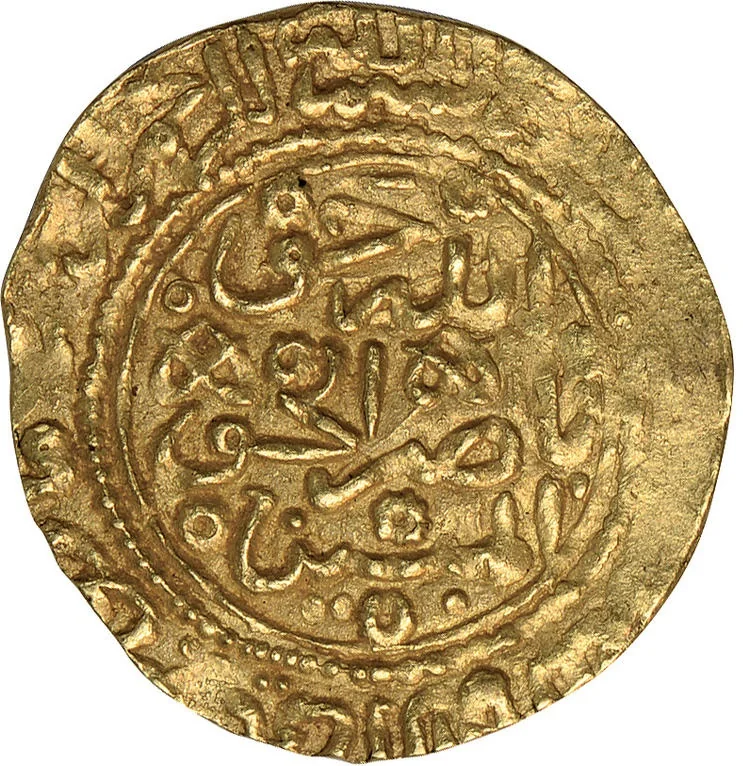
1 Dinar – Morocco
Morocco
Context

Material
Diameter: 23 mm
Weight: 3.52 g
Gold weight: 3.52 g
Shape: Irregular round
Composition: Gold
Magnetic: No
Technique: Hammered
References
KM: #Click to copy to clipboard28.1
Numista: #157545
Value
Bullion value: $586.89
Mintings
| Year | Mint Mark | Mintage | Quality | Collection |
|---|---|---|---|---|
| 1678 | — | — | ||
| 1679 | — | — | ||
| 1680 | — | — | ||
| 1681 | — | — | ||
| 1682 | — | — | ||
| 1683 | — | — | ||
| 1684 | — | — | ||
| 1685 | — | — | ||
| 1686 | — | — | ||
| 1687 | — | — | ||
| 1688 | — | — | ||
| 1690 | — | — | ||
| 1697 | — | — | ||
| 1698 | — | — | ||
| 1700 | — | — | ||
| 1704 | — | — | ||
| 1708 | — | — | ||
| 1709 | — | — | ||
| 1710 | — | — | ||
| 1711 | — | — | ||
| 1712 | — | — | ||
| 1715 | — | — | ||
| 1716 | — | — | ||
| 1717 | — | — | ||
| 1718 | — | — | ||
| 1721 | — | — | ||
| 1724 | — | — |
Historical background
In 1678, the currency situation in the Alaouite Sultanate of Morocco was characterized by significant complexity and instability, a legacy of the preceding Saadian dynasty's decline and the ongoing consolidation of power by Sultan Moulay Ismail. The monetary system was a fragmented mix of indigenous and foreign coins circulating with varying degrees of acceptance. The primary silver coin was the dirham, but its weight and purity were not consistently standardized across the mints in cities like Fez, Marrakech, and the new imperial capital at Meknes. Alongside these, Spanish reales and Ottoman piastres entered the kingdom through trade and piracy, further complicating transactions and valuation, as their intrinsic silver content often differed from local issues.
This monetary disorder was exacerbated by the Sultan's immense financial demands, driven by his ambitious projects, including the construction of vast palaces and fortifications and the maintenance of a large professional army, the Abid al-Bukhari. To meet these costs, the treasury frequently resorted to debasement—reducing the silver content in newly minted coins while mandating they hold the same face value. This practice, while providing short-term liquidity, eroded public trust in the currency, leading to hoarding of older, purer coins (Gresham's Law in action) and creating price inflation, particularly in markets supplying the imperial court and military.
Consequently, the year 1678 fell within a period of monetary experimentation and struggle for control. Sultan Moulay Ismail sought to centralize minting authority and impose a uniform currency to facilitate taxation and trade, but these efforts met with limited success against the entrenched practices of regional markets and the influx of foreign coinage. The economy thus operated on a dual track: a strained official monetary system for state affairs, and a more pragmatic, bullion-based market economy where the value of a coin was ultimately judged by its weight and metal, not solely by the Sultan's imprint.
This monetary disorder was exacerbated by the Sultan's immense financial demands, driven by his ambitious projects, including the construction of vast palaces and fortifications and the maintenance of a large professional army, the Abid al-Bukhari. To meet these costs, the treasury frequently resorted to debasement—reducing the silver content in newly minted coins while mandating they hold the same face value. This practice, while providing short-term liquidity, eroded public trust in the currency, leading to hoarding of older, purer coins (Gresham's Law in action) and creating price inflation, particularly in markets supplying the imperial court and military.
Consequently, the year 1678 fell within a period of monetary experimentation and struggle for control. Sultan Moulay Ismail sought to centralize minting authority and impose a uniform currency to facilitate taxation and trade, but these efforts met with limited success against the entrenched practices of regional markets and the influx of foreign coinage. The economy thus operated on a dual track: a strained official monetary system for state affairs, and a more pragmatic, bullion-based market economy where the value of a coin was ultimately judged by its weight and metal, not solely by the Sultan's imprint.

✨ Legendary