

1 Ducat – Landgraviate of Hesse-Darmstadt
Context
Years: 1739–1768
Issuer: Landgraviate of Hesse-Darmstadt
Ruler: Louis VIII
Currency:
(1568—1805)
Demonetized: Yes
References
KM: #Click to copy to clipboardA204
Numista: #154642
Value
Bullion value: $575.40
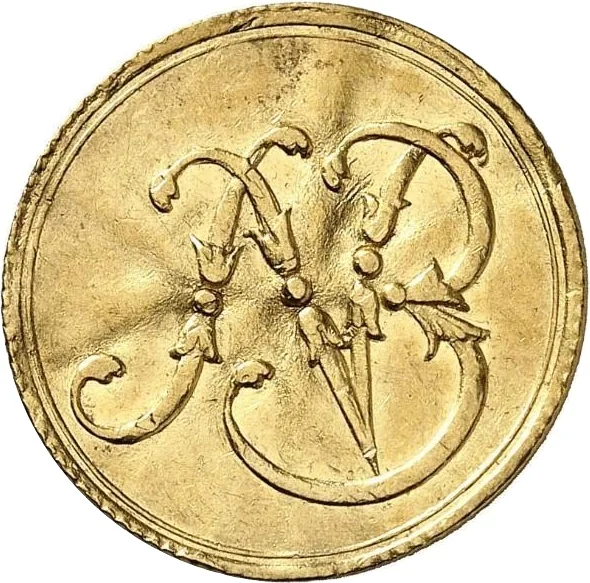
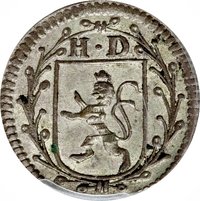
Obverse
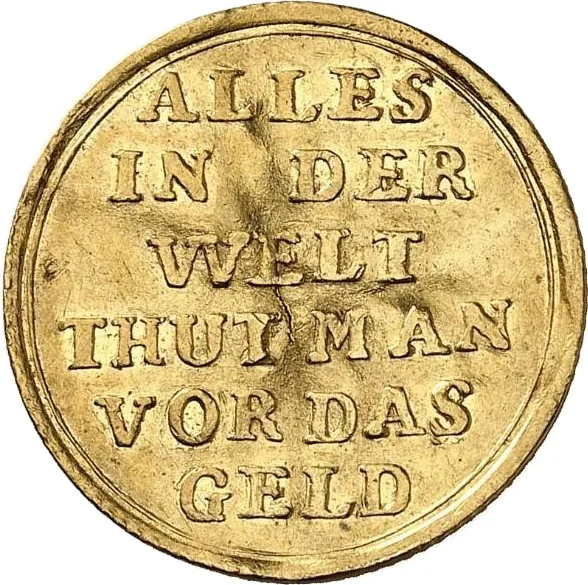
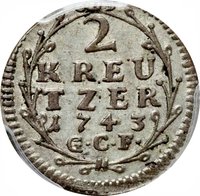
Reverse
Description:
Six-line inscription.
Inscription:
ALLES / IN DER / WELTTHUT MAN / VOR DAS / GELD
Script: Latin
Edge
Mintings
| Year | Mint Mark | Mintage | Quality | Collection |
|---|---|---|---|---|
| — | — | — |
Historical background
In 1739, the currency situation in the Landgraviate of Hesse-Darmstadt was complex and fragmented, reflecting the broader monetary disarray of the Holy Roman Empire. The landgravate did not have a single, unified currency but operated within a system where multiple coinage standards coexisted. The primary accounting unit was the Reichsthaler, a large silver coin defined by Imperial decree, but daily transactions were conducted in a plethora of smaller local and regional coins, such as Kreuzers and Groschen, whose values relative to the Reichsthaler fluctuated.
This period was characterized by significant monetary instability due to the practice of debasement. Facing chronic financial pressures from maintaining a court and administrative costs, the landgravate, like many German states, periodically reduced the silver content in its own minted coins to generate seigniorage profit. This led to a circulation of coins of varying intrinsic value, causing confusion and eroding public trust. Furthermore, coins from neighboring states and older, better-quality coins were often hoarded, leaving poorer-quality currency in active circulation—a classic example of Gresham's Law.
Consequently, trade and economic activity were hampered by the need for constant currency conversion and the risk of accepting undervalued money. While Landgrave Ernst Ludwig sought to manage finances, the year 1739 fell within a longer era of fiscal challenge, with no major monetary reform imminent. The situation demanded that merchants and officials be adept in assessing coinage, and it underscored the landgravate's limited sovereignty in monetary matters, bound as it was to the imperfect regulatory framework of the Empire.
This period was characterized by significant monetary instability due to the practice of debasement. Facing chronic financial pressures from maintaining a court and administrative costs, the landgravate, like many German states, periodically reduced the silver content in its own minted coins to generate seigniorage profit. This led to a circulation of coins of varying intrinsic value, causing confusion and eroding public trust. Furthermore, coins from neighboring states and older, better-quality coins were often hoarded, leaving poorer-quality currency in active circulation—a classic example of Gresham's Law.
Consequently, trade and economic activity were hampered by the need for constant currency conversion and the risk of accepting undervalued money. While Landgrave Ernst Ludwig sought to manage finances, the year 1739 fell within a longer era of fiscal challenge, with no major monetary reform imminent. The situation demanded that merchants and officials be adept in assessing coinage, and it underscored the landgravate's limited sovereignty in monetary matters, bound as it was to the imperfect regulatory framework of the Empire.
✨ Legendary