

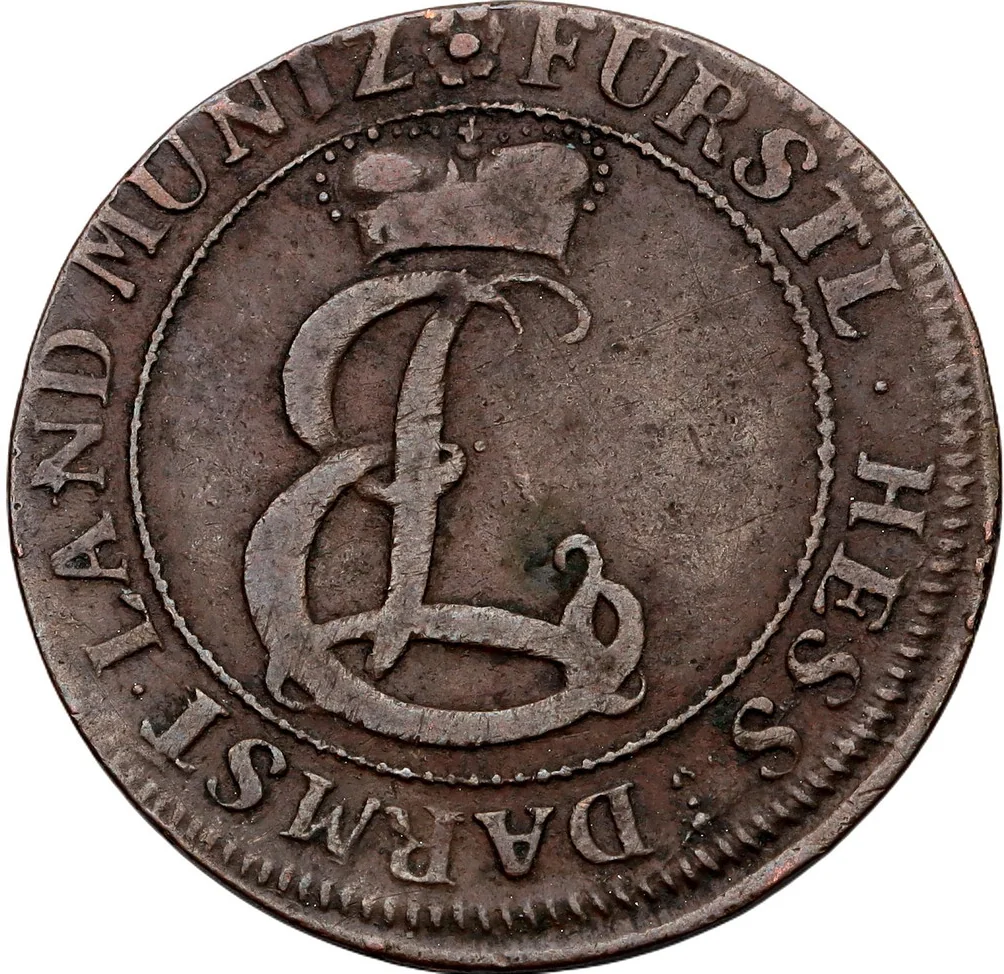
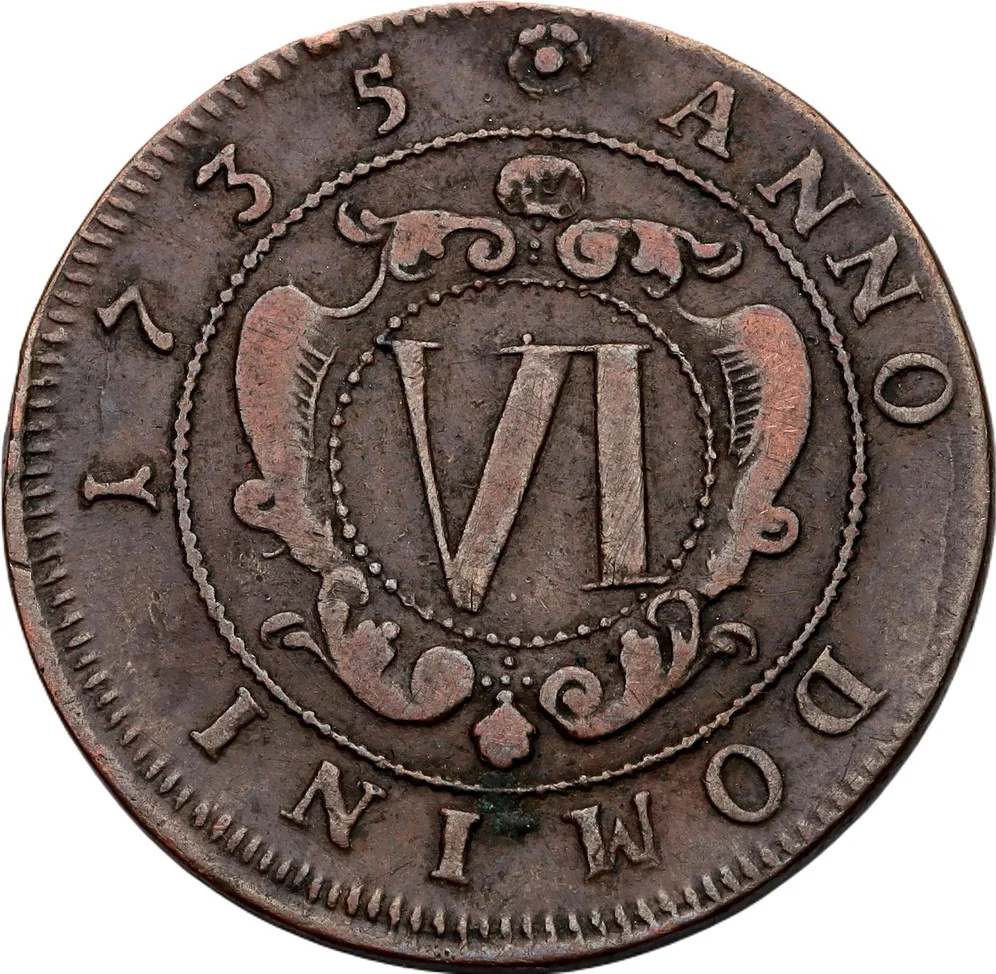
6 Pfennigs – Landgraviate of Hesse-Darmstadt
Context
Year: 1735
Issuer: Landgraviate of Hesse-Darmstadt
Ruler: Ernest Louis
Currency:
(1568—1805)
Demonetized: Yes
Material
References
KM: #Click to copy to clipboard167
Numista: #375250
Obverse
Description:
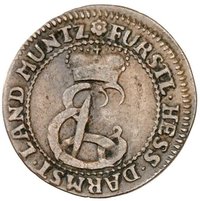
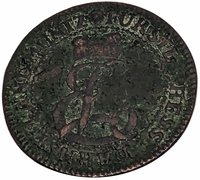
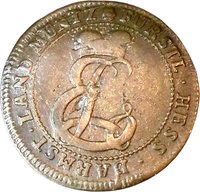
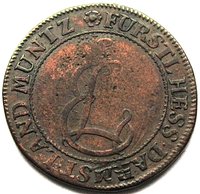
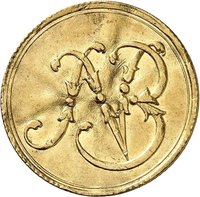
Crowned "EL" monogram within beaded circle, surrounded by legend.
Inscription:
FURSTL HESS DARMST LAND MUNTZ
Script: Latin
Reverse
Description:
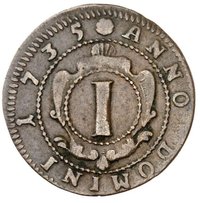
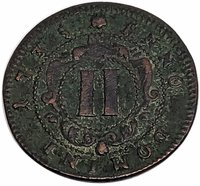
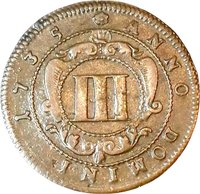
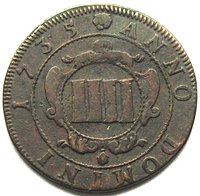
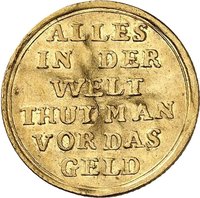
Gothic frame with surrounding legend.
Inscription:
ANNO DOMINI 1735
Edge
Mints
| Name | Mark |
|---|---|
| Darmstadt | — |
Mintings
| Year | Mint Mark | Mintage | Quality | Collection |
|---|---|---|---|---|
| 1735 | — | — |
Historical background
In 1735, the currency situation in the Landgraviate of Hesse-Darmstadt was complex and fragmented, typical of the Holy Roman Empire's decentralized monetary systems. The landgraviate did not have a single, unified currency but operated within a web of regional and supra-regional coinage systems. The most important of these was the Reichsthaler, a silver coin defined by Imperial decree, which served as the primary accounting unit for large transactions and state finances. However, in daily commerce, people more commonly used a variety of smaller, often debased local coins, such as Kreuzers and Groschen, whose value in relation to the Reichstaler fluctuated.
This monetary landscape was fraught with challenges. The landgraviate's own minting rights were limited, and its territory was economically integrated with neighboring states, meaning a plethora of foreign coins—from neighboring Hesse-Kassel, the Palatinate, and the Free City of Frankfurt—circulated freely. These coins often had different silver contents and values, leading to constant confusion, exchange difficulties, and opportunities for fraud. Furthermore, the frequent wars of the era, including the just-concluded War of the Polish Succession, placed severe strain on public finances, creating a temptation for rulers to debase coinage (reducing precious metal content) to raise short-term revenue, which further eroded monetary stability and public trust.
Consequently, the monetary policy of Landgrave Ernst Ludwig was primarily defensive and reactive. The government's focus was on managing this chaotic circulation through periodic mint ordinances (Münzedikte), which attempted to fix exchange rates between the myriad coins and regulate their acceptance. However, these decrees were difficult to enforce, and the fundamental problem of multiple, competing coinages persisted. The situation underscored the landgraviate's limited sovereignty in monetary matters and the pressing need for greater standardization—a goal that would remain elusive for another century until the unification of German currencies.
This monetary landscape was fraught with challenges. The landgraviate's own minting rights were limited, and its territory was economically integrated with neighboring states, meaning a plethora of foreign coins—from neighboring Hesse-Kassel, the Palatinate, and the Free City of Frankfurt—circulated freely. These coins often had different silver contents and values, leading to constant confusion, exchange difficulties, and opportunities for fraud. Furthermore, the frequent wars of the era, including the just-concluded War of the Polish Succession, placed severe strain on public finances, creating a temptation for rulers to debase coinage (reducing precious metal content) to raise short-term revenue, which further eroded monetary stability and public trust.
Consequently, the monetary policy of Landgrave Ernst Ludwig was primarily defensive and reactive. The government's focus was on managing this chaotic circulation through periodic mint ordinances (Münzedikte), which attempted to fix exchange rates between the myriad coins and regulate their acceptance. However, these decrees were difficult to enforce, and the fundamental problem of multiple, competing coinages persisted. The situation underscored the landgraviate's limited sovereignty in monetary matters and the pressing need for greater standardization—a goal that would remain elusive for another century until the unification of German currencies.
💎 Extremely Rare