

1 Thaler – Kingdom of Bohemia
Context
Years: 1726–1727
Country: Bohemia
Issuer: Kingdom of Bohemia
Ruler: Charles VI
Currency:
(1520—1754)
Demonetized: Yes
References
KM: #Click to copy to clipboard1502.7
Numista: #105978
Obverse
Description:
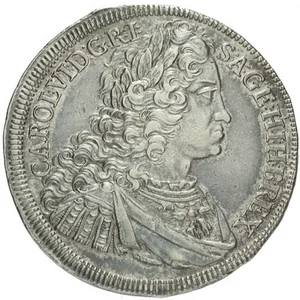
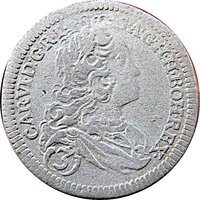
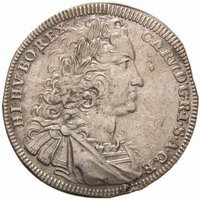
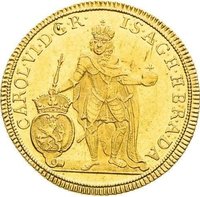
Armored bust right, legend starts at 8 o'clock.
Inscription:
CAROL VI D G R I S A GE HI H B REX
Script: Latin
Reverse
Inscription:
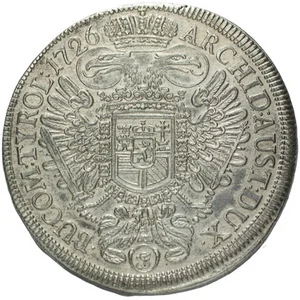
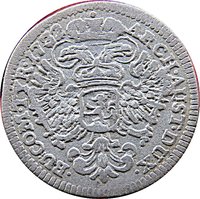
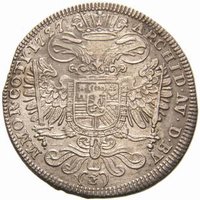
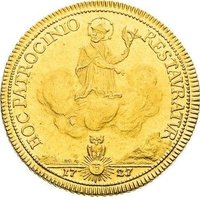
ARCHID AUST DUX BU COM TYROL 1726
Script: Latin
Edge
Mints
| Name | Mark |
|---|---|
| Prague | — |
Mintings
| Year | Mint Mark | Mintage | Quality | Collection |
|---|---|---|---|---|
| 1726 | FS | — | ||
| 1727 | FS | — |
Historical background
In 1726, the Kingdom of Bohemia, a core crown land of the Habsburg Monarchy, operated under a complex and strained currency system. The primary circulating coin was the Bohemian kreuzer, with 60 kreuzer equaling one Bohemian gulden (florin). However, the monetary landscape was fragmented and unreliable. Decades of war, particularly the Thirty Years' War and more recent conflicts, had led to repeated debasements—reducing the silver content in coins to fund state expenses. This resulted in a proliferation of lightweight, inferior domestic coinage circulating alongside older, full-weight thalers and foreign coins, causing confusion and eroding public trust in the currency.
The situation was governed by the imperial mint ordinances issued from Vienna, which attempted to standardize coinage across the Habsburg realms. A key framework was the Conventionstaler system, established in the 1750s but rooted in earlier attempts at reform. In 1726, the authorities were grappling with the practical enforcement of these standards. The central problem was agio, the fluctuating premium paid in good silver coins over the debased domestic kreuzers for large transactions. This effectively created a dual system where trade and state finances were calculated in stable silver "bank money" (like the Conventionsgulden), while everyday life used depreciating small change.
Consequently, the Bohemian economy in 1726 suffered from monetary instability that hampered commerce and created uncertainty. Prices were difficult to fix, and creditors risked being repaid in inferior coin. While the Habsburg state recognized the need for a uniform, sound currency to promote economic recovery and increase fiscal revenue, comprehensive reform was still decades away. Thus, the year represents a point within a long period of monetary transition, characterized by the lingering effects of wartime finance and slow, centralized efforts to impose order on the chaotic currency of the kingdom.
The situation was governed by the imperial mint ordinances issued from Vienna, which attempted to standardize coinage across the Habsburg realms. A key framework was the Conventionstaler system, established in the 1750s but rooted in earlier attempts at reform. In 1726, the authorities were grappling with the practical enforcement of these standards. The central problem was agio, the fluctuating premium paid in good silver coins over the debased domestic kreuzers for large transactions. This effectively created a dual system where trade and state finances were calculated in stable silver "bank money" (like the Conventionsgulden), while everyday life used depreciating small change.
Consequently, the Bohemian economy in 1726 suffered from monetary instability that hampered commerce and created uncertainty. Prices were difficult to fix, and creditors risked being repaid in inferior coin. While the Habsburg state recognized the need for a uniform, sound currency to promote economic recovery and increase fiscal revenue, comprehensive reform was still decades away. Thus, the year represents a point within a long period of monetary transition, characterized by the lingering effects of wartime finance and slow, centralized efforts to impose order on the chaotic currency of the kingdom.
✨ Legendary