

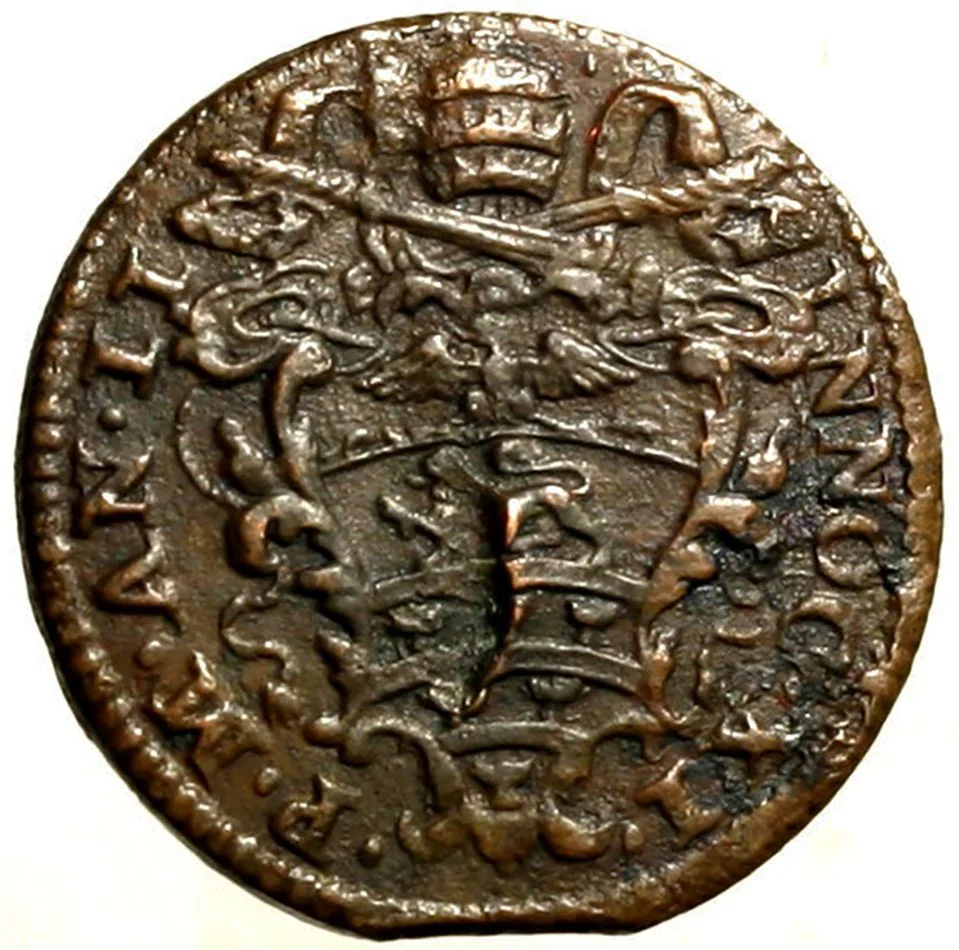
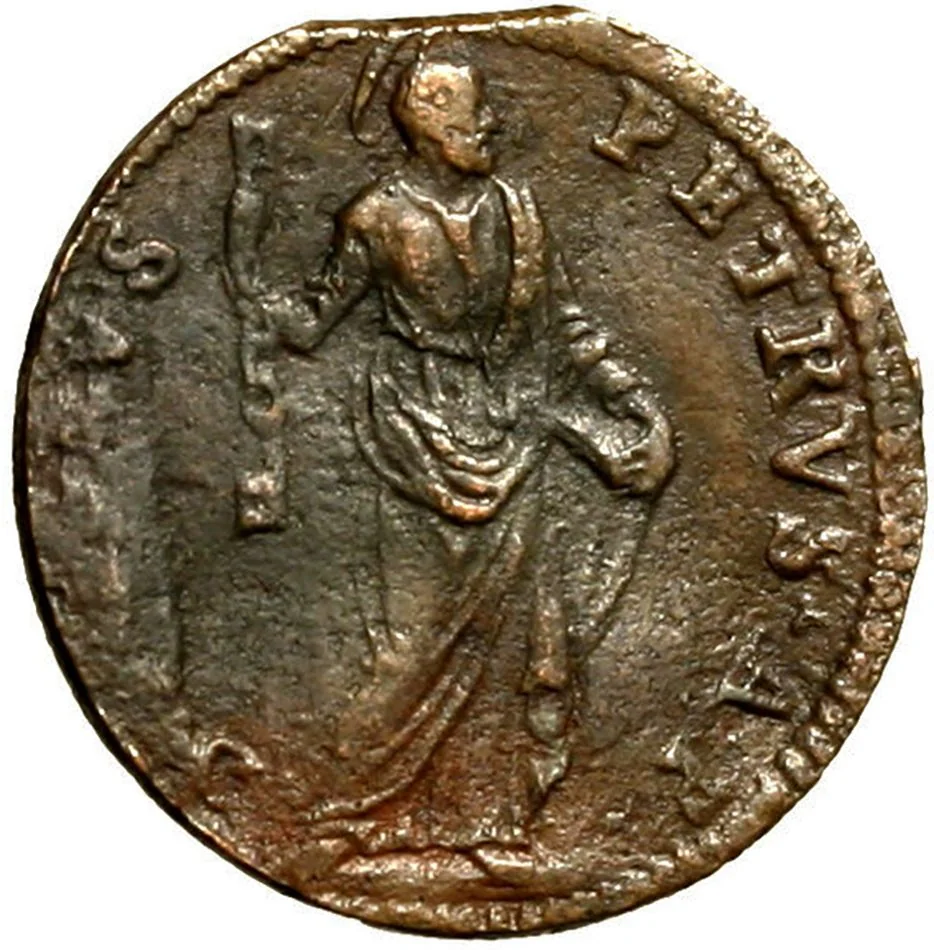
1 quattrino – Gubbio
Add to wishlist
Italy
Context
Years: 1677–1678
Country: Italy
Issuer: Gubbio
Ruler: Innocent XI
Currency:
(1534—1835)
Demonetized: Yes
Material
Diameter: 19.5 mm
Weight: 3.1 g
Thickness: 1.9 mm
Shape: Round
Composition: Copper
Standard: Gold tenth ounce
Magnetic: No
Alignment: Coin alignment
flip
References
KM: #
Numista: #105077
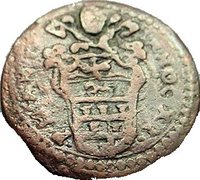
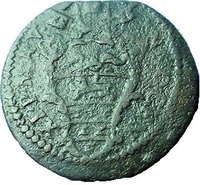
Obverse
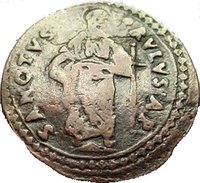
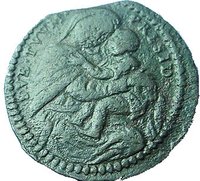
Reverse
Edge
Plain
Categories
| Person> Religious figure |
| Symbol> Crown |
| Symbols> Coat of Arms |
Mints
| Name | Mark |
|---|---|
| Gubbio | — |
Mintings
| Year | Mint Mark | Mintage | Quality | Collection |
|---|---|---|---|---|
| 1677 | — | — | ||
| 1678 | — | — |
Historical background
In 1677, the Italian city-state of Gubbio, like much of the Papal States under Pope Innocent XI, operated within a complex and strained monetary system. The official currency was the Papal scudo, a silver coin, but the reality of daily commerce was a chaotic jumble. Centuries of local minting rights, combined with a flood of foreign coins from Spanish, Venetian, and other Italian states, created a marketplace where dozens of different coins circulated simultaneously. Their value was not fixed by face but by the fluctuating weight and purity of their precious metal content, leading to constant calculation and frequent disputes.
This period was marked by a severe shortage of "good money"—full-weight silver coins. Following Gresham's Law, these were hoarded by merchants and citizens for savings or large transactions, while worn, clipped, or debased coins were used for everyday trade. The Papal government struggled to control this, issuing repeated edicts to fix exchange rates and ban certain foreign coins, but with limited enforcement power in a peripheral comune like Gubbio. This scarcity of reliable coinage stifled local commerce and credit, creating a persistent friction in the economy.
For the average artisan or farmer in Gubbio, this meant daily transactions were fraught with uncertainty. Prices were often quoted in a notional lira (divided into 20 soldi and 240 denari), but actual payment involved a physical assessment of mixed coinage. The local authorities, the Priori, spent considerable effort publishing tariffs to equate various coins to the official scudo, but these lists were frequently updated, proof of a losing battle. Thus, the monetary situation in 1677 was one of underlying instability, where trust in the very medium of exchange was eroded, reflecting Gubbio’s broader economic subordination and the weakening of its medieval autonomy within the Papal fiscal system.
This period was marked by a severe shortage of "good money"—full-weight silver coins. Following Gresham's Law, these were hoarded by merchants and citizens for savings or large transactions, while worn, clipped, or debased coins were used for everyday trade. The Papal government struggled to control this, issuing repeated edicts to fix exchange rates and ban certain foreign coins, but with limited enforcement power in a peripheral comune like Gubbio. This scarcity of reliable coinage stifled local commerce and credit, creating a persistent friction in the economy.
For the average artisan or farmer in Gubbio, this meant daily transactions were fraught with uncertainty. Prices were often quoted in a notional lira (divided into 20 soldi and 240 denari), but actual payment involved a physical assessment of mixed coinage. The local authorities, the Priori, spent considerable effort publishing tariffs to equate various coins to the official scudo, but these lists were frequently updated, proof of a losing battle. Thus, the monetary situation in 1677 was one of underlying instability, where trust in the very medium of exchange was eroded, reflecting Gubbio’s broader economic subordination and the weakening of its medieval autonomy within the Papal fiscal system.
💎 Extremely Rare