

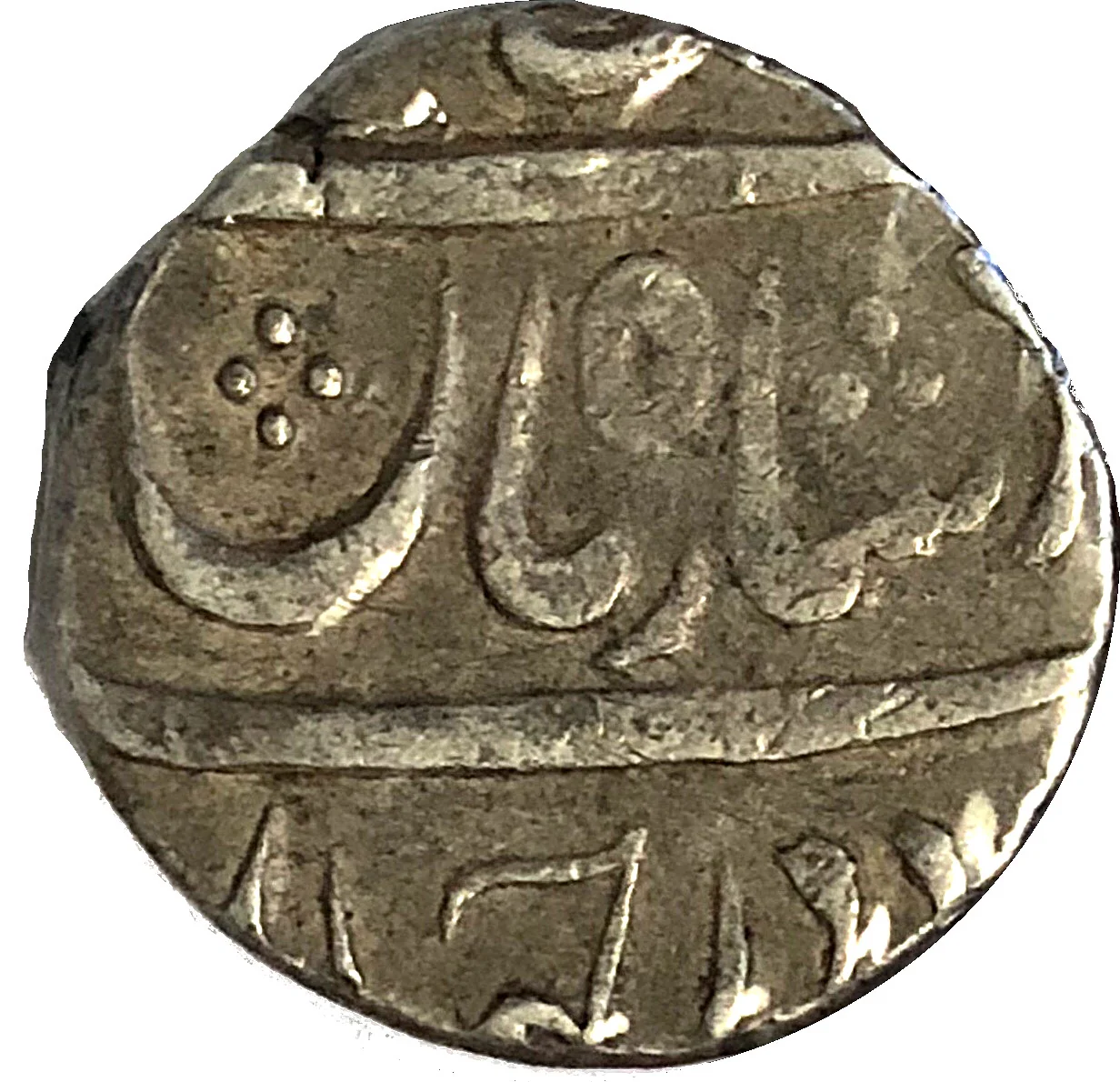

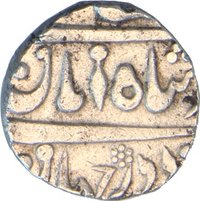
Obverse
Description:
Nawab of Sawnoor, a Maratha vassal, ruling in the name of Mohammed Shah.
Inscription:
Lutf i alah couplet
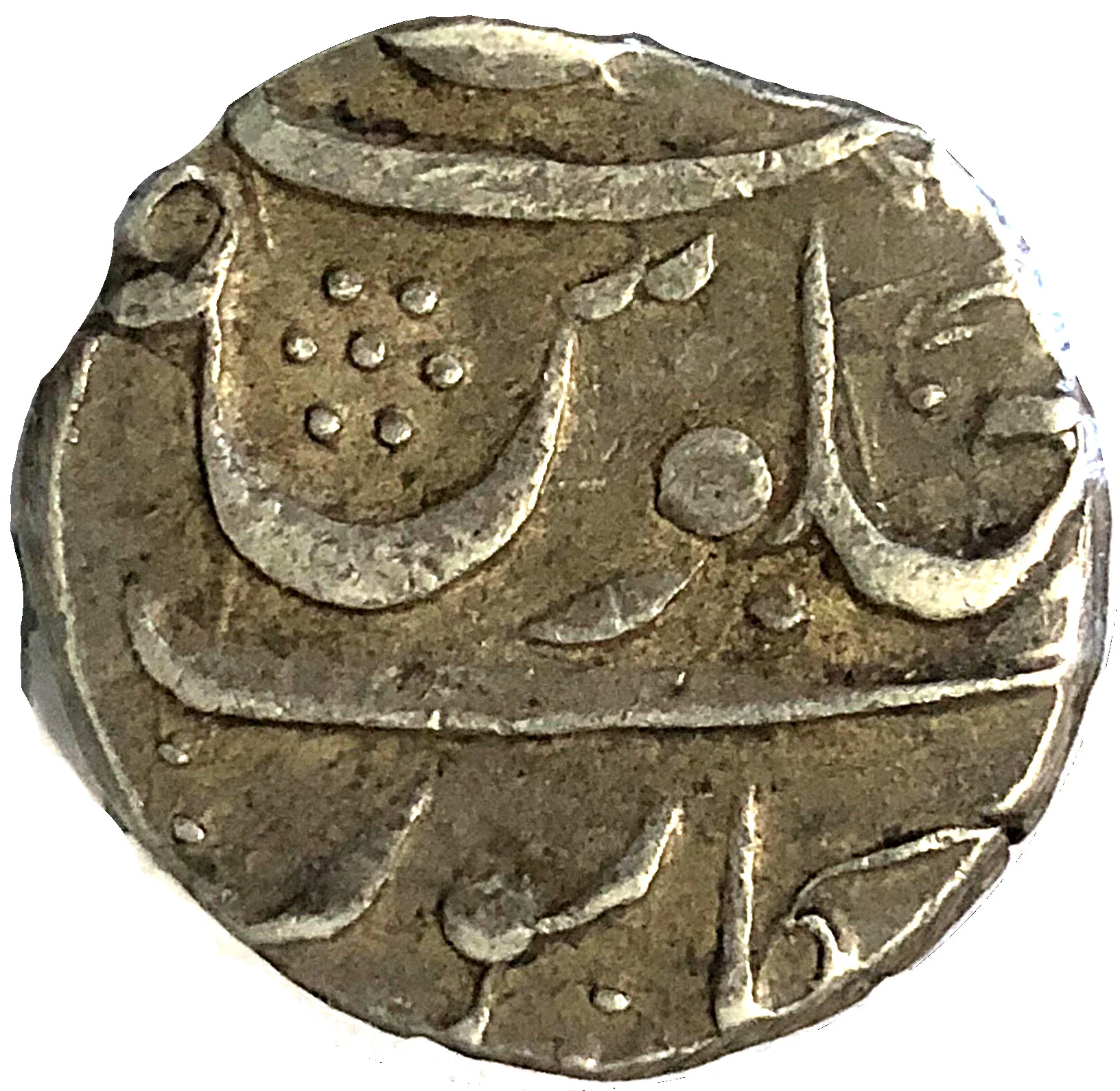
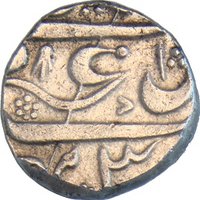
Reverse
Description:
Bankapur mint.
Edge
Plain
Mintings
| Year | Mint Mark | Mintage | Quality | Collection |
|---|---|---|---|---|
| — | — | — |
Historical background
By 1707, the currency situation within the Maratha Empire was a complex tapestry reflecting its political structure and economic ambitions. Following the death of Chhatrapati Shivaji in 1680, the state had endured a period of instability, but under Chhatrapati Shahu and his Peshwa, Balaji Vishwanath, consolidation was underway. The empire did not have a single, uniform currency system. Instead, it operated within a wider monetary environment dominated by the silver rupee of the declining Mughal Empire, particularly the Nam Shahi Rupee from Ahmednagar and other regional Mughal mints. Maratha-administered territories often collected revenue in these widely accepted Mughal coins, granting them de facto legitimacy.
However, the Marathas were actively asserting their sovereignty through coinage. They issued their own distinct coins, most notably the Shivrai copper coin and the Hon gold coin. The Shivrai, named after Shivaji, was a humble but strategically important copper currency used for local trade and daily transactions, promoting economic self-sufficiency within their heartland. The gold Hon, a continuation of the earlier Yadav-era pagoda, was primarily used for treasury reserves, large transactions, and temple donations. The key limitation was the scarcity of silver, which prevented the large-scale minting of a definitive Maratha silver rupee to fully replace the Mughal standard.
This period was therefore one of transition and parallel circulation. Mughal rupees, Maratha Hons, Shivrai coppers, and coins from various subjugated or allied regions all circulated simultaneously. The system was decentralized, with important mints at places like Satara, Pune, and Nasik. The currency landscape mirrored the Maratha polity itself: a growing power still navigating and eventually dominating the economic structures of the previous imperial order, while laying the groundwork for its own more unified monetary system that would mature in the decades to follow.
However, the Marathas were actively asserting their sovereignty through coinage. They issued their own distinct coins, most notably the Shivrai copper coin and the Hon gold coin. The Shivrai, named after Shivaji, was a humble but strategically important copper currency used for local trade and daily transactions, promoting economic self-sufficiency within their heartland. The gold Hon, a continuation of the earlier Yadav-era pagoda, was primarily used for treasury reserves, large transactions, and temple donations. The key limitation was the scarcity of silver, which prevented the large-scale minting of a definitive Maratha silver rupee to fully replace the Mughal standard.
This period was therefore one of transition and parallel circulation. Mughal rupees, Maratha Hons, Shivrai coppers, and coins from various subjugated or allied regions all circulated simultaneously. The system was decentralized, with important mints at places like Satara, Pune, and Nasik. The currency landscape mirrored the Maratha polity itself: a growing power still navigating and eventually dominating the economic structures of the previous imperial order, while laying the groundwork for its own more unified monetary system that would mature in the decades to follow.
✨ Legendary