

1 Paisa – Maratha Empire
India

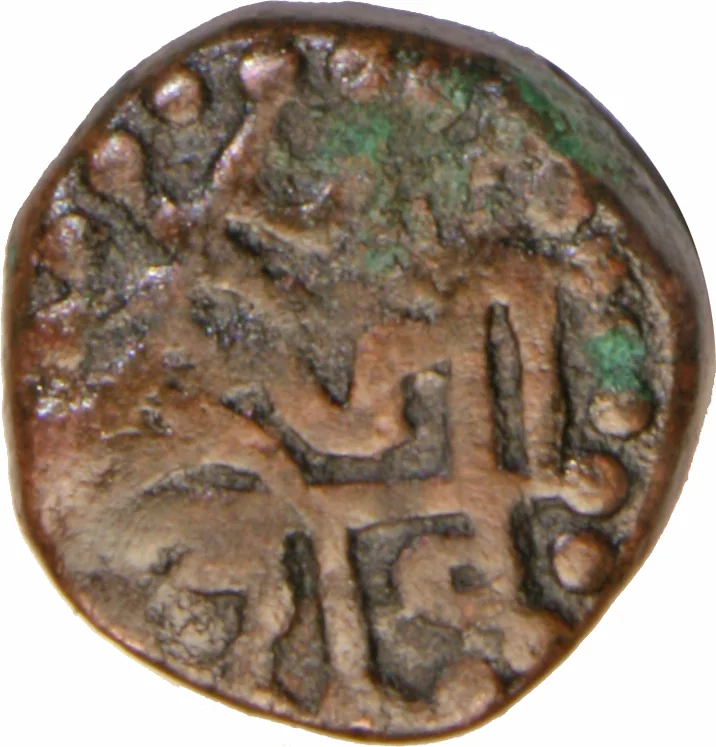
Obverse
Description:
"Śrī Rāja Śiva" in Nāgarī script within a dotted circle.
Inscription:
श्री राजा शिब
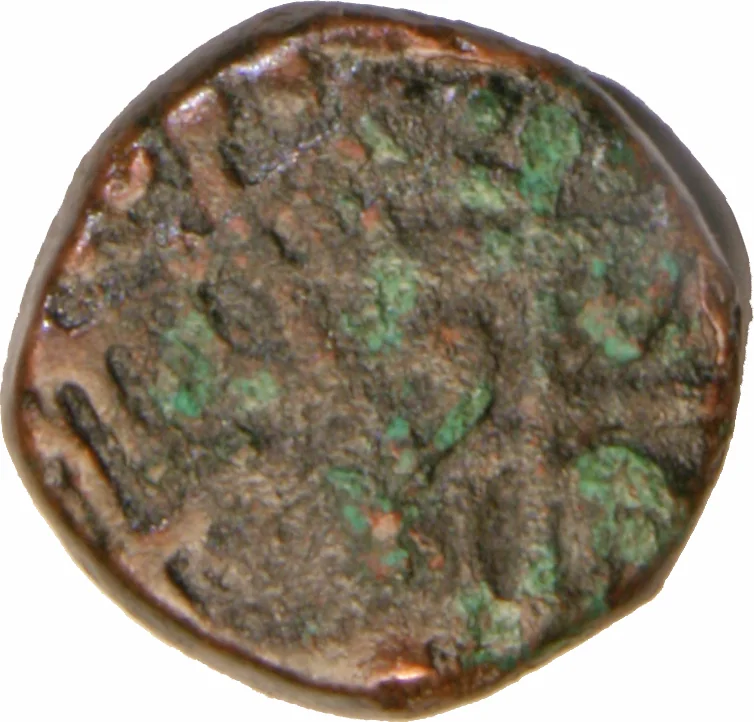
Reverse
Description:
"Chhatrapati" in Nagari script within a dotted circle.
Inscription:
छत्रपती
Edge
Plain
Mints
| Name | Mark |
|---|---|
| Raigad Fort | — |
Mintings
| Year | Mint Mark | Mintage | Quality | Collection |
|---|---|---|---|---|
| — | — | — |
Historical background
In 1674, the year of Chhatrapati Shivaji Maharaj's formal coronation, the Maratha currency system was in a state of transition, reflecting the empire's shift from a regional rebellion to a sovereign Hindu state. The prevailing monetary landscape was dominated by the currencies of the powerful Deccan Sultanates—primarily the Mohur (gold), Hun (gold), and Rupiya (silver) of the Bijapur and Golconda kingdoms, alongside the ubiquitous Mughal Rupiya. These coins, especially the silver rupiya, served as the primary medium for large-scale trade and revenue administration, as the Marathas initially operated within the existing economic frameworks of the Deccan.
Shivaji recognized that political sovereignty required economic independence, and his coronation accelerated efforts to establish a distinct Maratha monetary system. Prior to 1674, he had already begun minting coins, but the coronation year gave this initiative renewed symbolic and administrative force. The new Maratha coins were struck in gold, silver, and copper at mints like Rajapur and Fort Raigad. Notably, Shivaji's silver Shivrai Rupiya was introduced, bearing the Sri Raja Shiv legend in the Devanagari script, a direct challenge to the Perso-Arabic inscriptions on Mughal and Sultanate coins, proclaiming his independent Hindu kingship.
However, the situation in 1674 was one of co-circulation and gradual imposition. The fledgling Maratha currency did not immediately displace the well-established Mughal and Sultanate coins, which continued to circulate widely due to their recognized purity and acceptance in broader Indian trade. The copper Shivrai Paisa was crucial for local and daily transactions, aiding in revenue collection and grassroots economic integration. Thus, the background is of a dual system: the practical reliance on older, external currencies for larger economic functions, running parallel to the deliberate and politically charged project of establishing a sovereign Maratha coinage as a pillar of the new Swarajya (self-rule).
Shivaji recognized that political sovereignty required economic independence, and his coronation accelerated efforts to establish a distinct Maratha monetary system. Prior to 1674, he had already begun minting coins, but the coronation year gave this initiative renewed symbolic and administrative force. The new Maratha coins were struck in gold, silver, and copper at mints like Rajapur and Fort Raigad. Notably, Shivaji's silver Shivrai Rupiya was introduced, bearing the Sri Raja Shiv legend in the Devanagari script, a direct challenge to the Perso-Arabic inscriptions on Mughal and Sultanate coins, proclaiming his independent Hindu kingship.
However, the situation in 1674 was one of co-circulation and gradual imposition. The fledgling Maratha currency did not immediately displace the well-established Mughal and Sultanate coins, which continued to circulate widely due to their recognized purity and acceptance in broader Indian trade. The copper Shivrai Paisa was crucial for local and daily transactions, aiding in revenue collection and grassroots economic integration. Thus, the background is of a dual system: the practical reliance on older, external currencies for larger economic functions, running parallel to the deliberate and politically charged project of establishing a sovereign Maratha coinage as a pillar of the new Swarajya (self-rule).

💎 Extremely Rare