

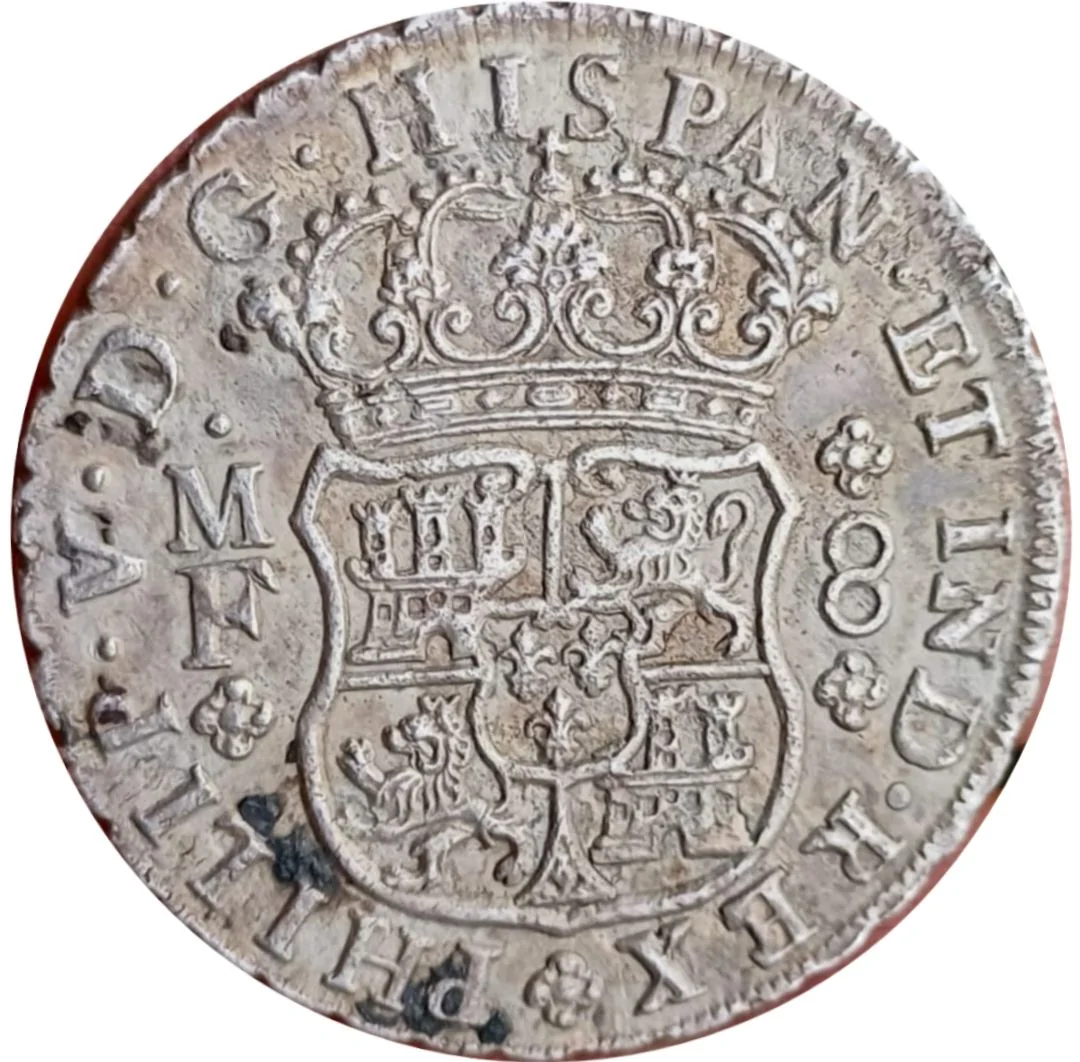
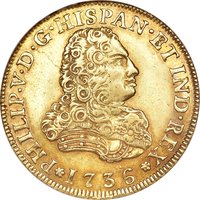
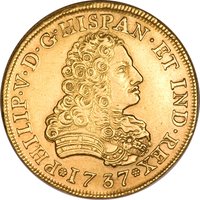
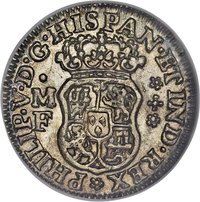
Obverse
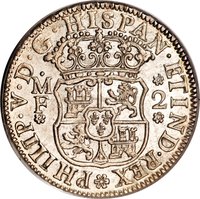
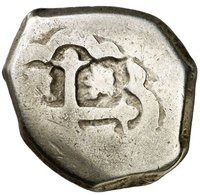
Description:
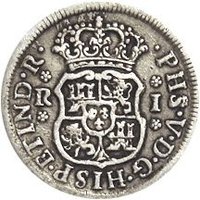
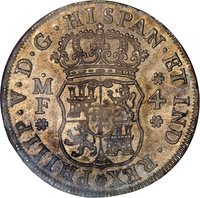
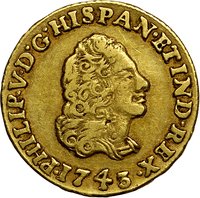
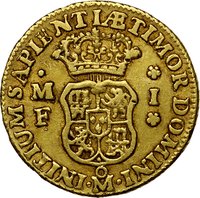
Shield with crowned arms between value and initials.
Inscription:
PHILIP · V · D · G · HISPAN · ET IND · REX ❀
· MF ❀
❀ 8 ❀
· MF ❀
❀ 8 ❀
Script: Latin
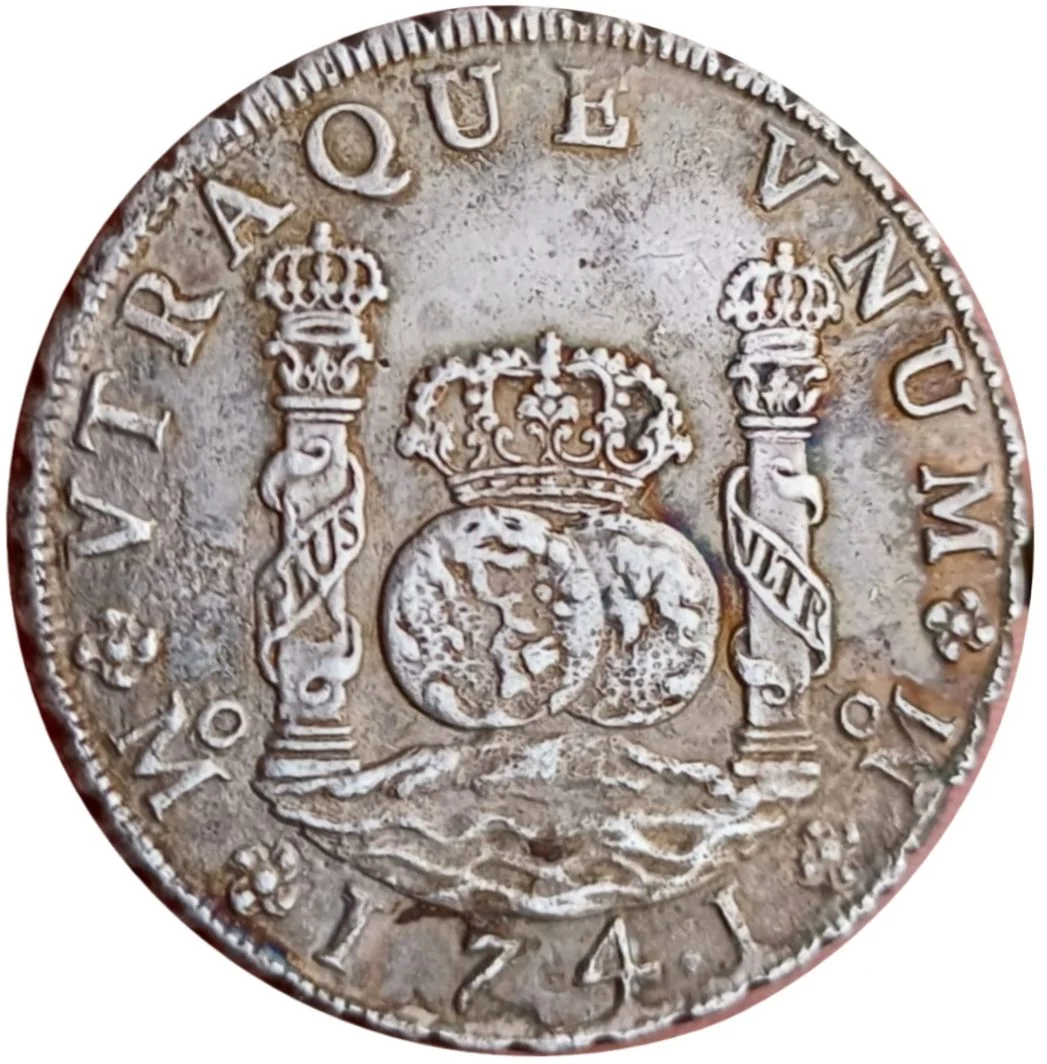
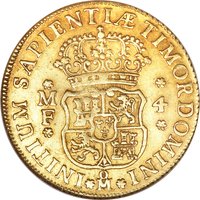
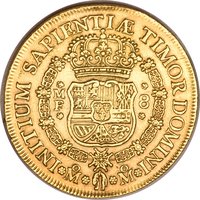
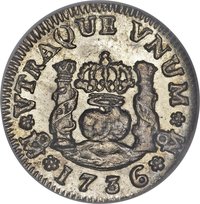
Reverse
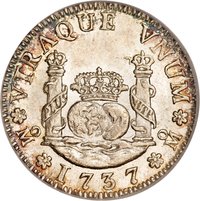
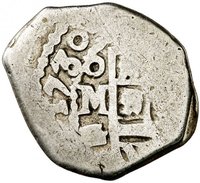
Description:
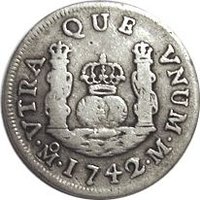
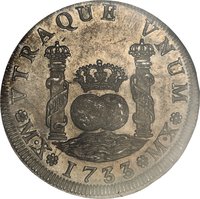
Crowned hemispheres between crowned pillars.
Inscription:
❀ VTRAQUE VNUM ❀
PLUS VLTR
Mo ❀ 1741 ❀ Mo
PLUS VLTR
Mo ❀ 1741 ❀ Mo
Script: Latin
Edge
© rubenfernandez (CC BY-SA)
Categories
| Symbol> Crown |
| Symbols> Coat of Arms |
Mints
| Name | Mark |
|---|---|
| Mexican Mint | (Mo) |
Mintings
| Year | Mint Mark | Mintage | Quality | Collection |
|---|---|---|---|---|
| 1732 | F | — | ||
| 1733 | F | — | ||
| 1733 | MF | — | ||
| 1733 | MX | — | ||
| 1734 | MF | — | ||
| 1735 | MF | — | ||
| 1736 | MF | — | ||
| 1737 | MF | — | ||
| 1738 | MF | — | ||
| 1739 | MF | — | ||
| 1740 | MF | — | ||
| 1741 | MF | — | ||
| 1742 | MF | — | ||
| 1743 | MF | — | ||
| 1744 | MF | — | ||
| 1745 | MF | — | ||
| 1746 | MF | — | ||
| 1747 | MF | — |
Historical background
In 1732, the currency system of New Spain (colonial Mexico) was a complex and often problematic fusion of official royal policy and local economic realities. The primary circulating coin was the silver real, with eight reales making the famous "piece of eight" or peso. These coins, minted at the Mexico City Mint—the oldest in the Americas—were of such reliable purity and weight that they had become a de facto global currency, circulating throughout the Americas, Asia, and Europe. However, a chronic shortage of small-denomination coinage for everyday transactions plagued the economy. To fill this void, a vast quantity of unofficial tlacos—crude, token-like coins often made of copper or base metals—circulated locally. These were issued by merchants, hacienda owners, and even churches, creating a fragmented and unreliable system of petty currency.
The Spanish Crown, viewing this proliferation of unofficial currency with suspicion, had long sought to impose order and centralize monetary control. Royal decrees repeatedly attempted to suppress tlacos and introduce official copper maravedí coins for small change. These efforts consistently failed, as the Crown's limited shipments of copper coinage were insufficient for the colony's massive internal market. The year 1732 fell within a period of particular tension, following a major but ultimately unsuccessful attempt to reform the system in the 1720s. The economy was thus characterized by a dual system: robust, high-quality silver for large-scale and international trade, and a chaotic, localized patchwork of token money for the populace's daily needs.
This monetary environment reflected the broader contradictions of the Bourbon reform period, where centralizing ambitions clashed with colonial practicalities. The silver peso anchored New Spain's position as the financial heart of the Spanish Empire, funding the Manila Galleon trade and royal activities worldwide. Yet, the persistent chaos in the small-change system caused frequent disputes, hindered local commerce, and placed a burden on the poor, who were most reliant on the depreciating tlacos. Consequently, 1732 was not a year of resolution but one of ongoing struggle between the imperial vision of a unified currency and the entrenched, informal economies that kept the colony's daily life functioning.
The Spanish Crown, viewing this proliferation of unofficial currency with suspicion, had long sought to impose order and centralize monetary control. Royal decrees repeatedly attempted to suppress tlacos and introduce official copper maravedí coins for small change. These efforts consistently failed, as the Crown's limited shipments of copper coinage were insufficient for the colony's massive internal market. The year 1732 fell within a period of particular tension, following a major but ultimately unsuccessful attempt to reform the system in the 1720s. The economy was thus characterized by a dual system: robust, high-quality silver for large-scale and international trade, and a chaotic, localized patchwork of token money for the populace's daily needs.
This monetary environment reflected the broader contradictions of the Bourbon reform period, where centralizing ambitions clashed with colonial practicalities. The silver peso anchored New Spain's position as the financial heart of the Spanish Empire, funding the Manila Galleon trade and royal activities worldwide. Yet, the persistent chaos in the small-change system caused frequent disputes, hindered local commerce, and placed a burden on the poor, who were most reliant on the depreciating tlacos. Consequently, 1732 was not a year of resolution but one of ongoing struggle between the imperial vision of a unified currency and the entrenched, informal economies that kept the colony's daily life functioning.
Series: 1732 New Spain circulation coins
🌟 Uncommon