

2 reales – New Spain
Add to wishlist
Mexico
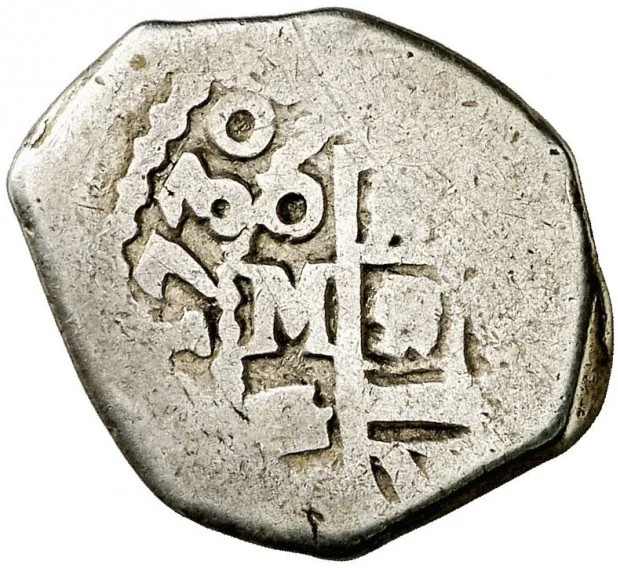
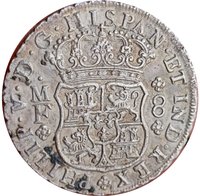
Obverse
Description:
Felipe V's royal coat of arms, encircled by legend and date.
Inscription:
PHILIPVS V DEI G
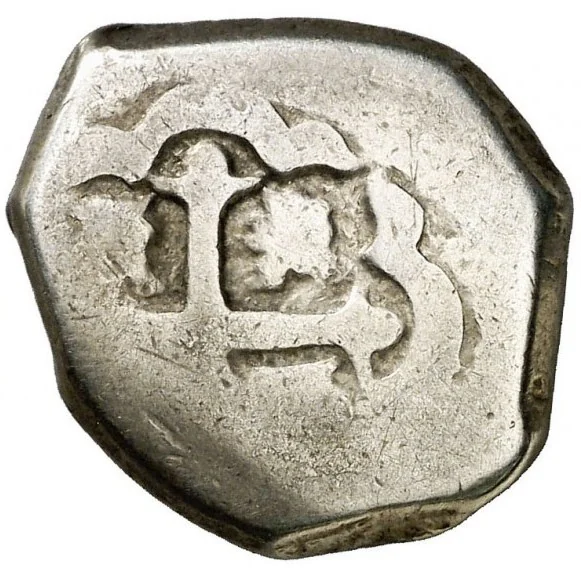
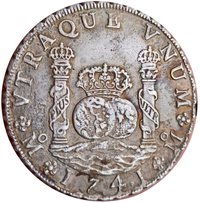
Reverse
Description:
Spain's coat of arms.
Inscription:
HISPANIARVM ET INDIARVM REX
Edge
Mintings
| Year | Mint Mark | Mintage | Quality | Collection |
|---|---|---|---|---|
| 1730 | Mo | — |
Historical background
In 1730, the currency system of New Spain was a complex and often problematic fusion of Old World practices and New World realities. The primary circulating coin was the silver real, with eight reales equaling one peso (often called the "piece of eight"). These coins, minted at the Mexico City Mint—the oldest in the Americas—were renowned for their high silver content and were a cornerstone of global trade, flowing from Acapulco to Manila and from Veracruz to Seville. However, the colony suffered from a chronic shortage of small-denomination coinage (moneda menuda), making everyday transactions for the majority of the population difficult and leading to the widespread use of informal substitutes like cacao beans and clipped coin fragments.
This shortage was exacerbated by two main factors. First, the Spanish Crown's mercantilist policies systematically drained silver bullion and high-value coinage to Spain, prioritizing the metropolis over the colony's internal economic needs. Second, the minting process itself was slow and often corrupt, with authorities frequently accused of hoarding silver or producing coins irregularly. The resulting scarcity of small currency stifled local commerce and created a two-tiered economy: one fueled by silver for large-scale merchants and the state, and another struggling with barter and improvised currency for the common people.
Attempts at reform were piecemeal and largely ineffective. While the Crown had authorized the minting of copper maravedí coins in the previous century to alleviate the small-change crisis, they were deeply unpopular, prone to counterfeiting, and often rejected by the public who distrusted their intrinsic value. Consequently, by 1730, the monetary situation remained unstable. The economy was buoyed by immense silver wealth, yet this very success undermined its day-to-day functionality, creating persistent inflation, transactional friction, and social tension that would continue to challenge colonial authorities for decades.
This shortage was exacerbated by two main factors. First, the Spanish Crown's mercantilist policies systematically drained silver bullion and high-value coinage to Spain, prioritizing the metropolis over the colony's internal economic needs. Second, the minting process itself was slow and often corrupt, with authorities frequently accused of hoarding silver or producing coins irregularly. The resulting scarcity of small currency stifled local commerce and created a two-tiered economy: one fueled by silver for large-scale merchants and the state, and another struggling with barter and improvised currency for the common people.
Attempts at reform were piecemeal and largely ineffective. While the Crown had authorized the minting of copper maravedí coins in the previous century to alleviate the small-change crisis, they were deeply unpopular, prone to counterfeiting, and often rejected by the public who distrusted their intrinsic value. Consequently, by 1730, the monetary situation remained unstable. The economy was buoyed by immense silver wealth, yet this very success undermined its day-to-day functionality, creating persistent inflation, transactional friction, and social tension that would continue to challenge colonial authorities for decades.
✨ Legendary