

8 reales – New Spain
Add to wishlist
Mexico
Context
Years: 1599–1621
Country: Mexico
Issuer: New Spain
Ruler: Philip III
Currency:
(1535—1897)
Demonetized: Yes
Material
References
KM: #
Numista: #14999
Value
Bullion value: $63.75
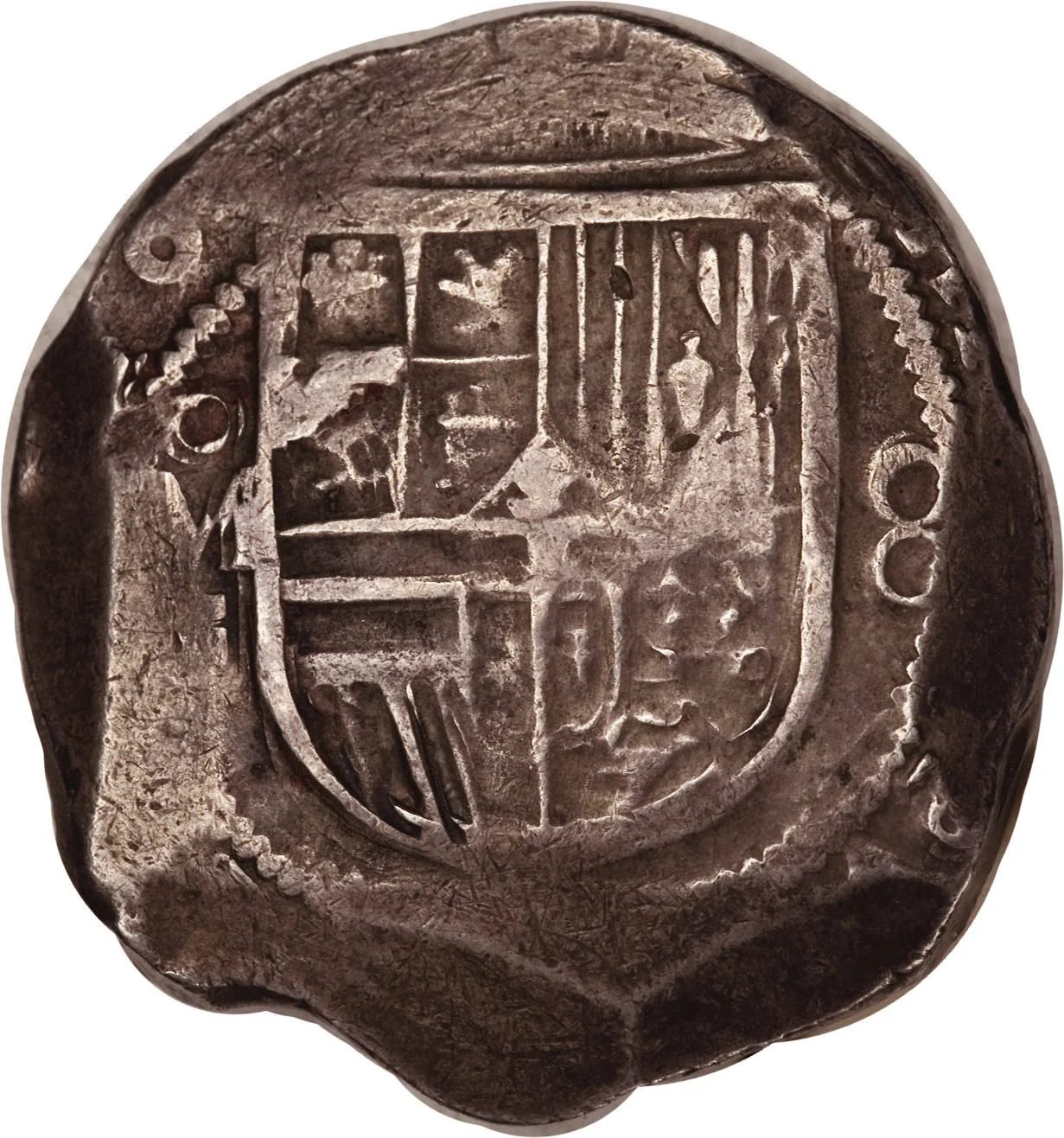
Obverse
Description:
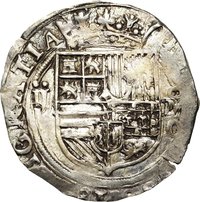
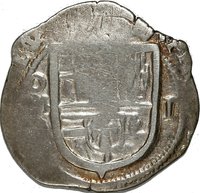
Shield of the Spanish Habsburgs.
Inscription:
PHILLIPPVS·III·DEI GRATIA (sans/without date, MB#44.1)
PHILLIPPVS·III·DEI G [DATE] (avec/with date, KM#44.3)
Mo
F 8
PHILLIPPVS·III·DEI G [DATE] (avec/with date, KM#44.3)
Mo
F 8
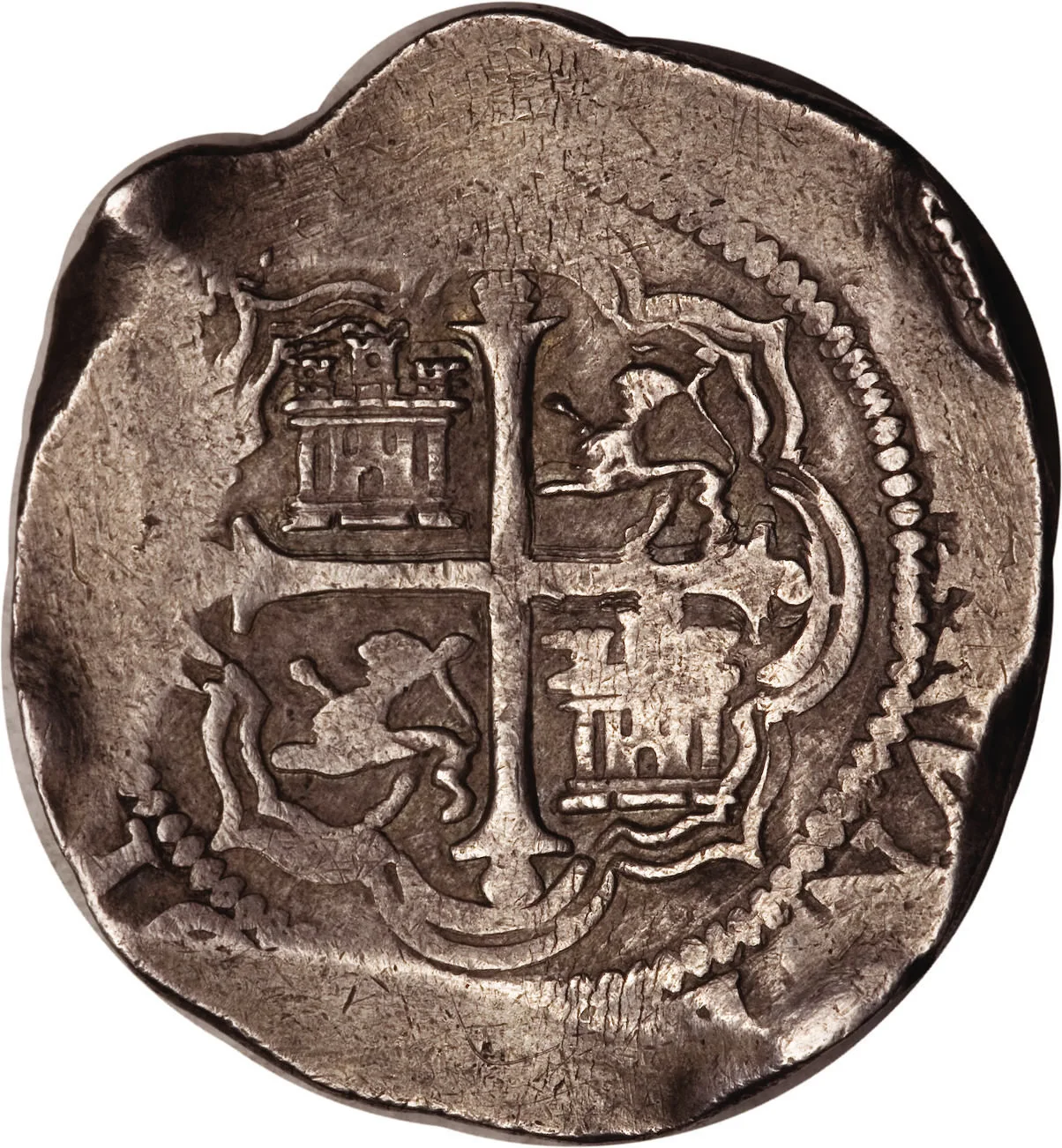
Reverse
Description:
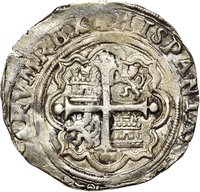
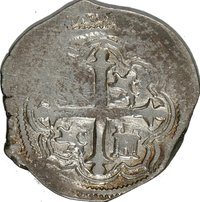
Jerusalem Cross with fleur-de-lys tips, featuring lions and castles.
Inscription:
HISPANIARVM·ET·INDIARVM·REX
Edge
Categories
| Building> Castle or fortification |
| Symbols> Coat of Arms |
| Symbol> Cross |
| Symbol> Fleur-de-lis |
Mints
| Name | Mark |
|---|---|
| Mexican Mint | M |
Mintings
Historical background
In 1599, the currency situation in New Spain (colonial Mexico) was defined by a severe and persistent shortage of official coinage, which crippled daily commerce and the broader economy. The primary circulating medium was the silver real, with eight reales making a peso (or "piece of eight"). However, the Spanish Crown maintained a strict monopoly on minting, and the sole authorized mint in Mexico City could not produce enough coin to meet the demands of a booming silver-mining economy. This scarcity was exacerbated by the Crown's policy of draining vast quantities of silver bullion and coin back to Spain to finance its European wars, leaving the colony chronically under-monetized.
To facilitate local trade, a complex and unofficial system of substitute currencies filled the void. The most common were tlacos, small tokens made of copper or base metals, issued by merchants, municipal authorities, and even convents. These were essentially credit tokens, redeemable only at the specific business or locality that issued them, creating a fragmented and unreliable monetary landscape. Alongside tlacos, cacao beans—a holdover from the pre-Hispanic economy—remained in use for very small transactions, while goods and services were often bartered. This proliferation of substitutes led to widespread confusion, frequent fraud, and disputes, as their value was unstable and acceptance was not universal.
The royal government viewed this situation with deep concern, as it undermined tax collection, facilitated illicit trade, and diminished Crown control. Efforts to introduce a standardized copper coinage to alleviate the small-change crisis had been proposed but were repeatedly rejected due to fears of inflation and a cultural aversion to "vile" copper money among the populace accustomed to silver. Consequently, 1599 represents a year deep within a prolonged period of monetary dysfunction, where the colony's immense silver wealth starkly contrasted with the daily reality of a cumbersome, inefficient, and semi-chaotic currency system that hindered economic integration and growth.
To facilitate local trade, a complex and unofficial system of substitute currencies filled the void. The most common were tlacos, small tokens made of copper or base metals, issued by merchants, municipal authorities, and even convents. These were essentially credit tokens, redeemable only at the specific business or locality that issued them, creating a fragmented and unreliable monetary landscape. Alongside tlacos, cacao beans—a holdover from the pre-Hispanic economy—remained in use for very small transactions, while goods and services were often bartered. This proliferation of substitutes led to widespread confusion, frequent fraud, and disputes, as their value was unstable and acceptance was not universal.
The royal government viewed this situation with deep concern, as it undermined tax collection, facilitated illicit trade, and diminished Crown control. Efforts to introduce a standardized copper coinage to alleviate the small-change crisis had been proposed but were repeatedly rejected due to fears of inflation and a cultural aversion to "vile" copper money among the populace accustomed to silver. Consequently, 1599 represents a year deep within a prolonged period of monetary dysfunction, where the colony's immense silver wealth starkly contrasted with the daily reality of a cumbersome, inefficient, and semi-chaotic currency system that hindered economic integration and growth.
💎 Extremely Rare