

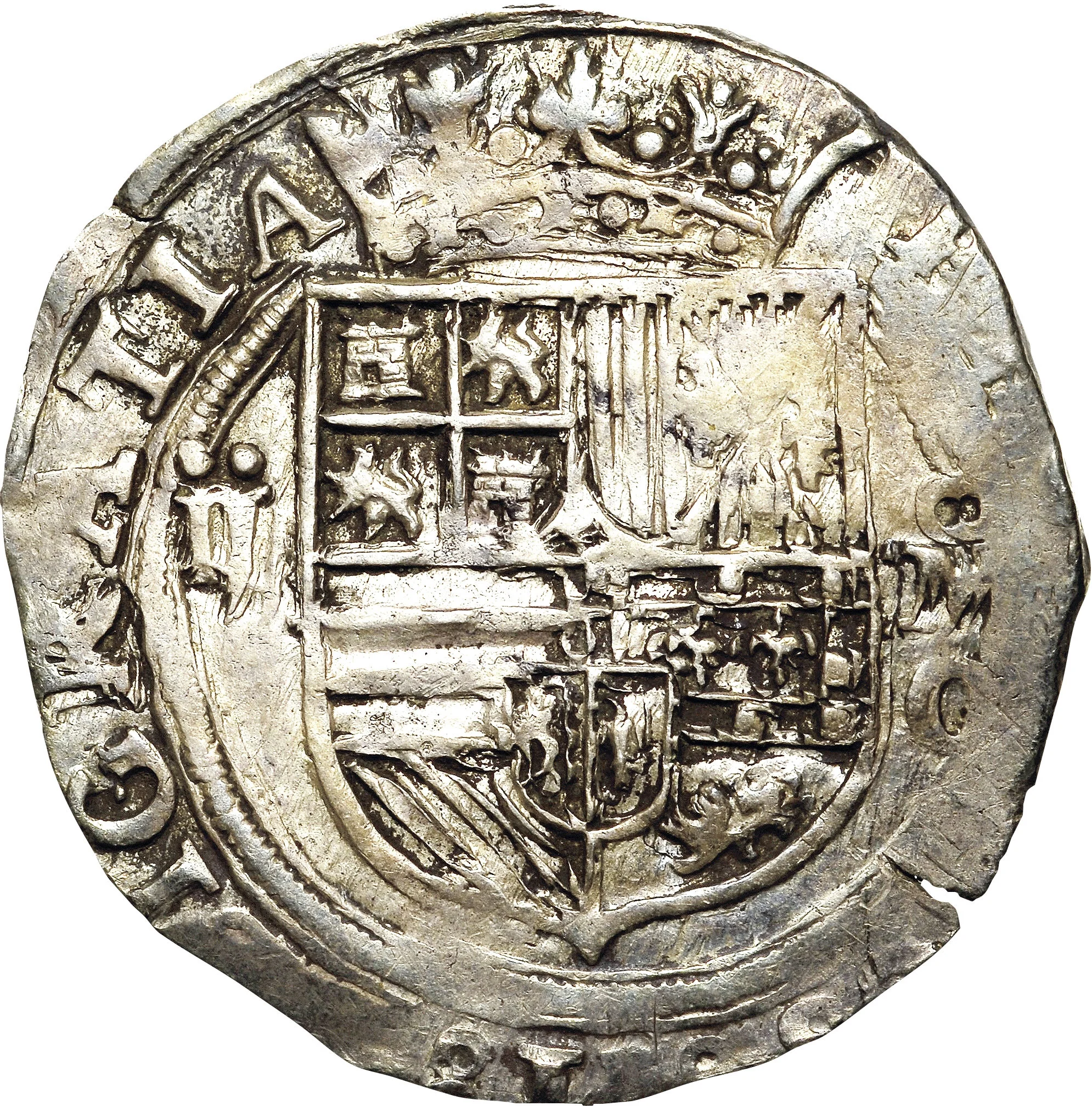
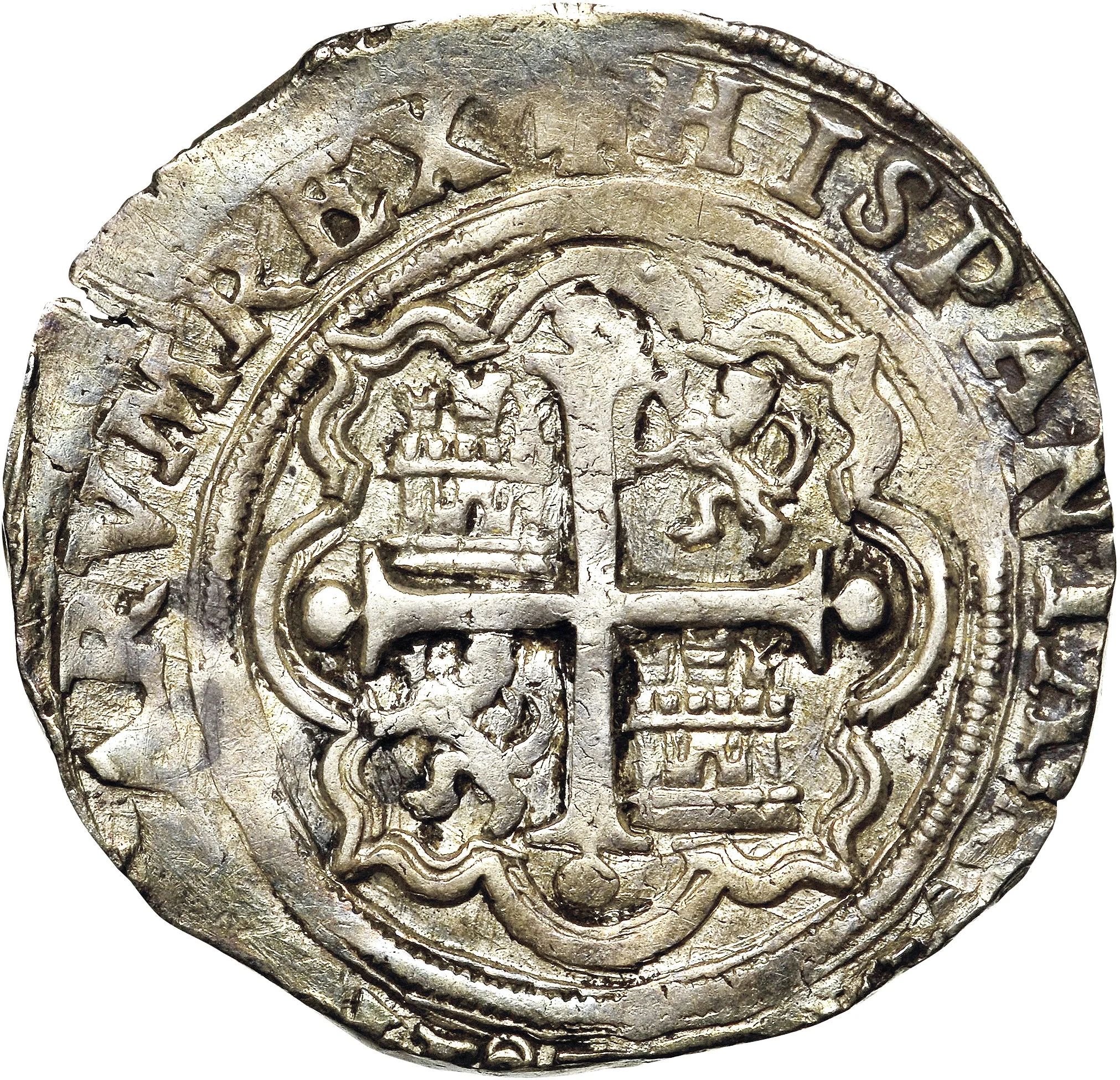
2 reales – New Spain
Add to wishlist
Mexico
Context
Years: 1598–1622
Country: Mexico
Issuer: New Spain
Ruler: Philip III
Currency:
(1535—1897)
Demonetized: Yes
Material
Diameter: 27 mm
Weight: 6.77 g
Silver Weight:: 6.30 g
Shape: Irregular round
Composition: 93.1% Silver
Magnetic: No
Technique: Hammered
References
KM: #
Numista: #14992
Value
Bullion value: $15.71
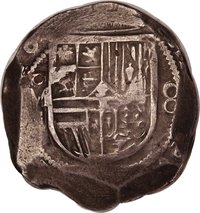
Obverse
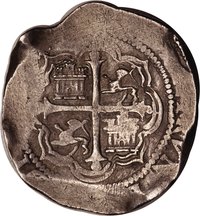
Reverse
Edge
Categories
| Symbols> Coat of Arms |
| Symbol> Cross |
Mintings
| Year | Mint Mark | Mintage | Quality | Collection |
|---|---|---|---|---|
| — | — | — | ||
| 1607 | A | — | ||
| 1607 | F | — | ||
| 1608 | A | — | ||
| 1609 | A | — | ||
| 1609 | F | — | ||
| 1611 | F | — | ||
| 1613 | F | — | ||
| 1616 | D | — | ||
| 1616 | F | — | ||
| 1620 | D | — | ||
| 1622 | — | — |
Historical background
In 1598, the currency system of New Spain, centered in Mexico City, was a complex and often problematic pillar of the world's richest silver economy. The primary coin was the silver real, with eight reales comprising a peso (or "piece of eight"), a coin of such reliable silver content that it circulated globally. The mint in Mexico City, established in 1535, produced vast quantities of these coins from the immense silver flows of mines like Zacatecas and Potosí (in the Viceroyalty of Peru), fueling both trans-Pacific trade with Manila and trans-Atlantic fleets to Seville. However, this official system coexisted with a chronic shortage of small-denomination currency for daily transactions, leading to widespread use of informal tlacos (credit tokens issued by merchants) and cut or clipped coins, creating constant local friction.
The monetary situation was further strained by the crown's persistent financial demands. King Philip II's Spain, nearing bankruptcy from endless European wars, viewed New Spain as a fiscal lifeline. Silver remittances to the crown were enormous, often leaving the colony itself cash-poor despite producing the wealth. Furthermore, the government frequently resorted to manipulating the coinage to raise short-term funds, such as by authorizing the minting of debased vellón coinage (copper or low-grade silver) in previous decades. While pure silver pesos were maintained for international trade, these inferior coins eroded public trust and complicated domestic commerce.
By the turn of the 17th century, the authorities were engaged in a perpetual struggle to impose order. Royal officials repeatedly issued decrees against the use of tlacos and clipped coinage, but with little success, as the economic need for small change was genuine. The system was thus a duality: a robust, high-quality silver currency that anchored global trade, underpinned by a chaotic and insufficient local currency ecosystem. This instability reflected the broader colonial reality where administrative ambition consistently lagged behind economic reality and local ingenuity.
The monetary situation was further strained by the crown's persistent financial demands. King Philip II's Spain, nearing bankruptcy from endless European wars, viewed New Spain as a fiscal lifeline. Silver remittances to the crown were enormous, often leaving the colony itself cash-poor despite producing the wealth. Furthermore, the government frequently resorted to manipulating the coinage to raise short-term funds, such as by authorizing the minting of debased vellón coinage (copper or low-grade silver) in previous decades. While pure silver pesos were maintained for international trade, these inferior coins eroded public trust and complicated domestic commerce.
By the turn of the 17th century, the authorities were engaged in a perpetual struggle to impose order. Royal officials repeatedly issued decrees against the use of tlacos and clipped coinage, but with little success, as the economic need for small change was genuine. The system was thus a duality: a robust, high-quality silver currency that anchored global trade, underpinned by a chaotic and insufficient local currency ecosystem. This instability reflected the broader colonial reality where administrative ambition consistently lagged behind economic reality and local ingenuity.
✨ Legendary