

1 real – New Spain
Add to wishlist
Mexico
Context
Years: 1607–1613
Country: Mexico
Issuer: New Spain
Ruler: Philip III
Currency:
(1535—1897)
Demonetized: Yes
Material
References
KM: #
Numista: #76222
Value
Bullion value: $7.98
Obverse
Description:
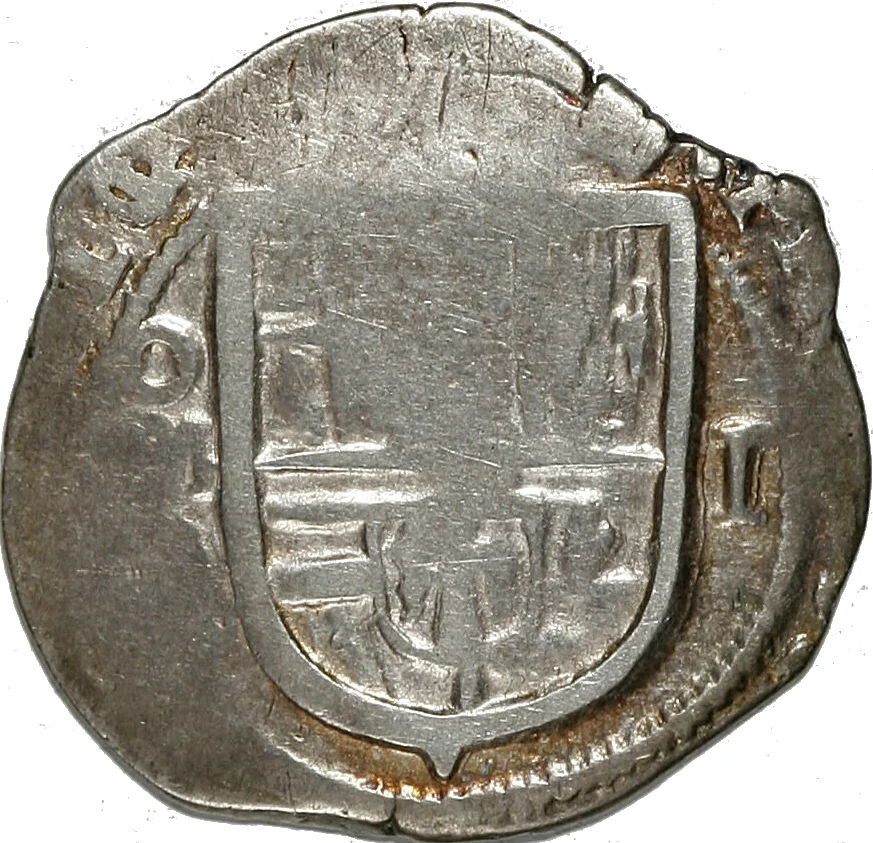
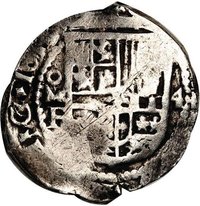
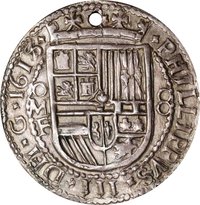
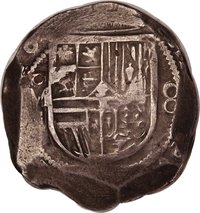
Felipe III coat of arms between mint mark and value, surrounded by legend.
Inscription:
PHILIPVS III DEI G
Reverse
Description:
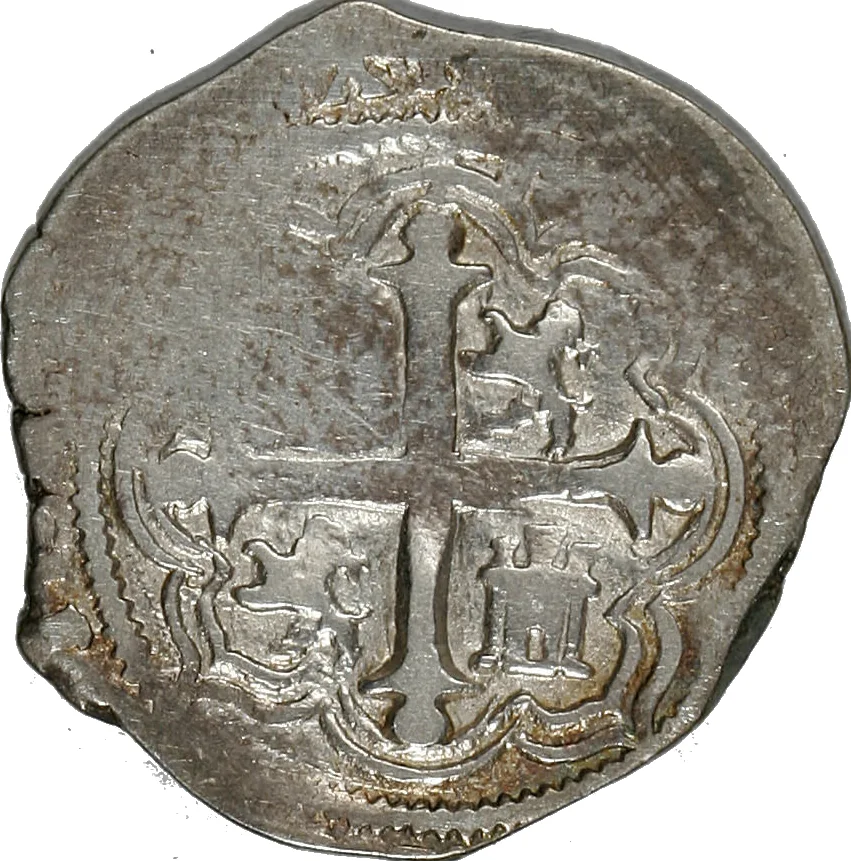
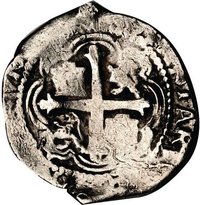
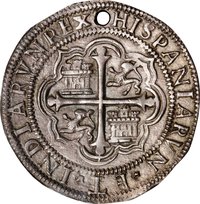
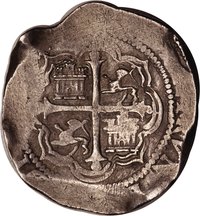
Cross divides castles from lions.
Edge
Mintings
| Year | Mint Mark | Mintage | Quality | Collection |
|---|---|---|---|---|
| 1607 | F | — | ||
| 1608 | A | — | ||
| 1608 | F | — | ||
| 1609 | A | — | ||
| 1610 | F | — | ||
| 1611 | F | — | ||
| 1612 | F | — | ||
| 1613 | F | — |
Historical background
In 1607, the currency system of New Spain, the wealthiest viceroyalty of the Spanish Empire, was defined by a chronic shortage of small-denomination coinage, a reliance on multiple forms of money, and the overwhelming influence of silver from mines like Potosí and Zacatecas. The official currency was based on the silver real and the gold escudo, with eight reales making a peso (or "piece of eight"), a coin recognized globally for its purity and weight. However, the Spanish Crown, prioritizing the shipment of wealth to Europe, consistently failed to mint sufficient tlacos (copper coins) and reales for local, everyday transactions. This created a profound disconnect between the vast silver wealth flowing through Mexico City and the practical economy of its markets.
This scarcity of official small change led to a widespread and tolerated system of substitute currencies. Shopkeepers, merchants, and even convents issued their own tlacos—lead, copper, or even cocoa bean tokens—as credit tokens redeemable only at their own establishments. This practice, while lubricating daily commerce, was inherently unstable and prone to fraud. Simultaneously, cacao beans, used as money in pre-Hispanic times, still circulated for tiny purchases, and gold dust was used in mining regions. Thus, the economy operated on a dual track: large-scale trade and imperial finance in pristine silver pesos, and a fragmented local economy reliant on a patchwork of quasi-private tokens.
The underlying driver of this complex monetary environment was the Casa de Moneda (mint) in Mexico City, which operated as an engine of the global economy. Its primary function was to cast silver into pesos and reales de a ocho for export to Spain and onward to finance Spain's European wars and Asian trade. The famous Spanish treasure fleets gathered at Veracruz, making the colony the financial heart of the empire but leaving its internal currency system anemic. Consequently, 1607 represents a point of tension where New Spain's immense mineral wealth contrasted sharply with a local monetary system that was improvisational, inefficient, and struggled to meet the needs of its growing population, a problem that would spur official reforms and the eventual introduction of a copper coinage decades later.
This scarcity of official small change led to a widespread and tolerated system of substitute currencies. Shopkeepers, merchants, and even convents issued their own tlacos—lead, copper, or even cocoa bean tokens—as credit tokens redeemable only at their own establishments. This practice, while lubricating daily commerce, was inherently unstable and prone to fraud. Simultaneously, cacao beans, used as money in pre-Hispanic times, still circulated for tiny purchases, and gold dust was used in mining regions. Thus, the economy operated on a dual track: large-scale trade and imperial finance in pristine silver pesos, and a fragmented local economy reliant on a patchwork of quasi-private tokens.
The underlying driver of this complex monetary environment was the Casa de Moneda (mint) in Mexico City, which operated as an engine of the global economy. Its primary function was to cast silver into pesos and reales de a ocho for export to Spain and onward to finance Spain's European wars and Asian trade. The famous Spanish treasure fleets gathered at Veracruz, making the colony the financial heart of the empire but leaving its internal currency system anemic. Consequently, 1607 represents a point of tension where New Spain's immense mineral wealth contrasted sharply with a local monetary system that was improvisational, inefficient, and struggled to meet the needs of its growing population, a problem that would spur official reforms and the eventual introduction of a copper coinage decades later.
💎 Extremely Rare