

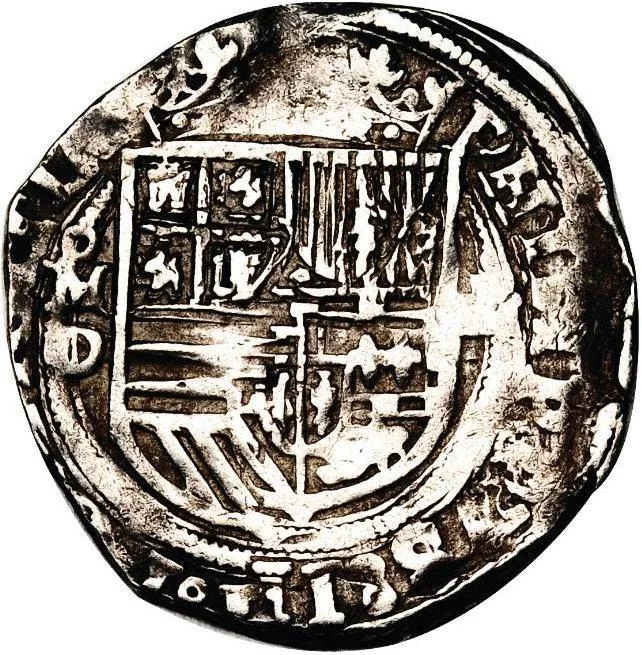
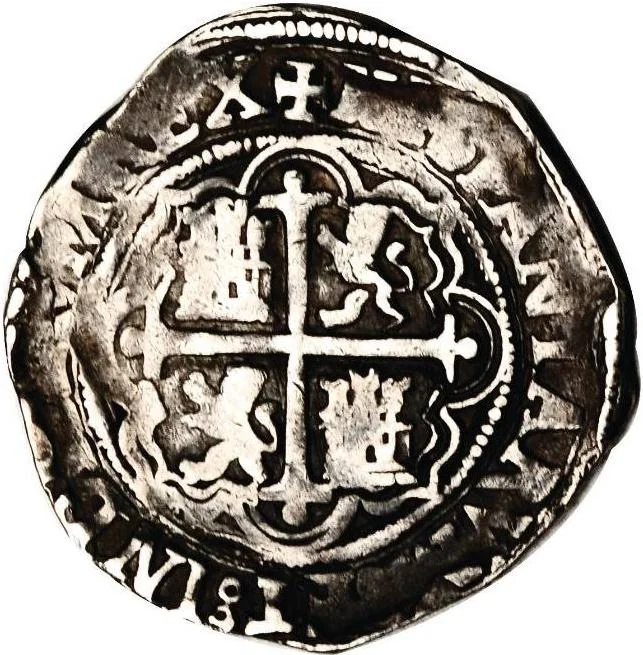
4 reales – New Spain
Add to wishlist
Mexico
Mintings
| Year | Mint Mark | Mintage | Quality | Collection |
|---|---|---|---|---|
| — | — | — |
Historical background
In 1556, the currency system of New Spain was a complex and often chaotic blend of official policy and practical reality. The cornerstone was the silver real, with eight reales equaling one peso (or "piece of eight"), a coin that would become a global currency. However, the colony suffered from a severe shortage of official minted coinage. The Mexico City Mint, established in 1535, struggled to meet demand, leading to widespread use of irregularly cut cobs (macuquinas)—crude, hand-struck coins—as well as a reliance on barter and indigenous commodities like cacao beans as de facto money in local markets.
This scarcity was exacerbated by the Crown's relentless extraction of wealth. The Royal Fifth (Quinto Real), a 20% tax on all mined precious metals, siphoned vast quantities of silver and gold directly to Spain, leaving the local economy chronically drained of specie. Furthermore, the Spanish monarchy, particularly under Charles V and then Philip II (who ascended in 1556), was frequently bankrupt due to European wars, leading to currency manipulations like the sudden devaluation of the vellón (copper) coinage in Spain itself, which created ripples of uncertainty and distrust in transatlantic trade and finance.
Consequently, the monetary environment was one of fragmentation and inflation. While silver pesos anchored large-scale trade and tax payments, everyday transactions relied on a messy patchwork of tokens, credit notes, and commodity money. This system inherently favored encomenderos and merchants with access to coin, while complicating commerce and stifling local economic development. The year 1556 thus represents a point of tension, where the immense silver wealth of Potosí (discovered in 1545) was beginning to flow, yet had not yet transformed the money supply, leaving New Spain in a transitional period of monetary strain on the eve of its transformation into the heart of the first global currency system.
This scarcity was exacerbated by the Crown's relentless extraction of wealth. The Royal Fifth (Quinto Real), a 20% tax on all mined precious metals, siphoned vast quantities of silver and gold directly to Spain, leaving the local economy chronically drained of specie. Furthermore, the Spanish monarchy, particularly under Charles V and then Philip II (who ascended in 1556), was frequently bankrupt due to European wars, leading to currency manipulations like the sudden devaluation of the vellón (copper) coinage in Spain itself, which created ripples of uncertainty and distrust in transatlantic trade and finance.
Consequently, the monetary environment was one of fragmentation and inflation. While silver pesos anchored large-scale trade and tax payments, everyday transactions relied on a messy patchwork of tokens, credit notes, and commodity money. This system inherently favored encomenderos and merchants with access to coin, while complicating commerce and stifling local economic development. The year 1556 thus represents a point of tension, where the immense silver wealth of Potosí (discovered in 1545) was beginning to flow, yet had not yet transformed the money supply, leaving New Spain in a transitional period of monetary strain on the eve of its transformation into the heart of the first global currency system.
💎 Extremely Rare