

10 Grani – Malta
Malta
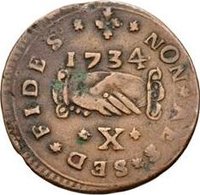
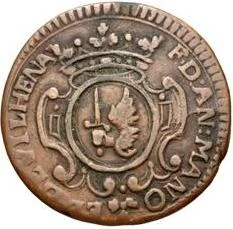
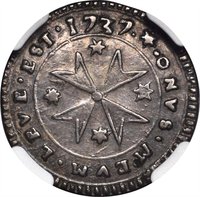
Obverse
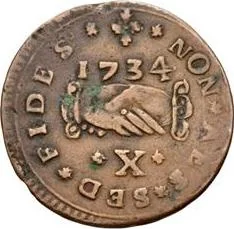
Reverse
Description:
Clasped hands, date above, value in grani below.
Inscription:
NON AES SED FIDES
Script: Latin
Edge
Mintings
| Year | Mint Mark | Mintage | Quality | Collection |
|---|---|---|---|---|
| 1734 | — | — |
Historical background
In 1734, Malta's currency situation was a complex tapestry reflecting its dual role as a strategic fortress of the Knights of St. John and a vibrant Mediterranean trading hub. The official currency was the Maltese scudo, issued by the Order's treasury, which was subdivided into 12 tari, each of 20 grani. However, the actual money in circulation was a bewildering array of foreign coins, a direct result of the island's commercial activity and the Knights' international connections. Spanish pieces of eight, Venetian sequins, French écus, and Turkish piastres all circulated freely, their values fluctuating against the scudo based on weight and metallic purity, leading to constant calculations and disputes in the marketplace.
This monetary chaos was exacerbated by a chronic shortage of small change, which crippled everyday transactions for the local population. To fill this void, a unique local solution emerged: the Knights authorised the circulation of low-value copper tokens, known as "grani" or "piccioli," which were minted from melted-down cannonballs. These tokens, valid only within Malta, became a vital but unstable component of the economy. Furthermore, the practice of "clipping" or shaving precious metal from the edges of full-bodied foreign coins was rampant, degrading their value and adding another layer of uncertainty to trade.
The situation placed significant strain on both commerce and governance. Merchants and money-changers, often operating from benches (banchi) in Valletta's streets, wielded considerable power in determining exchange rates, while the Order's treasury struggled to assert monetary control. Although attempts were made to standardise the system, such as officially fixing the value of the most common foreign coins, these measures were often ineffective. Thus, in 1734, Malta's economy operated on a precarious and intricate system of local tokens, debased foreign silver, and an official currency that often served more as an accounting unit than a physical medium of exchange.
This monetary chaos was exacerbated by a chronic shortage of small change, which crippled everyday transactions for the local population. To fill this void, a unique local solution emerged: the Knights authorised the circulation of low-value copper tokens, known as "grani" or "piccioli," which were minted from melted-down cannonballs. These tokens, valid only within Malta, became a vital but unstable component of the economy. Furthermore, the practice of "clipping" or shaving precious metal from the edges of full-bodied foreign coins was rampant, degrading their value and adding another layer of uncertainty to trade.
The situation placed significant strain on both commerce and governance. Merchants and money-changers, often operating from benches (banchi) in Valletta's streets, wielded considerable power in determining exchange rates, while the Order's treasury struggled to assert monetary control. Although attempts were made to standardise the system, such as officially fixing the value of the most common foreign coins, these measures were often ineffective. Thus, in 1734, Malta's economy operated on a precarious and intricate system of local tokens, debased foreign silver, and an official currency that often served more as an accounting unit than a physical medium of exchange.
✨ Legendary