

1 Maravedi – Spain
Spain
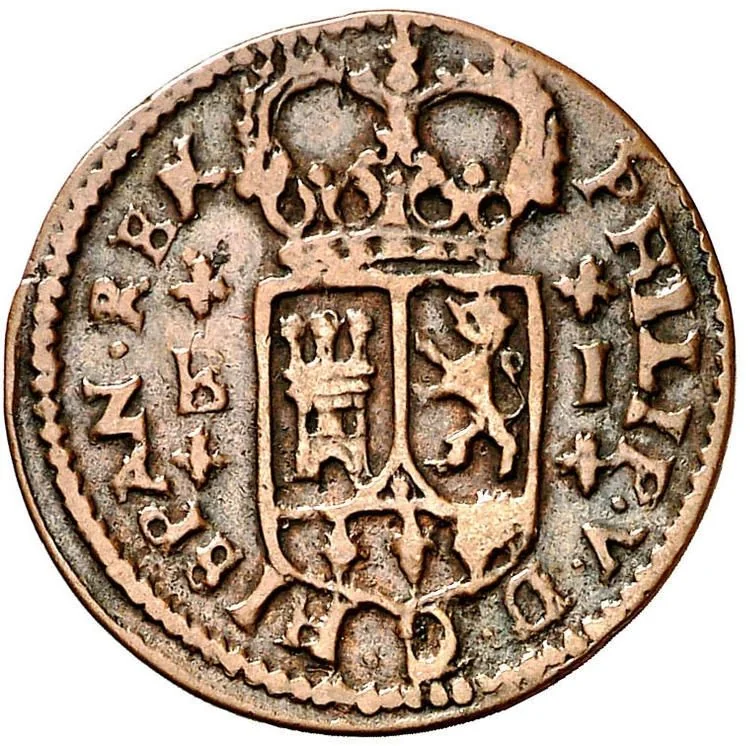
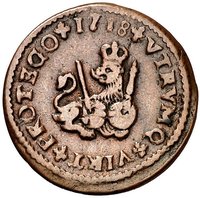
Obverse
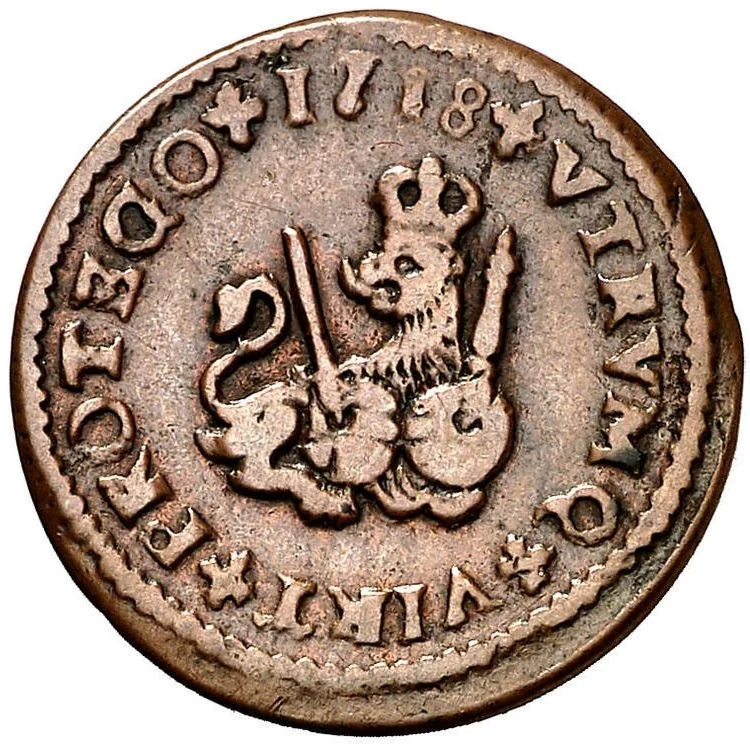
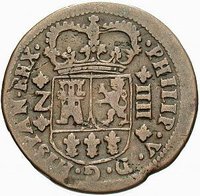
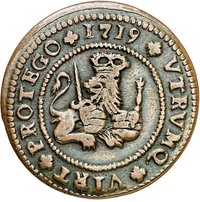
Reverse
Description:
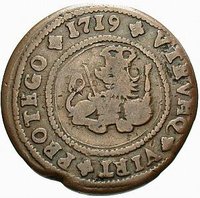
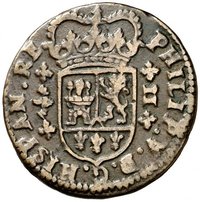
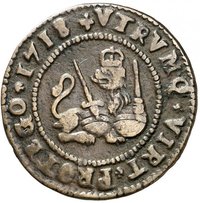
Crowned lion holding a scepter and saber, with two globes at its feet.
Inscription:
VTRVMQ ✣ VIRT ✣ PROTEGO
✣ 1720 ✣
✣ 1720 ✣
Script: Latin
Edge
Mints
| Name | Mark |
|---|---|
| Royal Mint of Segovia | — |
| Barcelona Mint / La Seca | B |
| Zaragoza | Z |
Historical background
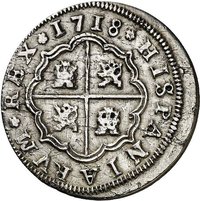
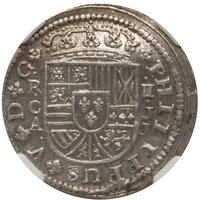
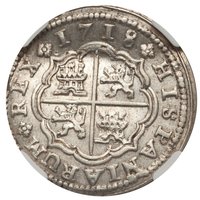
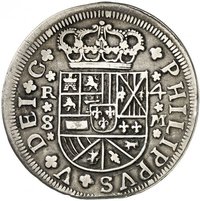
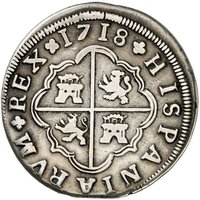
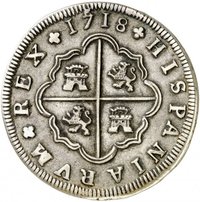
In 1718, Spain's currency system was a complex and troubled relic of its Habsburg past, grappling with the financial strains of the War of the Quadruple Alliance. The core of the problem was the severe debasement of the domestic vellón coinage—copper or billon (copper-silver alloy) coins used for everyday transactions. Successive monarchs had drastically reduced their silver content and increased their minting to fund state expenditures, leading to rampant inflation and a profound loss of public confidence. This created a chaotic dual system where transactions were often calculated in "real money" (silver-based units of account) but paid in vastly depreciated vellón coins, causing economic distortion and social unrest.
The situation was further complicated by the circulation of more stable foreign silver coins, like the French écu and the Dutch leeuwendaalder, which were preferred for substantial trade. Meanwhile, the prized Spanish silver real de a ocho (piece of eight), minted in the Americas, often flowed directly out of Spain to pay for foreign goods and service the crown's debts abroad, leaving the domestic economy starved of sound currency. King Philip V, the first Bourbon monarch, recognized this monetary chaos as a major obstacle to centralizing power and revitalizing the state, but the immediate pressures of war took precedence over comprehensive reform.
Consequently, the year 1718 fell within a period of stopgap measures rather than fundamental overhaul. The government resorted to arbitrary decrees, such as attempting to mandate the acceptance of vellón at face value, which were largely ineffective. True stabilization would only begin after the war, culminating in the ambitious reforms of 1724-1726, which introduced new gold escudos and silver reales and aimed to unify the monetary system across Spain, laying the groundwork for Bourbon economic recovery. Thus, 1718 represents the tense climax of an unsustainable monetary disorder that the new dynasty was determined, but not yet fully able, to resolve.
The situation was further complicated by the circulation of more stable foreign silver coins, like the French écu and the Dutch leeuwendaalder, which were preferred for substantial trade. Meanwhile, the prized Spanish silver real de a ocho (piece of eight), minted in the Americas, often flowed directly out of Spain to pay for foreign goods and service the crown's debts abroad, leaving the domestic economy starved of sound currency. King Philip V, the first Bourbon monarch, recognized this monetary chaos as a major obstacle to centralizing power and revitalizing the state, but the immediate pressures of war took precedence over comprehensive reform.
Consequently, the year 1718 fell within a period of stopgap measures rather than fundamental overhaul. The government resorted to arbitrary decrees, such as attempting to mandate the acceptance of vellón at face value, which were largely ineffective. True stabilization would only begin after the war, culminating in the ambitious reforms of 1724-1726, which introduced new gold escudos and silver reales and aimed to unify the monetary system across Spain, laying the groundwork for Bourbon economic recovery. Thus, 1718 represents the tense climax of an unsustainable monetary disorder that the new dynasty was determined, but not yet fully able, to resolve.
Series: 1718 Spain circulation coins
🌟 Limited