

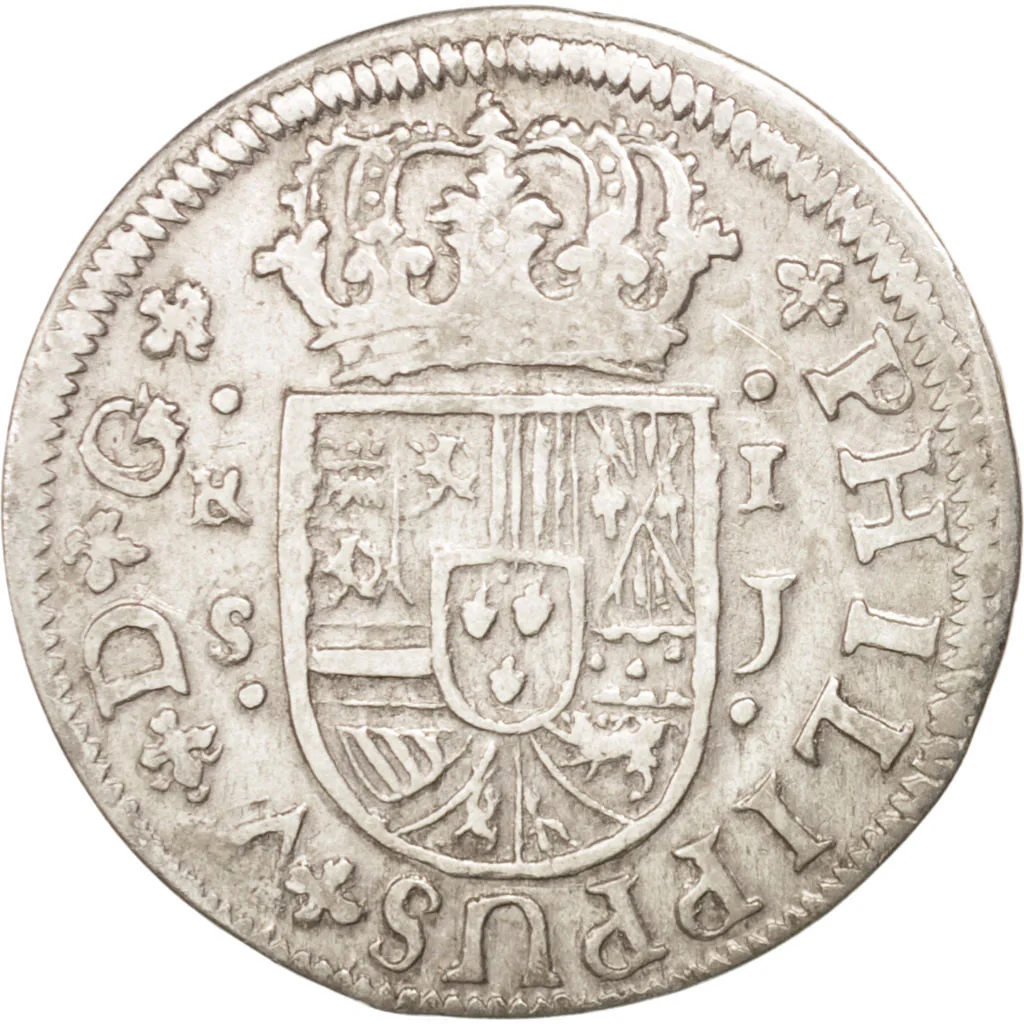
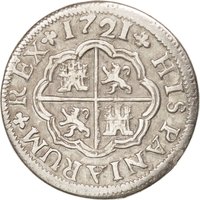
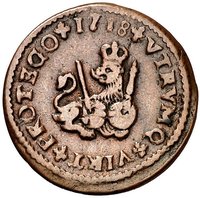
Obverse
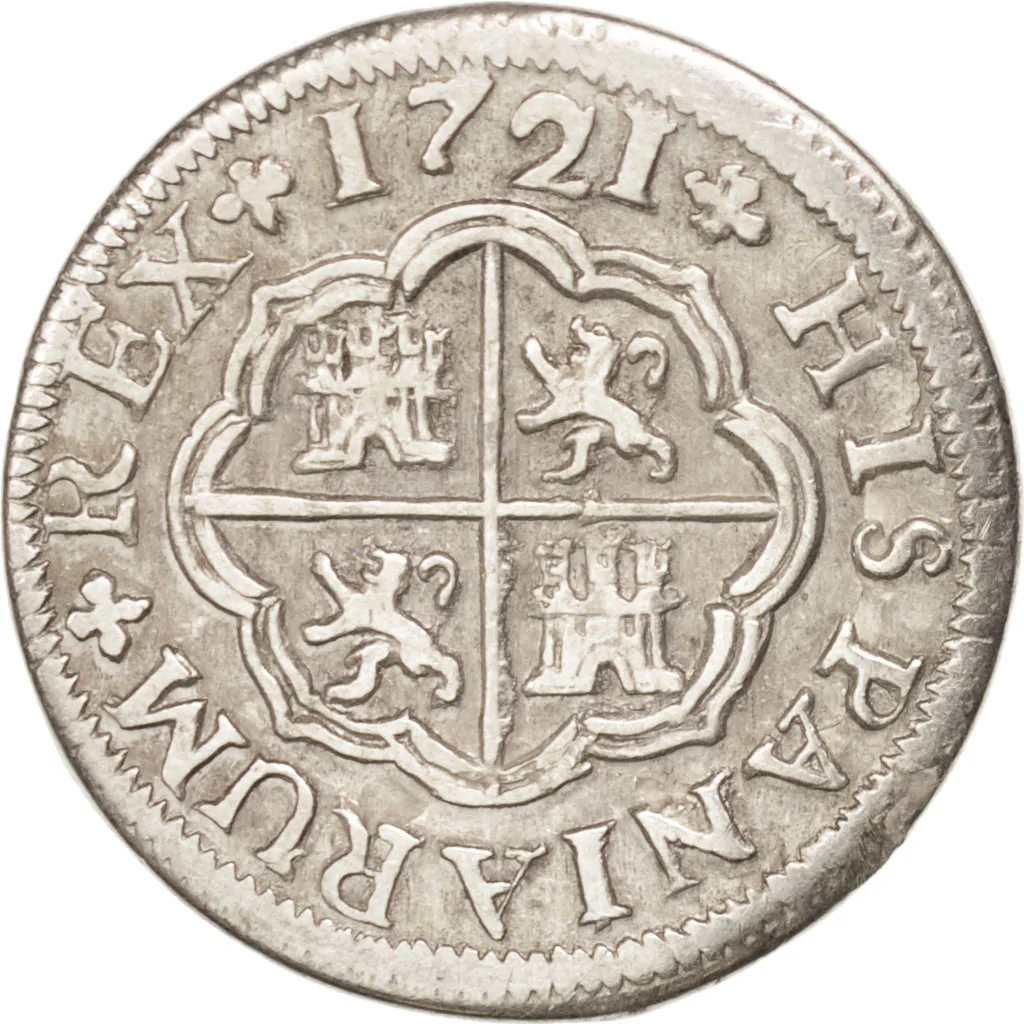
Reverse
Description:
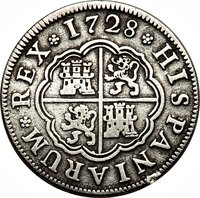
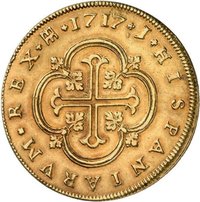
Castile and León's coat of arms in an octolobe.
Inscription:
✤ 1721 ✤ HISPANIARUM ✤ REX
Script: Latin
Edge
Categories
| Symbols> Coat of Arms |
Mints
| Name | Mark |
|---|---|
| Cuenca | CA |
| Royal Mint of Seville | S |
Mintings
Historical background
In 1717, Spain's currency situation was characterized by profound instability and debasement, a direct legacy of the costly War of the Spanish Succession (1701-1714). The crown, burdened by immense debt and a fragmented monetary system inherited from the Habsburg era, resorted to repeatedly lowering the silver content in coins like the ubiquitous real to finance its obligations. This practice led to a severe loss of public confidence, rampant inflation, and a chaotic circulation of coins of varying intrinsic values from different Spanish regions and foreign nations, which crippled commerce and state finances.
Recognizing the crisis, King Philip V's new Bourbon administration embarked on a decisive reform, culminating in the pivotal decree of October 14, 1717. This legislation aimed to unify the kingdom's coinage by establishing a new national standard based on the silver real de a ocho (piece of eight). The reform systematically recalled old, debased coins for reminting at a higher and uniform purity, and it officially defined the relationship between gold and silver, pegging the gold escudo at 16 silver reales. The intent was to centralize monetary authority, restore trust in the currency, and stimulate economic recovery.
However, the 1717 reform immediately faced severe practical challenges. The prescribed silver-to-gold ratio inadvertently overvalued silver relative to international markets, particularly France. This triggered an arbitrage crisis where merchants exported Spanish silver for foreign gold, leading to a rapid drain of silver from the country. Consequently, the well-intentioned reform destabilized the very system it sought to fix, forcing the crown to issue corrective decrees in 1718 and again in 1726 to adjust the mint ratios, highlighting the difficult transition toward a stable, centralized monetary system in early Bourbon Spain.
Recognizing the crisis, King Philip V's new Bourbon administration embarked on a decisive reform, culminating in the pivotal decree of October 14, 1717. This legislation aimed to unify the kingdom's coinage by establishing a new national standard based on the silver real de a ocho (piece of eight). The reform systematically recalled old, debased coins for reminting at a higher and uniform purity, and it officially defined the relationship between gold and silver, pegging the gold escudo at 16 silver reales. The intent was to centralize monetary authority, restore trust in the currency, and stimulate economic recovery.
However, the 1717 reform immediately faced severe practical challenges. The prescribed silver-to-gold ratio inadvertently overvalued silver relative to international markets, particularly France. This triggered an arbitrage crisis where merchants exported Spanish silver for foreign gold, leading to a rapid drain of silver from the country. Consequently, the well-intentioned reform destabilized the very system it sought to fix, forcing the crown to issue corrective decrees in 1718 and again in 1726 to adjust the mint ratios, highlighting the difficult transition toward a stable, centralized monetary system in early Bourbon Spain.
Series: 1717 Spain circulation coins
⭐ Rare