

1 gold christian – Denmark
Add to wishlist
Denmark
Context
Years: 1771–1775
Year:: 1775
Issuer: Denmark
Ruler: Christian VII
Currency:
(1625—1813)
Demonetized: Yes
Total mintage: 22,928
Material
References
KM: #
Numista: #148409
Value
Bullion value: $926.21
Obverse
Description:
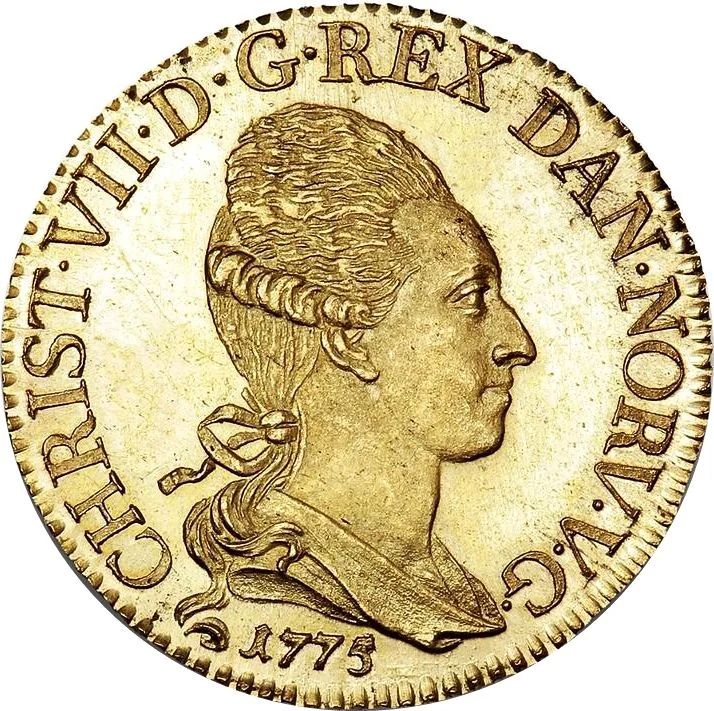
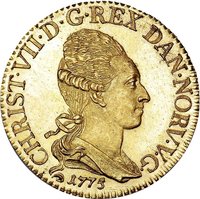
King Christian VII facing right. Date below neck truncation.
Inscription:
CHRIST • VII • D • G • REX • DAN • NOR • V • G •
1775
1775
Script: Latin
Engraver: Johan Henrik Wolff
Reverse
Description:
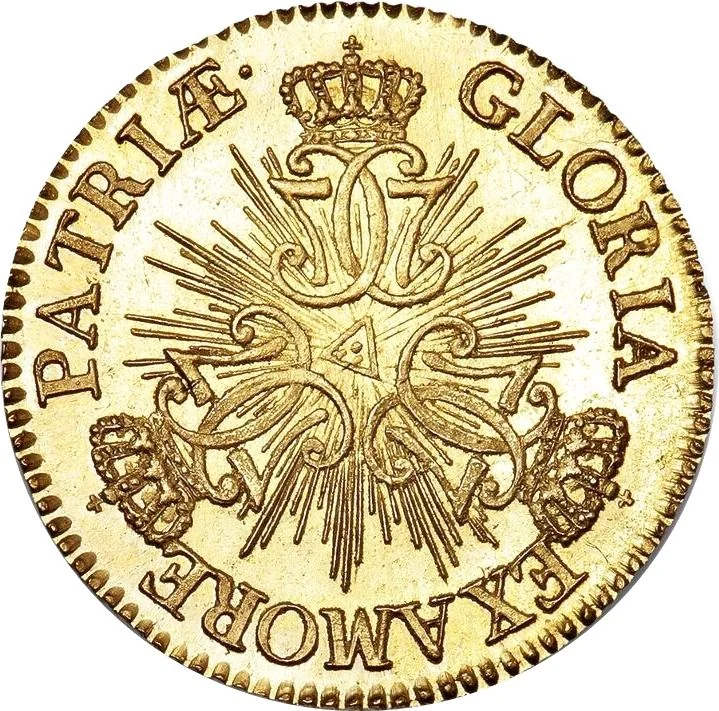
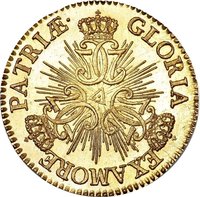
Central triangle with crowned monograms above each vertex, surrounded by the king's motto.
Inscription:
GLORIA EX AMORE PATRIÆ
C77C
C77C
C77C
C77C
C77C
C77C
Script: Latin
Engraver: Johannes Wiedewelt
Edge
Mints
| Name | Mark |
|---|---|
| Altona, Schleswig-Holstein | — |
Mintings
| Year | Mint Mark | Mintage | Quality | Collection |
|---|---|---|---|---|
| 1771 | W | 207 | ||
| 1775 | W | 22,721 |
Historical background
In 1771, Denmark found itself in a precarious monetary situation, a direct consequence of the costly state bankruptcy of 1770. The preceding decades, particularly under the absolutist rule of King Frederik V, had seen extensive and expensive wars, a lavish court, and significant subsidies to the state-owned Asiatic Company. To finance these expenditures, the government had increasingly resorted to debasing the currency by reducing the silver content in coins, leading to inflation and a severe loss of public confidence in the monetary system.
The crisis culminated under the brief and tumultuous rule of the German physician Johann Friedrich Struensee, who seized power in 1770. In a desperate attempt to stabilize state finances, Struensee's government issued the "Kurantdalerseddel" of January 1771—a paper currency intended to replace the discredited silver coins. However, this measure was poorly conceived and implemented without sufficient backing or public trust. The new paper notes were effectively declared legal tender by decree, but they rapidly depreciated, causing further economic dislocation and hardship for the populace, who saw their savings eroded.
Thus, the currency situation in 1771 was characterized by a fragile and failing system, caught between a legacy of metallic debasement and a rash experiment with unsecured paper money. This financial instability contributed to the growing unpopularity of Struensee's radical reforms and would be a significant factor in his dramatic fall from power and execution in 1772. The episode left a deep suspicion of paper money in Denmark, delaying its reintroduction for decades.
The crisis culminated under the brief and tumultuous rule of the German physician Johann Friedrich Struensee, who seized power in 1770. In a desperate attempt to stabilize state finances, Struensee's government issued the "Kurantdalerseddel" of January 1771—a paper currency intended to replace the discredited silver coins. However, this measure was poorly conceived and implemented without sufficient backing or public trust. The new paper notes were effectively declared legal tender by decree, but they rapidly depreciated, causing further economic dislocation and hardship for the populace, who saw their savings eroded.
Thus, the currency situation in 1771 was characterized by a fragile and failing system, caught between a legacy of metallic debasement and a rash experiment with unsecured paper money. This financial instability contributed to the growing unpopularity of Struensee's radical reforms and would be a significant factor in his dramatic fall from power and execution in 1772. The episode left a deep suspicion of paper money in Denmark, delaying its reintroduction for decades.
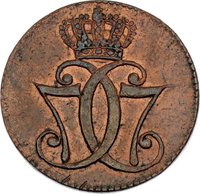
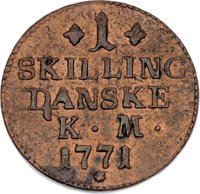
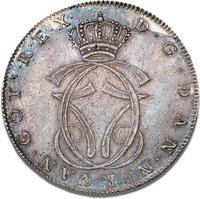
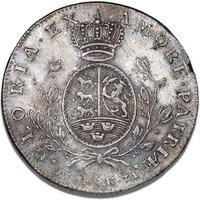
Series: 1771 Denmark circulation coins
✨ Legendary