

8 skilling – Denmark
Add to wishlist
Denmark
Context
Material
Diameter: 23 mm
Weight: 3.06 g
Silver Weight:: 1.72 g
Shape: Round
Composition: 56.25% Silver
Standard: Gold tenth ounce
Magnetic: No
Technique: Milled
References
KM: #
Numista: #318047
Value
Bullion value: $4.26
Obverse
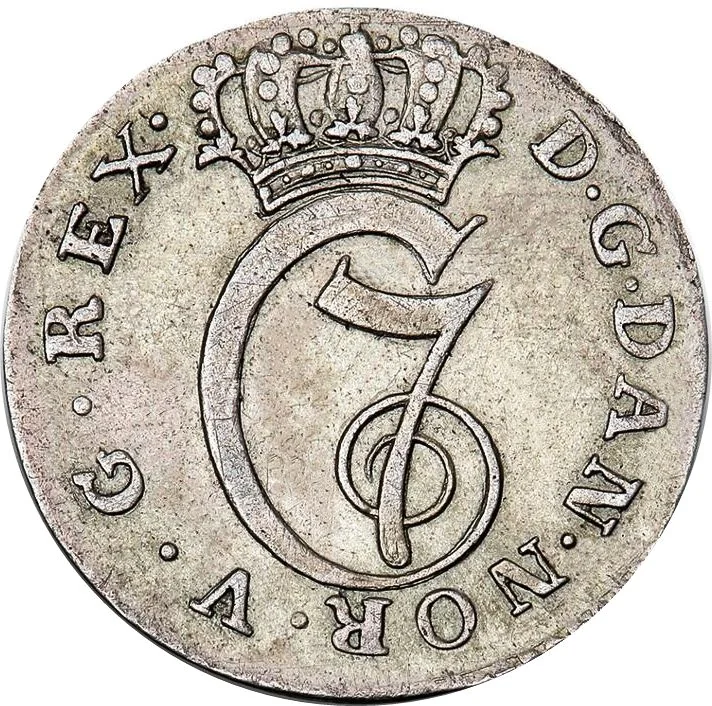
Description:
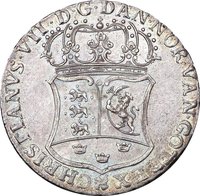
Crowned royal monogram. Rim inscription.
Inscription:
C7
D.G.DAN.NOR.VAN.GOT.REX
D.G.DAN.NOR.VAN.GOT.REX
Script: Latin
Reverse
Edge
Mints
| Name | Mark |
|---|---|
| Royal Danish Mint | — |
Mintings
| Year | Mint Mark | Mintage | Quality | Collection |
|---|---|---|---|---|
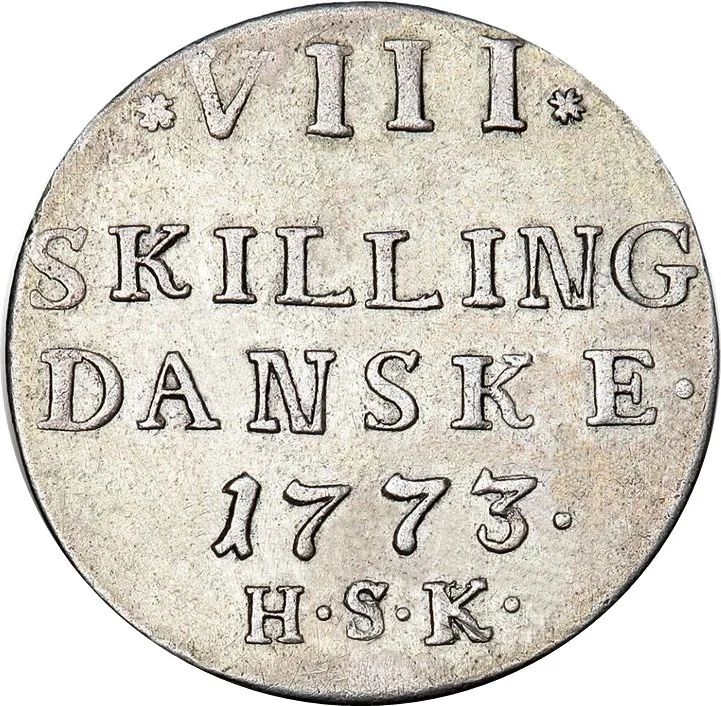
| 1773 | — | — | ||
| 1783 | — | — |
Historical background
In 1773, Denmark found itself in a precarious monetary situation, caught between the legacy of past debasements and the pressures of international trade. The Danish state had long struggled with a chronic shortage of silver, the bedrock of its monetary system. To finance state expenditures, notably the costly wars of the early 18th century, the government had repeatedly resorted to devaluing the currency by reducing the silver content in coins. This created a system where multiple coin types with different intrinsic values circulated simultaneously, leading to widespread confusion, hoarding of full-weight coins, and a loss of public trust.
The situation was exacerbated by the circulation of a vast quantity of underweight and clipped coins, particularly the skilling denominations. Furthermore, the Danish realm operated on a bimetallic standard, but the official ratio between silver and gold often failed to match market rates, causing one metal to disappear from circulation—a problem known as Gresham's Law. This monetary instability hampered commerce, complicated state finances, and made international transactions difficult, as foreign merchants were wary of the fluctuating and often debased Danish currency.
Recognizing the crisis, the absolute monarchy under King Christian VII and his ministers, particularly the influential Count Johann Friedrich Struensee (though his tenure was brief), had begun to see monetary reform as a critical necessity. The year 1773 itself was a point of mounting pressure and planning, setting the stage for a major transformation. This culminated just a few years later, in 1777, with the introduction of the Rigsbankdaler, a new, stable silver-based currency backed by a dedicated state fund, which aimed to restore confidence and simplify the chaotic monetary landscape.
The situation was exacerbated by the circulation of a vast quantity of underweight and clipped coins, particularly the skilling denominations. Furthermore, the Danish realm operated on a bimetallic standard, but the official ratio between silver and gold often failed to match market rates, causing one metal to disappear from circulation—a problem known as Gresham's Law. This monetary instability hampered commerce, complicated state finances, and made international transactions difficult, as foreign merchants were wary of the fluctuating and often debased Danish currency.
Recognizing the crisis, the absolute monarchy under King Christian VII and his ministers, particularly the influential Count Johann Friedrich Struensee (though his tenure was brief), had begun to see monetary reform as a critical necessity. The year 1773 itself was a point of mounting pressure and planning, setting the stage for a major transformation. This culminated just a few years later, in 1777, with the introduction of the Rigsbankdaler, a new, stable silver-based currency backed by a dedicated state fund, which aimed to restore confidence and simplify the chaotic monetary landscape.
✨ Legendary